



























US Scrambles Fighter Jets After Russian Anti-Submarine Aircraft Enter Alaska Defense Zone

Radar operators monitoring the skies over the North Pacific detected an unusual flight path approaching the Alaska Air Defense Identification Zone on March 4, 2026. The aircraft were moving along a corridor frequently used during long-range military patrol missions across the Arctic region. Their approach immediately drew attention from defense monitoring systems operated by the United States and Canada.
The aircraft had not crossed into national airspace. But their position inside the vast identification zone meant they had entered a sensitive buffer area designed to provide early warning of approaching traffic. Inside command centers of the North American Aerospace Defense Command, known as NORAD, operators began tracking the formation as it moved toward the northern coast of Alaska.
As radar systems followed the aircraft across the remote skies near the Beaufort Sea, commanders began preparing an aerial response. NORAD maintains standing procedures for unidentified military flights entering the region. Fighter aircraft were placed on alert while analysts worked to confirm the identity of the approaching planes.
Long-Range Patrol Aircraft Appear over the Arctic Corridor
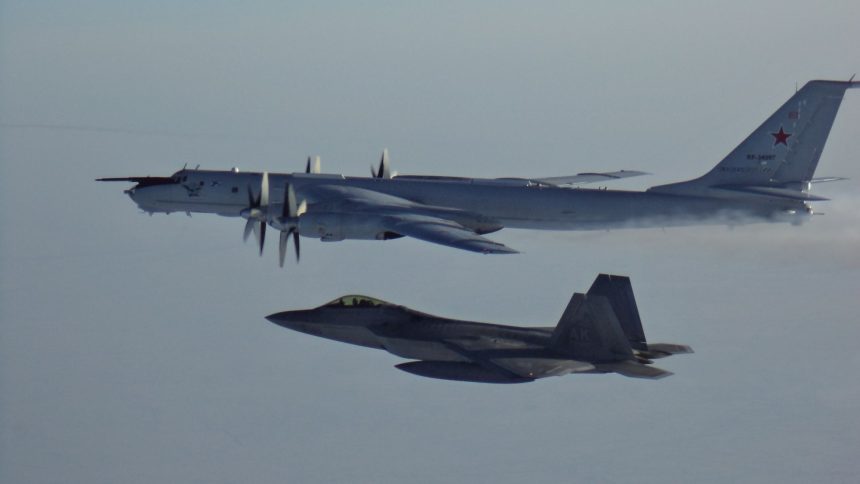
Tracking data soon revealed that the aircraft were Tu-142 maritime patrol aircraft, a long-range platform operated by the Russian Navy. The Tu-142 is derived from the Tu-95 bomber, a turboprop aircraft originally developed during the Cold War for strategic missions. Over time, the platform was adapted for maritime patrol and anti-submarine warfare.
According to Newsweek, the two aircraft entered the Alaska Air Defense Identification Zone, often referred to as the ADIZ, during a patrol that covered large sections of the North Pacific and the Beaufort Sea. Aircraft operating within the identification zone are expected to identify themselves to air traffic control authorities.
The Alaska Air Defense Identification Zone extends hundreds of miles beyond the sovereign airspace of North America. Its purpose is to provide additional time for military commanders to detect and identify approaching aircraft before they reach national borders.
Defense officials confirmed the Russian aircraft remained in international airspace throughout the encounter. Even so, their presence inside the identification zone required a response under standard NORAD monitoring procedures.
Fifth-Generation Fighters Launched to Investigate
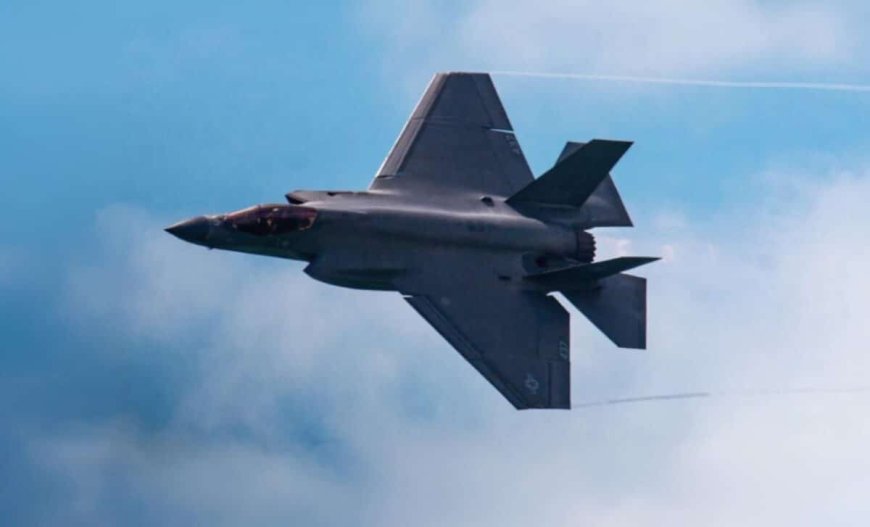
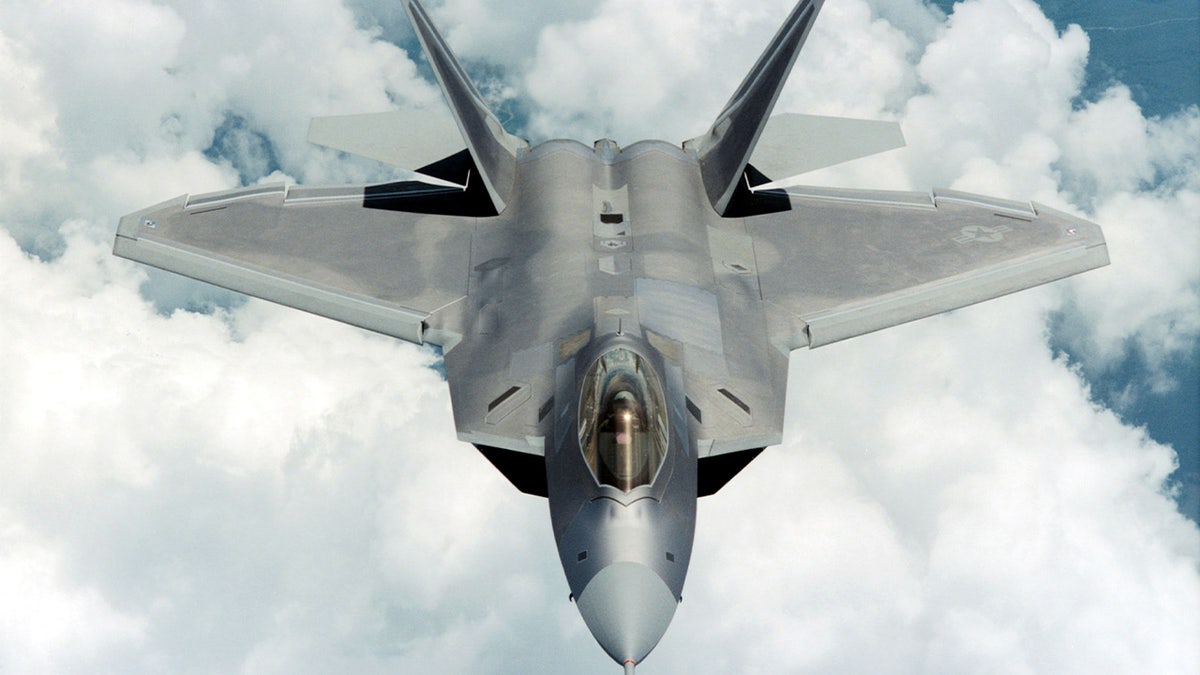
Once the aircraft were confirmed inside the identification zone, NORAD launched interceptor aircraft from bases across the region. The response included F-35A Lightning II stealth fighters and F-22 Raptor air-superiority jets operated by the U.S. Air Force. Both aircraft types are designed for rapid interception missions and are frequently assigned to Arctic defense patrols.
The Royal Canadian Air Force also joined the mission, deploying CF-18 Hornet fighter aircraft to support the intercept. The participation of both American and Canadian jets reflects the binational structure of NORAD, which coordinates the air defense of the continent.
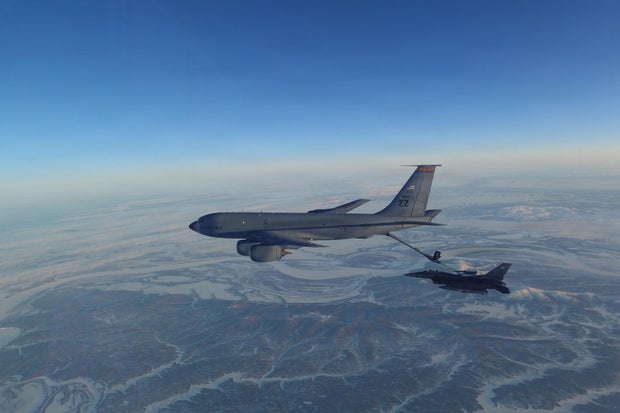
Supporting the fighters were KC-135 Stratotanker aircraft that provided aerial refueling. This capability allows interceptor jets to remain on station for extended periods over the remote Arctic region, where distances between bases and patrol areas are extremely large.
Fighter pilots approached the Russian aircraft to conduct what military planners call a visual identification intercept. During this procedure, pilots fly close enough to confirm the aircraft type and monitor its flight path as it continues through the zone.
How NORAD Tracks Aircraft in the Far North
Encounters like this rely on a layered surveillance network operated by NORAD. The command integrates satellite sensors, ground-based radar installations, and airborne monitoring platforms to detect aircraft moving toward the northern approaches of North America.
During the intercept mission, an E-3 Sentry airborne early warning aircraft helped coordinate the response. Flying at high altitude, the E-3 Sentry uses a rotating radar dome capable of tracking aircraft across hundreds of miles. The aircraft functions as a flying command center that directs fighters and monitors airspace activity.
With the help of the airborne radar platform, NORAD controllers maintained a detailed real-time picture of the Russian flight path. This coordination allowed interceptor pilots to position themselves safely while confirming the identity of the aircraft.
Military officials later described the encounter as safe and professional. No aggressive maneuvers were reported by either the Russian aircraft or the intercepting fighters.
Arctic Patrol Flights Continue near North American Airspace
Long-range patrol missions using the Tu-142 are a routine part of Russian naval aviation activity. The aircraft carries specialized sensors, magnetic anomaly detectors, and sonar buoys used to locate submarines operating beneath the ocean surface.
Flights across the Arctic allow Russian crews to train over long distances while demonstrating their ability to operate near major maritime routes. These patrols occasionally bring aircraft close to the outer boundaries of the NORAD monitoring network.

The U.S. Air Force maintains a rapid-response alert force at Joint Base Elmendorf-Richardson in Alaska specifically to respond to these types of flights. Fighter aircraft stationed there can launch quickly when unidentified aircraft approach the Alaska Air Defense Identification Zone.
Officials from the Department of Defense say such intercepts are considered routine monitoring actions rather than signs of confrontation. Because the Russian aircraft did not enter sovereign airspace, the mission remained focused on identification and observation.
NORAD reported that it has tracked and intercepted Russian military aircraft entering the Alaska Air Defense Identification Zone at least six times during the past year.
Enjoyed this article? Subscribe to our free newsletter for engaging stories, exclusive content, and the latest news.
What's Your Reaction?
 Like
0
Like
0
 Dislike
0
Dislike
0
 Love
0
Love
0
 Funny
0
Funny
0
 Angry
0
Angry
0
 Sad
0
Sad
0
 Wow
0
Wow
0