

























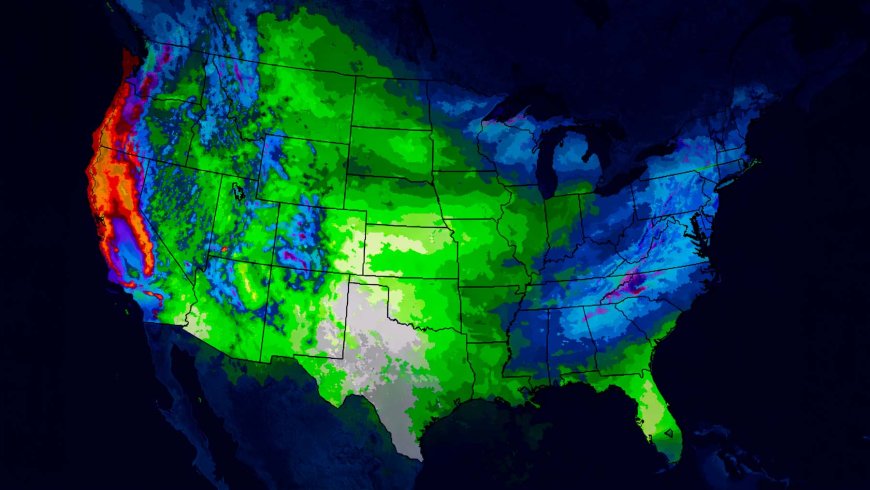
Up to 8 feet of snow, 7 inches of rain, and 60 mph winds are forecast to batter the West Coast Feb 16–22, NOAA warns

You’ve probably noticed this winter doesn’t feel normal. Blizzards in one state, flooding in another, and record cold followed by sudden warmth.
Across the United States, the 2025–26 season has become a weather rollercoaster — and forecasters say it’s not done yet.
Major ocean patterns are shifting, which could make conditions even more volatile.
The next major weather system is building offshore. And what it brings may redefine this already strange winter.
How to put it? America is having a… strange winter
Let’s be honest: 2025–26 winter in America isn’t acting like normal. It’s been wild, unpredictable, and dramatic in unusual patterns.
The northern half of the country has seen record cold temperatures, deep snow, and repeated winter storms. These have lingered far longer than expected.
Meanwhile, the West Coast has seen intense, multi-phase storms bringing torrential rain, fierce winds, and snow in mountain regions that would make even seasoned skiers raise an eyebrow — in some places dumping feet of snow and flooding lowlands at the same time.
Other regions have had stretches of warmth and dryness at odd times of the year, hinting at a winter season of extremes.
Forecasters say it’s highly possible that the next few weeks will come with more inconveniences, such as impacted travel.
La Niña is weakening. But the worst is yet to come
Right now, weather scientists are watching a major shift in one of the biggest drivers of global climate: La Niña. This ocean-atmosphere pattern is known for its cooler Pacific waters and bringing storms, droughts, and temperature swings.
NOAA’s climate monitors now expect it to transition into a more neutral phase between February and April.
This matters because La Niña has helped shape winter weather across the U.S., but a weakening signal means patterns could dissipate. As conditions move toward neutral, weather tends to be less predictable and more prone to shifts.
But here’s the twist: scientists also see signs that something else could be on its way — conditions that might reshape global weather patterns even more dramatically. This is the part that’s forcing us into high alert.
Up to 8 feet of snow and 7 inches of rain. Everything at 60 mph
This isn’t your typical winter forecast.
NOAA’s latest projections for February 16 to 22, 2026, show a powerful series of Pacific storms is ready to slam the West Coast. This will come with extreme conditions — the kind that turn highways into rivers and mountaintops into whiteout regions overnight.
Forecasters warn that some mountain zones could see up to 8 feet of snow over the week. That’s not a single big storm. Avalanches become a real threat, and travel routes are affected.
At lower elevations, namely foothills, valleys, and coastal ranges, the same systems are expected to unleash as much as 7 inches of rain. In an area still recovering from drought, that much water in a short time becomes flood potential, moving the region into the other extreme.
NOAA is not sugarcoating forecasts. We can expect sustained gusts up to 60 mph along exposed coastal areas and ridgelines, meaning trees and power lines could come down, debris could become airborne, and even well-built structures could collapse.
This isn’t a gentle rain-and-snow week
What’s being predicted is a weather on wheels scenario: heavy precipitation, strong winds, and turbulent transitions between rain, snow, and wind-driven chaos.
Stay alert. Conditions will shift fast — and this storm cycle is only just beginning.
With La Niña fading and powerful systems lining up offshore, the pattern feels less predictable and at the same time, more intense. Extreme weather events aren’t isolated anymore; they’re features of a season that keeps shifting under our feet.
For us, it means staying flexible. Forecasts may change quickly and impacts could move from coast to coast before everyone has had a chance to prepare.
This winter has shown that “normal” weather can’t be assumed… and the season isn’t even over yet.
What's Your Reaction?
 Like
0
Like
0
 Dislike
0
Dislike
0
 Love
0
Love
0
 Funny
0
Funny
0
 Angry
0
Angry
0
 Sad
0
Sad
0
 Wow
0
Wow
0