



























Underwater Mountain Taller Than Mount Olympus Found in Pacific Ocean. Then Flying Spaghetti Monsters From the 1800s Emerged

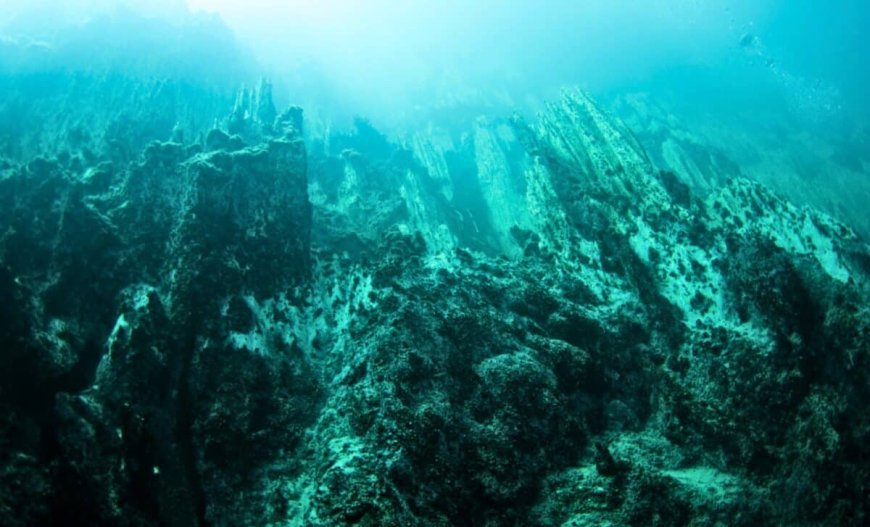
Oceanographers have discovered and mapped a massive underwater mountain in the Pacific Ocean that rises 3,109 meters from the seafloor, making it taller than Greece’s Mount Olympus. The seamount sits along the Nazca Ridge, an underwater mountain chain located 900 miles west of the Chilean coast in international waters.
The discovery came during a 28-day expedition led by the Schmidt Ocean Institute aboard the research vessel Falkor (too), which wrapped up in late summer 2024. The team used a sonar system mounted on the vessel’s hull to map the seafloor topography with high resolution. “Sound waves go down and they bounce back off the surface, and we measure the time it takes to come back and get measured,” Jyotika Virmani, the institute’s executive director, told CNN. “From that we get a really good idea of the seabed topography.”

The newly mapped seamount is roughly four times the height of Dubai’s Burj Khalifa, the world’s tallest building. It joins a chain of underwater mountains that researchers have been systematically exploring throughout 2024.
Rare Marine Life Documented on Camera
Beyond mapping the mountain, the expedition deployed an underwater robot to explore one of its ridges. The dives revealed sponge gardens, ancient deep sea corals, and several marine species rarely seen by humans.
The team captured the first ever camera footage of a live Promachoteuthis squid, a genus previously known only from a small number of dead specimens collected in nets. Some of those specimens date back to the late 1800s. “The squid genus has only been characterized from dead samples found in nets,” according to the Schmidt Ocean Institute’s press release.
Researchers also documented a ghostly white Casper octopus, marking the first confirmed sighting of this deep-dwelling cephalopod in the southern Pacific Ocean. Virmani noted that the species has never been captured and lacks a formal scientific name.

Two Bathyphysa siphonophores also appeared during the exploration. These creatures are commonly called “flying spaghetti monsters” due to their tangled, string-like appearance. The rocky slopes of the seamount provide habitat for these organisms, supporting coral gardens and sponge communities that shelter rockfish, brittle stars, and king crabs.
A Region Rich in Unknown Species
This expedition was the third that the Schmidt Ocean Institute conducted in the Nazca and Salas y Gómez Ridges during 2024. The two previous voyages, which took place in January and February, documented more than 150 previously unknown species.
During this most recent expedition, the team collected an additional 20 suspected new species. Before the institute began exploring this portion of the Pacific Ocean, scientists had recorded 1,019 species known to live in the region. That number now exceeds 1,300 and continues to grow, according to reporting by Popular Mechanics.

One of the neighboring seamounts explored during the trip contained a pristine coral garden covering approximately 800 square meters, an area roughly the size of three tennis courts. The researchers explored nine additional unprotected features along the underwater mountain range beyond the newly mapped peak.
“The seamounts of the Southeastern Pacific host remarkable biological diversity, with species found nowhere else to date,” said Alex David Rogers, Science Director of Ocean Census, in the institute’s press release.
Mapping the Unknown Seafloor
The discovery highlights how much of the ocean floor remains unmapped in detail. While 71 percent of Earth’s surface is ocean floor, only 26 percent has been mapped with the high-resolution sonar used during the Nazca Ridge expedition.

The seafloor data gathered during the voyage will be contributed to the Seabed 2030 Project, an international effort to create a complete map of the world’s ocean bottom. The specimens and records collected across the three 2024 expeditions will be shared with the Ocean Census, a collaborative alliance led by the Nippon Foundation and Nekton that aims to accelerate the discovery and protection of ocean life.
The initiative has set a goal of identifying 100,000 unknown marine species within a decade.
Conservation Efforts in International Waters
The Nazca Ridge and the adjoining Salas y Gómez Ridge are under consideration for designation as a high seas marine protected area. The region falls within international waters, meaning any protection would require cooperation under international agreements.
“We’ve explored around 25 seamounts on the Nazca and Salas y Gómez Ridges,” said Tomer Ketter, Co-Chief Scientist and Schmidt Ocean Institute Marine Technician. “Our findings highlight the remarkable diversity of these ecosystems, while simultaneously revealing the gaps in our understanding of how the seamount ecosystems are interconnected.”
The expedition was conducted in partnership with Ocean Census and the Center for Coastal and Ocean Mapping and Joint Hydrographic Center at the University of New Hampshire. The data collected during the three 2024 expeditions will inform future policy discussions about safeguarding these underwater mountain ecosystems.
Enjoyed this article? Subscribe to our free newsletter for engaging stories, exclusive content, and the latest news.
What's Your Reaction?
 Like
0
Like
0
 Dislike
0
Dislike
0
 Love
0
Love
0
 Funny
0
Funny
0
 Angry
0
Angry
0
 Sad
0
Sad
0
 Wow
0
Wow
0