

























ULA Aims for Major Boost in Rocket Launches in 2026

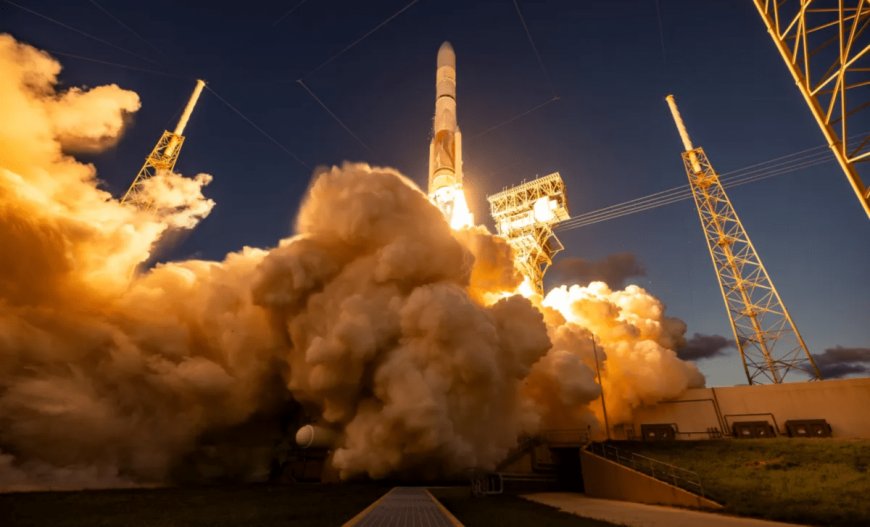
In 2026, United Launch Alliance (ULA) is setting its sights on an ambitious goal of increasing its launch cadence. With a target of between 18 to 22 launches this year, ULA is focusing on both its Atlas 5 and Vulcan rockets to meet the rising demand from commercial and government customers.
ULA’s Ambitious Goal for 2026 Launch Cadence
In 2026, ULA is working hard to ramp up its launch cadence significantly. According to Spaceflight Now, The company aims to execute between 18 and 22 launches over the course of the year, which is a substantial increase compared to previous years when they launched only five missions in 2024 and six in 2025. The breakdown includes both Atlas 5 and Vulcan rockets, with Vulcan launches expected to make up the majority of the cadence. ULA’s goal is ambitious but achievable, thanks to their focus on expanding their infrastructure and working closely with customers to prioritize missions.
As part of this initiative, ULA will leverage two primary launch pads: Cape Canaveral Space Force Station’s Pad 41 for Atlas 5 missions and Vandenberg Space Force Base’s Pad 3 for Vulcan missions. However, ensuring that the right missions are prioritized is a delicate balancing act. As ULA’s vice president of Atlas and Vulcan Programs, Gary Wentz, explained,
“It’s a balance. We’re working with our customers to determine specific priorities and order of missions and in the case of Space Force and NRO (National Reconnaissance Office), to determine which missions they want to get off with higher priority.”
This collaboration with customers ensures that the most important missions are given top priority, but the team also has to be flexible as new challenges and priorities arise. Over the next several months, ULA will work on finalizing which missions will be launched by Atlas and which will be assigned to Vulcan, based on customer needs and strategic objectives.

Preparing for Increased Launch Rates: Track A and VIF-G
To meet its increased launch cadence goals, ULA is expanding its infrastructure. One of the key elements in this expansion is the addition of a new Vertical Integration Facility (VIF) known as Track A. This facility will play a critical role in streamlining ULA’s operations and enabling faster turnaround times for their Vulcan rockets. As ULA’s interim CEO, John Elbon, pointed out,
“Those are behind us now and so the Vulcan rocket is ready to go. We talked about getting what we call ‘Track A’ online, the new Vertical Integration Facility, the new Vulcan launch platform that allows us to double the rate, as Mark described, at KSC.”
This new platform at Kennedy Space Center (KSC) will significantly enhance ULA’s ability to handle a higher volume of launches. Alongside this, ULA will also bring online another facility at Vandenberg later in the year. These efforts will ensure that ULA can meet its ambitious goal of increasing the launch rate in 2026.
Elbon emphasized,
“We have in inventory, already built and finished goods, the rockets that will allow us to get up to that rate through this year. And the payloads are ready to go. So what we need to do is execute our launch activities at the Cape and at Vandenberg. And so, it’s very achievable for us to get up to the rate that we need to get up to through this year.”
With these facilities and the rockets ready for launch, ULA is poised to achieve its goal of a higher launch cadence this year.
Collaboration with Amazon and U.S. Military Forces
One of the driving forces behind ULA’s increased launch cadence is the contract with Amazon to launch 47 broadband satellites into orbit. This deal will account for a significant portion of ULA’s missions over the next few years. The massive volume of launches for Amazon’s “Amazon Leo” project is expected to bolster ULA’s position as a leader in the satellite launch industry.
In addition to the commercial contract with Amazon, ULA has a strong commitment from its government customers, such as the U.S. Space Force and the National Reconnaissance Office (NRO). These customers account for dozens of missions through the National Security Space Launch (NSSL) Phase 2 and Phase 3 contracts. According to Wentz, “Mark (Peller) and I will be laser focused during the next period on continuing to meet our customers’ needs and importantly, getting us set for a reliable and sustainable increased launch rate.”
As ULA continues to expand its services to both commercial and government clients, the company is well-positioned to meet its launch cadence goals in 2026.
ULA’s Strategic Focus for 2026
Despite facing some challenges in previous years, including anomalies during Vulcan’s certification process, ULA is confident about achieving its 2026 objectives. The company is placing a strong focus on enhancing reliability and sustainability, ensuring that the increased launch rate doesn’t come at the cost of quality or safety. Elbon’s leadership, following the departure of former CEO Tory Bruno, is centered around improving operational efficiency and continuing to meet the evolving needs of their customers.
Wentz emphasized that ULA is taking a deliberate approach when it comes to scheduling and prioritizing missions:
“That would go in after, as you described, after GPS and before SF-57 and that is our current plan. And then, if they were approved to fly crew, we have a slot in the October/November timeframe, where we would work between Space Force and NRO on priority to put a crew mission out there in October.”
With a strategic plan in place and the necessary infrastructure to support higher launch rates, ULA is poised to become a dominant player in the commercial and government space launch markets in 2026 and beyond.
Enjoyed this article? Subscribe to our free newsletter for engaging stories, exclusive content, and the latest news.
What's Your Reaction?
 Like
0
Like
0
 Dislike
0
Dislike
0
 Love
0
Love
0
 Funny
0
Funny
0
 Angry
0
Angry
0
 Sad
0
Sad
0
 Wow
0
Wow
0