



























This Small Canadian Town Is Turning Abandoned Coal Mines Into a Massive Clean Energy Network

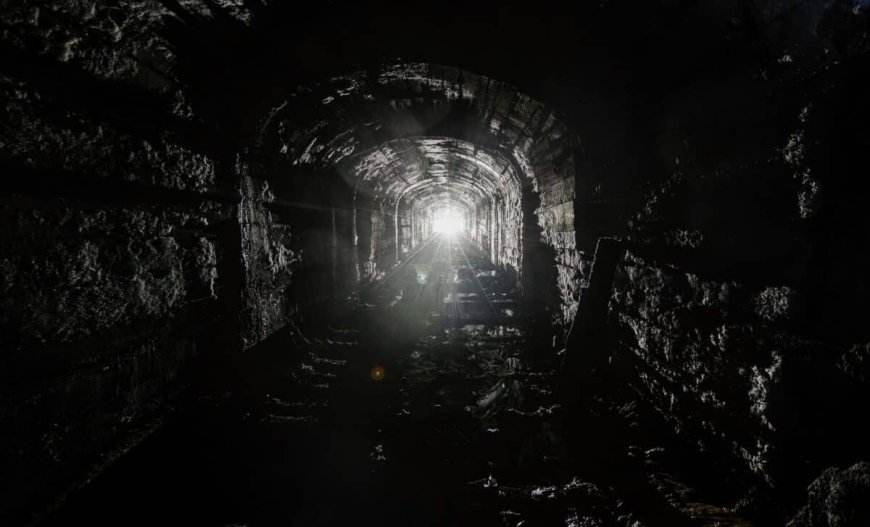
Flooded coal mines beneath Cumberland, British Columbia are being studied as the foundation for a town-wide geothermal system. Local leaders and university researchers are testing whether water pooled in the abandoned tunnels can provide low-carbon heating and cooling.
For more than eight decades, coal mining defined Cumberland’s economy. Beginning in 1888, roughly 16 million tonnes of bituminous coal were extracted from the Comox Valley, powering steamships and supplying international markets. When operations ceased in the late 1960s, they left behind an extensive network of underground workings stretching beneath much of the village.
Now, through the Cumberland District Energy project, the municipality is partnering with the University of Victoria-led Accelerating Community Energy Transformation (ACET) initiative to assess whether mine water can serve as a geothermal resource.
Tapping Into Stable Underground Temperatures
The idea is based on a simple thermal principle. As Zachary Gould, ACET’s community energy planner and project lead, explains, water trapped in the old mine shafts stays cooler than the air above in summer and warmer in winter. By using heat pumps, this stable underground temperature could be used to heat and cool buildings with almost no carbon emissions and at a relatively low cost.

Emily Smejkal, a geothermal systems fellow at the Cascade Institute, describes it as “basically a giant ground-source heat exchanger.” Unlike deep geothermal systems that require drilling to reach high-temperature water, Cumberland’s plan would use the shallower mine water to balance out seasonal temperature changes. Geologists have mapped the underground tunnels to see if they can be used long-term.
Driving Urban Renewal with Clean Energy
As explained in a press release published by the University of Victoria (UVic), plans under consideration include a community center, municipal offices, affordable housing, and a nearby industrial area closer to Comox Lake. According to Gould :
“It’s an opportunity to look at resource extraction in a new way in a village that was built on extractive principles. This project could turn those ruins of extraction, so to speak, into an opportunity and a shared community asset.”
With a population of about 4,800 and no dedicated engineering department, the village is relying on ACET to conduct feasibility studies and business case analysis. Mayor Vickey Brown has framed the initiative as a way to use “the waste of that old resource” to support a cleaner energy system.

Reframing A Mining Legacy
Coal mining brought both economic growth and hardship. In the words of Dawn Copeman of the Cumberland Museum and Archives, working conditions were dangerous and many miners were injured or killed, while coal combustion contributed to climate change.
Local geologist Cory MacNeill said discussions initially focused on methane produced by former mines before shifting to the therma lpotential of mine water.
“We haven’t always worked very well with natural systems,” Brown stated. “But I think this is a model of using the tools and resources you have in place to look after the needs of your community. And I think that’s far more resilient than the way we’ve done it in the past.”
The underground labyrinth that once powered an extractive economy is now being evaluated as a shared, low-carbon energy asset.
Enjoyed this article? Subscribe to our free newsletter for engaging stories, exclusive content, and the latest news.
What's Your Reaction?
 Like
0
Like
0
 Dislike
0
Dislike
0
 Love
0
Love
0
 Funny
0
Funny
0
 Angry
0
Angry
0
 Sad
0
Sad
0
 Wow
0
Wow
0