




























This Ship Vanished Without A Trace 137 Years Ago, Divers Have Just Found It Perfectly Intact At The Bottom Of A Lake

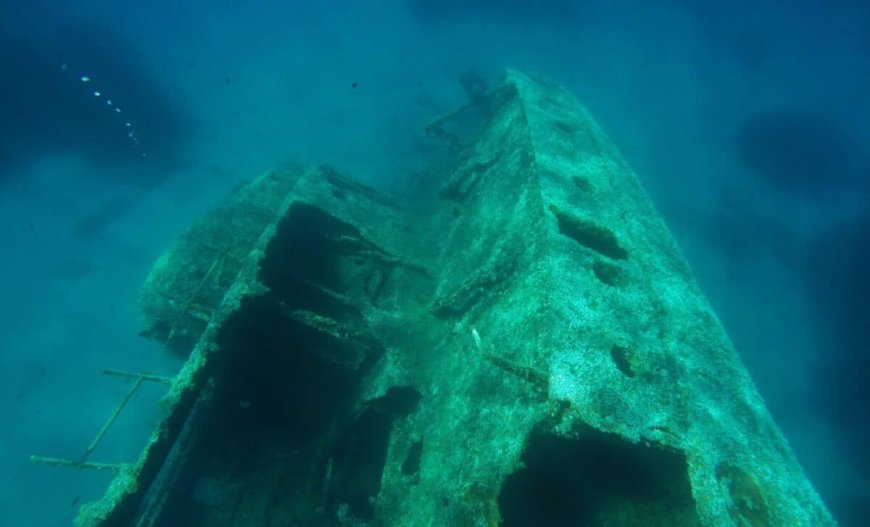
A steamship lost to fog and collision in 1886 has reappeared in an unexpected way, resting almost perfectly preserved on the floor of Lake Michigan. Discovered in 2024, the Milwaukee has given researchers a glimpse into Great Lakes shipping, as if time simply paused the moment it sank.
The wreck was located 137 years after it sank, following a collision with another vessel during a sudden fog event. According to the Michigan Shipwreck Research Association, the ship was found after only two days of sonar searching, guided by historical records and current analysis.
This discovery matters because it connects documented maritime history with physical evidence. The Milwaukee was part of a shifting economic landscape shaped by trade, industrial growth, and transportation changes in the late 19th century.
A Collision In Silence And Fog
The Milwaukee sank in July 1886 after colliding with the C. Hickox, a steamship of similar size traveling the opposite route between Muskegon and Chicago. As explained by the historical accounts cited by the research association, both ships were expected to slow down and turn to avoid impact, while signaling with steam whistles.

Neither captain reduced speed. A sudden fog rolled in and drastically reduced visibility while a mechanical failure aboard the Hickox prevented its whistle from sounding. A broken chain made signaling impossible and moments later the vessels collided.
The damage proved fatal for the Milwaukee. Despite efforts from the Hickox and the City of New York steamer to keep it afloat using ropes, the ship sank within two hours in waters about 360 feet deep. All crew members escaped safely, though both captains later had their licenses suspended.
A Discovery Shaped By Archives And Precision
The wreck was located roughly 40 miles off Holland, Michigan. As Neel Zoss of the association noted, historical news reports combined with the study of lake currents helped quickly narrow down the search area.
“News accounts of the accident, as well as the study of water currents, led us to the Milwaukee after only two days searching.”
Within two days, sonar detected a promising target. Weeks later, a remotely operated vehicle confirmed the find. Pilot Jack van Heest described seeing “the forward mast still standing” as the vehicle descended, with the vessel resting upright and facing northeast, matching its final recorded position. He added that the visibility at that depth allowed for unusually clear observation. The condition of the wreck stood out immediately, with structural elements still in place and recognizable.

A Vessel Forged by Economic Shifts
Built in 1868 for the Northern Transportation Company of Ohio, the Milwaukee was designed to navigate the Welland Canal, linking major Great Lakes routes. It measured 135 feet and featured three decks, including space for passengers and freight.
As stated by the same source, the ship’s role shifted after the Panic of 1873 and the expansion of railroads disrupted traditional shipping lines. The vessel was sold, then modified in 1881 to increase cargo capacity by reducing cabin space.
Later owned by Lyman Gates Mason, the Milwaukee became a lumber transport vessel operating between Michigan and Chicago. Evidence of these modifications was confirmed during the 2024 exploration. Craig Rich noted in a statement that, based on the footage, the pilothouse and aft cabin had been downsized to allow for greater cargo space.
“In studying the video, we realized that Lyman Gates Mason, who owned the Milwaukee, had made both the pilothouse and the aft cabin smaller in order to maximize the amount of lumber the ship could carry on each run.” With this discovery, the wreck becomes the 19th ship recorded by the association in the area.
Enjoyed this article? Subscribe to our free newsletter for engaging stories, exclusive content, and the latest news.
What's Your Reaction?
 Like
0
Like
0
 Dislike
0
Dislike
0
 Love
0
Love
0
 Funny
0
Funny
0
 Angry
0
Angry
0
 Sad
0
Sad
0
 Wow
0
Wow
0