



























This Radioactive Natural Gas Kills 21,000 Americans Every Year Without Anyone Noticing It

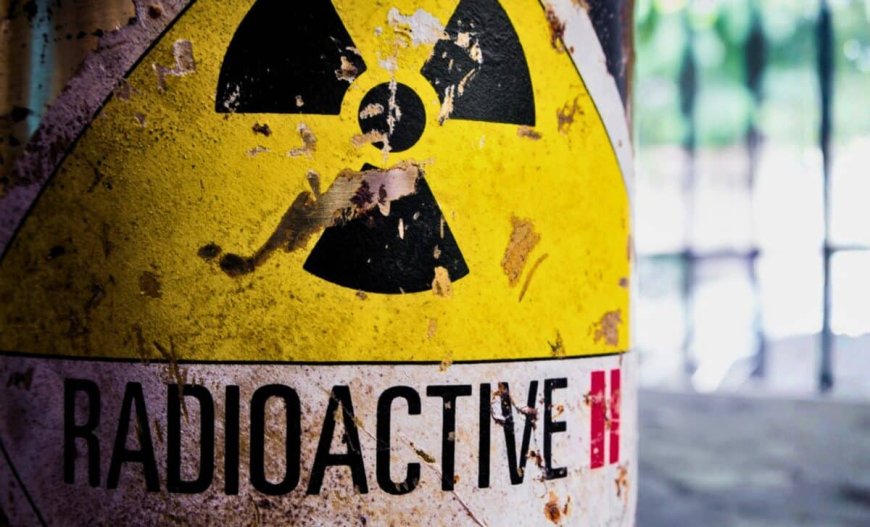
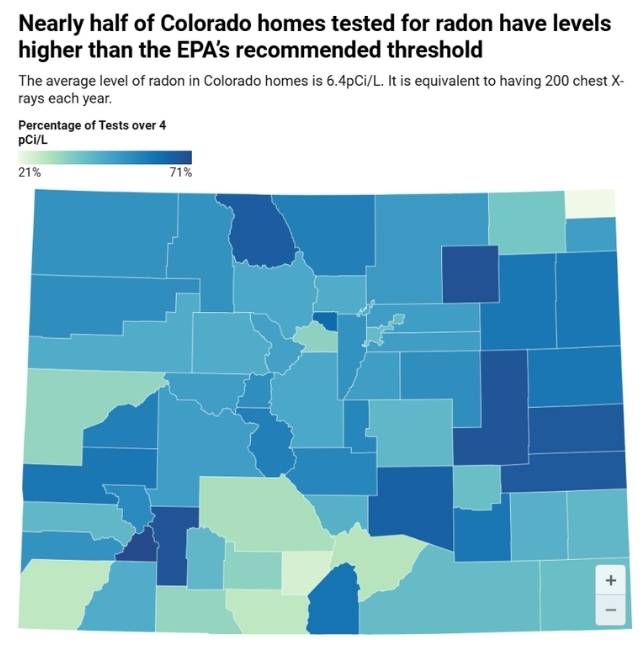
On a winter night in Colorado, a family might sit in a tightly sealed modern house, windows shut to keep in the heat. Inside, the air feels clean and safe. Yet measurements in many homes across the state average about 6.4 picocuries per liter (pCi/L) of Radon gas, a dose that state health officials compare to roughly 200 chest X-rays a year.
Across the United States, federal agencies estimate that long-term exposure to Radon gas contributes to about 21,000 lung cancer deaths every year. The Environmental Protection Agency (EPA) calls it the leading cause of lung cancer among people who have never smoked and the second leading cause overall, behind tobacco, on its official health risk overview. In Colorado, the Colorado Department of Public Health & Environment (CDPHE) estimates that radon exposure causes about 500 lung cancer deaths annually, a figure repeated in its radon action press release.
Most residents never notice anything unusual. Radon gas has no color, no smell and no taste, and it does not trigger coughing or irritation the way smoke does. According to estimates summarized in the ScienceAlert piece, only about half of Colorado homes have ever been tested for radon, and roughly half of those tested show levels higher than the EPA’s recommended action level of 4 pCi/L, meaning many households may be living with elevated exposure without realizing it.
Why Radon gas Is So Strong In Colorado
Radon gas forms naturally when uranium in rock and soil breaks down. As uranium atoms decay, they produce radon, which rises through the ground and looks for easy escape routes such as foundation cracks, gaps around pipes and open crawl spaces. Outdoors, this gas is usually diluted to low levels, a point the Environmental Protection Agency (EPA) makes on its radon information page. Indoors, in enclosed rooms, the same gas can accumulate to concentrations that carry a significant long term cancer risk.

Colorado’s geology makes those accumulations more likely. Large parts of the state rest on granite-rich rock that contains more uranium than many other regions. World Population Review ranks Colorado among the top states for average indoor radon levels, with typical home readings around 6.4 to 6.8 pCi/L, well above the EPA’s action threshold of 4 pCi/L. These figures are statewide averages, and readings can vary sharply even between neighboring houses.
Building design and climate add another layer. In cold months, warm indoor air rises and escapes through upper floors and roofs, creating slightly lower pressure in basements and crawl spaces. That pressure difference pulls soil gases, including Radon gas, into the lowest parts of a house. Modern, energy-efficient homes, sealed tightly to conserve heat, can trap more of whatever seeps inside. In areas that rely on private wells, CDPHE notes that radon can dissolve into groundwater and then be released again in showers and sinks, so both air and water may need testing in some homes.
What Radon gas Does Inside The Body
Once Radon gas enters a building, the gas itself keeps breaking down. As it decays, it produces tiny radioactive particles that can be inhaled deep into the lungs. Those particles emit bursts of energy that can damage DNA in lung cells, and over many years, repeated damage that is not fully repaired can lead to lung cancer. A major review in the Journal for Clinicians, concludes that tobacco still accounts for about 86 percent of lung cancer cases, while other sources of ionizing radiation, including radon, add a smaller but measurable share.
The Environmental Protection Agency (EPA) stresses that Radon gas is the leading cause of lung cancer among never-smokers and the second cause overall. For lifelong nonsmokers who live for decades at the action level of 4 pCi/L, the agency estimates that about 7 in 1,000 may eventually develop lung cancer. For people who smoke, the risk multiplies because both tobacco smoke and radon decay products damage the same lung tissues, so combined exposures matter more than either factor alone.
Children may be especially vulnerable to Radon gas because they breathe faster and often spend more time close to the floor, where radon decay products tend to settle. Colorado health officials note in their radon press materials that any home can have high levels, whether it is newly built or decades old. Cracks, gaps and ventilation patterns, rather than the age of the structure, determine how much gas enters and where it accumulates.
The Epidemiologist Pushing Colorado To Test
Much of the recent public focus on Radon gas in Colorado comes through the work of cancer epidemiologist Jan Lowery. She describes her efforts to help residents understand their household radon levels and options for reducing exposure. Lowery notes that only about 50 percent of Colorado homes have been tested for Radon gas, and that about half of the tested homes show levels above the EPA action threshold.
She also reports that the University of Colorado Anschutz Cancer Center has distributed more than 1,600 free test kits across 55 counties, with nearly 40 percent of returned tests above the EPA threshold. Those numbers underscore how common elevated radon levels are in the state and how many households may still be unaware of their exposure.
Testing And Fixing A Radon gas Problem
Testing is the only reliable way to know how much Radon gas is in a particular home or apartment. The EPA recommends testing all residential units at or below the third floor. Short term tests sit in the lowest regularly used living area for 2 to 90 days, while long term devices stay in place for 90 days or more to estimate an annual average. Test kits typically cost less than US$50 or can be obtained free through state programs and partners such as the Anschutz cancer center.
When a test shows Radon gas at or above 4 pCi/L, federal and state guidance recommends installing a mitigation system. The standard design uses a vent pipe and a continuously running fan to draw soil gases from beneath the foundation and release them safely above the roofline. EPA materials report that these systems can reduce indoor radon levels by up to 99 percent, often bringing them well below the action level even when starting from very high concentrations. Installation typically costs between US$1,000 and US$3,000, depending on the structure and location.
For households that cannot afford that expense, Colorado’s Low Income Radon Mitigation Assistance program can pay most or all of the cost for eligible residents. Maps and state rankings, including those compiled by World Population Review on radon levels by state, can show broad patterns but cannot predict the radon level in any single house. Colorado health authorities, the Environmental Protection Agency (EPA) and researchers such as Jan Lowery all return to the same conclusion: the only way to know a home’s Radon gas level, and to decide whether mitigation is needed, is to test it.
Enjoyed this article? Subscribe to our free newsletter for engaging stories, exclusive content, and the latest news.
What's Your Reaction?
 Like
0
Like
0
 Dislike
0
Dislike
0
 Love
0
Love
0
 Funny
0
Funny
0
 Angry
0
Angry
0
 Sad
0
Sad
0
 Wow
0
Wow
0