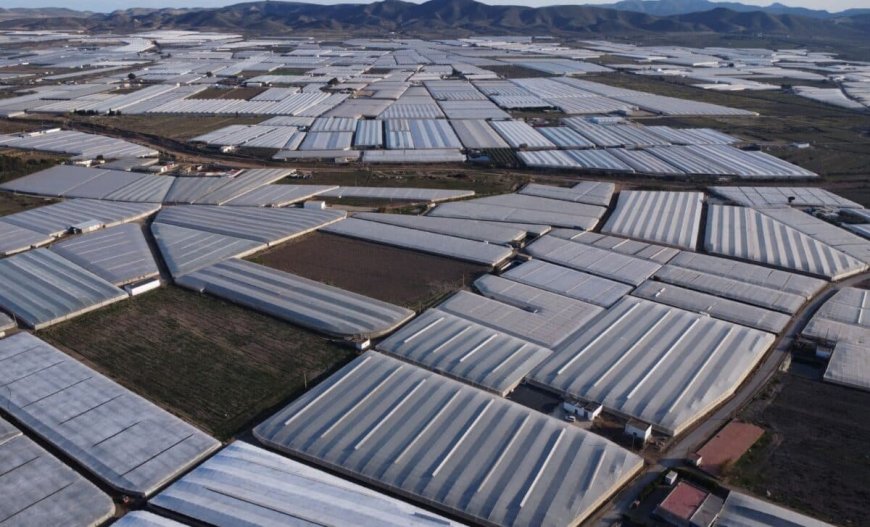
In southern Spain, there’s a sight so striking that you can spot it from space. It’s not an ancient landmark or a famous structure, but a massive patch of greenhouses that stretch as far as the eye can see.
Known as the “Sea of Plastic,” this sprawling agricultural area in Almería is one of the most noticeable human-made features on Earth. While the Great Wall of China was once thought to be visible from orbit, it’s these greenhouses that truly stand out.
Covering over 40,000 hectares, Almería’s greenhouses have turned a barren desert into a booming farming hub. But, as impressive as they are, they also bring environmental challenges that can’t be ignored.
Turning Desert Into a Farming Powerhouse
Almería’s transformation from arid desert to an agricultural giant is nothing short of remarkable. Back in the 1950s, the land was dry, salty, and unfit for traditional farming. A NASA statement added that:
“The province of Almería in southeastern Spain has some of the driest conditions in Europe. Yet with access to groundwater and an abundance of sun, it has become a major hub of greenhouse agriculture.”
This satellite image shows the vast expanse of greenhouses near the town of El Ejido in southern Spain. Credit: NASA
Local farmers started experimenting with plastic sheets to keep the soil from eroding and to lock in moisture. This simple idea eventually led to the creation of the greenhouses that now cover the land.
“By some estimates, Almería’s greenhouses now produce between 2.5 million and 3.5 million tons of fruits and vegetables per year, enough to make them a major source of off-season tomatoes, peppers, cucumbers, and melons for people all over Europe,” added the U.S space agency.
A Bright Patch Visible from Space
From space, Almería’s greenhouses are hard to miss. Their bright white roofs stand out against the brown hills and Mediterranean landscape below. Spanish astronaut Pedro Duque, who has seen the region from orbit, called it a “white patch” that’s unmistakable. The greenhouses are made from reflective polyethylene, which bounces sunlight back into space and creates a shimmering effect, according to Futura-Sciences.
This massive network covers more than 40,000 hectares, making it one of the largest greenhouse operations in the world. The scale and contrast of the greenhouses, with their clean, geometric shapes, make them easy to spot from space.
The Environmental Cost of Success
While Almería’s greenhouses are an agricultural success, they come with a serious environmental cost. The use of plastic on such a large scale has raised concerns about waste. The plastic sheeting used to cover the greenhouses doesn’t biodegrade, so it builds up over time and can end up polluting the area.
Also, the massive amount of water needed to irrigate the crops puts pressure on local water supplies. Though the greenhouses have allowed crops to thrive in an otherwise dry area, they’re also taxing the region’s water resources. Surprisingly, NASA data has shown that the reflective roofs of the greenhouses have led to a slight cooling effect in the area, but this doesn’t undo the fact that the region still faces significant environmental challenges, like plastic pollution and water scarcity.
































 Like
0
Like
0
 Dislike
0
Dislike
0
 Love
0
Love
0
 Funny
0
Funny
0
 Angry
0
Angry
0
 Sad
0
Sad
0
 Wow
0
Wow
0