



























This Balloon Telescope Could Change How We Study Exoplanets Forever

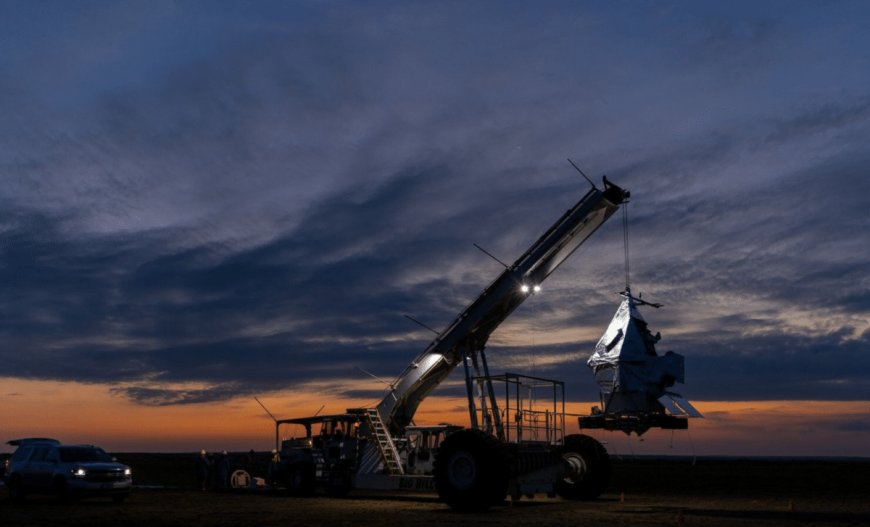
Exoplanet science has entered an exciting new phase with the development of the EXCITE mission, a groundbreaking project designed to enhance our understanding of exoplanet atmospheres. Unlike large-scale space observatories such as the James Webb Space Telescope (JWST), EXCITE offers a cost-effective alternative for gathering critical data. This mission uses a unique approach, a balloon-based telescope floating at high altitudes, to capture long-duration, high-quality observations of exoplanet atmospheres.
EXCITE: The Balloon-Based Telescope Revolutionizing Exoplanet Science
The EXCITE (EXoplanet Climate Infrared TElescope) mission is a bold, innovative step forward in exoplanet research. Unlike traditional space telescopes, EXCITE will not be confined to orbit. Instead, it will float high above Earth’s atmosphere, aboard a balloon gondola positioned at approximately 40 kilometers above the surface. This unique altitude, well above 99.5% of Earth’s atmospheric interference, provides an ideal platform for extended, uninterrupted observations. The balloon’s high-altitude vantage point allows the telescope to observe exoplanets for several days at a time, capturing crucial data that would otherwise be unavailable with limited observation windows typical of other space telescopes.
This balloon-based design offers a significant advantage over space telescopes like Hubble and JWST, which face challenges such as thermal swings or the overexposure of bright stars. By staying well above the Earth’s atmosphere, EXCITE avoids these issues and has the potential to gather data more efficiently. The mission focuses on exoplanets, particularly hot Jupiters, where high temperatures and close orbits provide ideal conditions for studying phase curves. The key innovation here is the ability to observe these phase curves over days, enabling scientists to build 3D atmospheric maps that are far more detailed than the limited snapshots from traditional transit or eclipse methods.
Understanding Phase Curves: A Window into Exoplanet Weather
One of the most important features of EXCITE is its ability to observe phase curves. Phase curves are essential for creating 3D maps of an exoplanet’s atmosphere, offering a more comprehensive look at how the planet’s temperature and atmospheric conditions vary. Accodring tot the study available on arXiv, these phase curves are particularly valuable for studying hot Jupiters, which are gas giants that orbit very close to their stars and are tidally locked, meaning one side always faces the star, and the other is perpetually in darkness.
As these planets orbit, their terminator line (the line between day and night) moves across the surface, and by tracking this movement over several days, scientists can create longitudinal weather maps of the planet. These maps can highlight the hottest spots on the planet, reveal patterns in the planet’s weather, and even provide insights into atmospheric pressure at various altitudes. By capturing light at different wavelengths, EXCITE can also measure how various gases in the planet’s atmosphere absorb light, offering a clearer picture of its composition. This level of detail is crucial for advancing our understanding of exoplanetary environments, which could have implications for the search for habitable worlds.
EXCITE’s Technological Edge: Advanced Features and Performance
EXCITE is not just a new mission; it represents a leap forward in technological innovation. The mission boasts an advanced suite of instruments, including highly sensitive infrared detectors and optics that allow for precision observation even in challenging conditions. The balloon gondola’s ability to stabilize and point with sub-arcsecond precision makes it an ideal tool for observing distant exoplanets. In particular, the cryogenic systems designed to cool the infrared detectors are crucial, as they prevent thermal noise that could otherwise distort the data.
The flight tests conducted in August 2024, over New Mexico, proved that the system is capable of achieving highly stable pointing, even in challenging conditions. While the test revealed some challenges, such as a GPS failure and mechanical issues related to the housing, the overall results were promising. Engineers are already working on resolving these issues to ensure that EXCITE will be ready for longer missions, including a planned flight over Antarctica in 2026-2027. If successful, this mission could double the current number of phase curve measurements, providing astronomers with unprecedented insights into the atmospheres of distant exoplanets.
EXCITE vs. Hubble and JWST: A New Competitor in Exoplanet Science
While JWST and Hubble have made significant contributions to exoplanet research, they each come with their own set of limitations. For instance, JWST’s PRISM mode, which could capture phase curves, is too sensitive for certain bright stars, potentially overwhelming its sensors. Meanwhile, Hubble, with its low Earth orbit, faces frequent interruptions due to thermal swings as it passes in and out of Earth’s shadow, resulting in gaps in data collection. These limitations make continuous monitoring difficult, especially when tracking long-duration phenomena like phase curves.
EXCITE’s balloon-based design allows it to stay above the atmosphere for much longer, with the ability to observe for days without interruption. This makes EXCITE an ideal candidate for the type of long-duration, high-quality observations required to map exoplanet atmospheres. Moreover, the relatively low cost of the mission compared to flagship space telescopes means that EXCITE can be deployed on a more frequent basis, allowing for continuous advancements in our understanding of exoplanet climates.
Enjoyed this article? Subscribe to our free newsletter for engaging stories, exclusive content, and the latest news.
What's Your Reaction?
 Like
0
Like
0
 Dislike
0
Dislike
0
 Love
0
Love
0
 Funny
0
Funny
0
 Angry
0
Angry
0
 Sad
0
Sad
0
 Wow
0
Wow
0