





























This $12.7 Billion Mega-Airport Could Be the Catalyst Global Aviation Has Been Waiting For

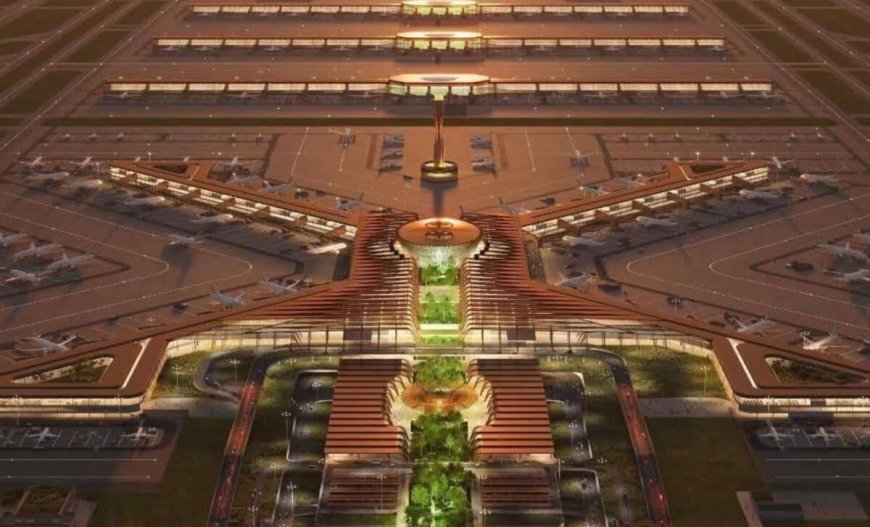
On January 10, 2026, Ethiopia laid the first stone of an airport project set to revolutionize the global aviation landscape. The future Bishoftu International Airport, designed by the renowned Zaha Hadid Architects, will become one of the largest airports in the world, with a planned capacity of 110 million passengers per year.
With an eye-popping investment of $12.7 billion, this colossal mega-hub seeks to position Ethiopia as a regional leader in aviation while offering significant economic benefits for the country. Located around 40 kilometers from the capital, Addis Ababa, it is intended to become a vital international gateway and a bridge between Africa and the rest of the world.
A One-of-a-Kind Design
The design of Bishoftu International Airport matches its ambitious goals. Created by Zaha Hadid Architects, the international gateway features an “X” shape, inspired by the African Rift Valley, a geological landmark that cuts through Ethiopia.
“Bishoftu International Airport is a visionary project for Ethiopia and Africa as a whole,” shared Cristiano Ceccato de Sabata of Zaha Hadid Architects’ aviation team. “Airports bring people together and bridge national divides. Zaha Hadid Architects is honoured to be part of its development – connecting every region of the continent as Africa’s global gateway.”
This innovative layout is meant to streamline passenger flow, with a central corridor connecting all areas to make it easier to get from one point to another.

The terminal piers will reflect Ethiopia’s diversity, with each one representing a different region of the country. Local materials like concrete and steel will be used, reducing environmental impact while also supporting local industries.
Sustainability at the Heart of the Project
One of the standout aspects of the Bishoftu project is its commitment to sustainability. The project aims to achieve LEED Gold certification, signaling its adherence to the highest environmental standards.
According to the design plans shared by Zaha Hadid Architects, the airport will feature natural ventilation, solar panels for energy production, and a rainwater collection system to make the airport as self-sufficient as possible.

On top of that, the landscaping will include drought-resistant native plants, helping to preserve local biodiversity and reduce water usage. The goal is to create an airport that’s not only modern and efficient but also environmentally responsible.
A New Economic Engine for Ethiopia
When completed, the project will be able to handle four times the capacity of Addis Ababa’s current Bole International Airport. It will also create 80,000 jobs, providing a major boost to the local economy.
“The further phase will serve up to 110 million passengers annually with four runways and parking for 270 aircraft,” announced on the Zaha Hadid Architects website.
However, the project hasn’t been without its challenges. Around 2,500 farmers had to be relocated to make room for the airport, with $350 million set aside for their resettlement.

 Ethiopia unveils design for $10 billion Bishoftu International Airport—set to become Africa’s largest aviation hub
The project integrates the country's cultural motifs, cutting-edge sustainable infrastructure, and a full urban ecosystem.
Here's a closer look at the… pic.twitter.com/70uPcT7Ilb— Sputnik Africa (@sputnik_africa) January 12, 2026
Enjoyed this article? Subscribe to our free newsletter for engaging stories, exclusive content, and the latest news.
What's Your Reaction?
 Like
0
Like
0
 Dislike
0
Dislike
0
 Love
0
Love
0
 Funny
0
Funny
0
 Angry
0
Angry
0
 Sad
0
Sad
0
 Wow
0
Wow
0