





























They uncovers a ‘Dragon Hole’ holding 1,700+ viruses frozen for 14,000 years

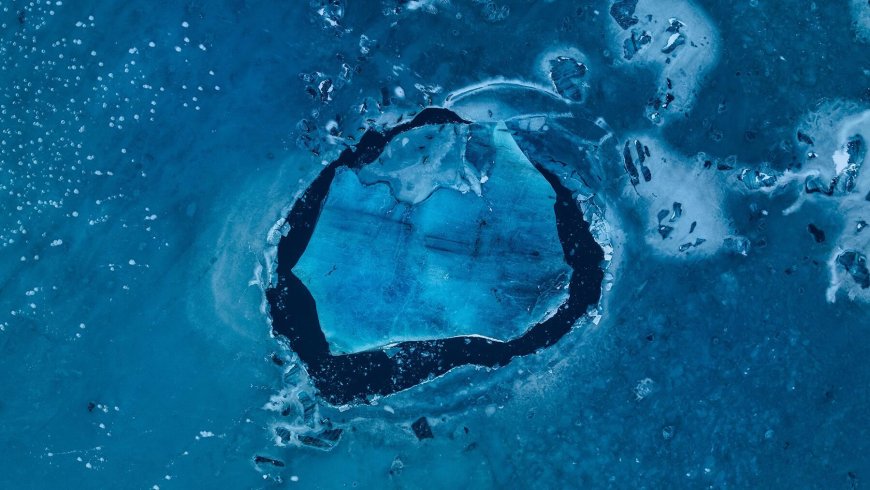
The ocean is a deep and mysterious place. Scientists believe we know more about the surface of the moon than we do about the ocean floor, and that just goes to show how in the dark we are, quite literally, about our seas. China’s Dragon Hole shows another example of this, as researchers discovered 1,700-plus viruses frozen deep in the dark ocean waters.
Why does so much of our ocean remain unexplored to this day?
There’s no denying that we are a very high-tech and advanced society. We are creating technology and tools that our ancestors could never have imagined, with developments like AI that can understand and create, labs that are growing their own meat, humanoid robots, reusable space rockets, and so much more. It seems that the focus is everywhere and anywhere, except the ocean. Why is this?
Despite the ocean being super close to home and essential to our survival, it is actually quite a difficult environment to explore. As soon as you delve even a little deeper under the surface, it soon becomes so dark, pressurized, and dangerous that people seldom reach that far. The payoffs from deep-sea research are also not nearly as quick to be seen, therefore not as desirable, as other forms of research and exploration. But this doesn’t mean it is not equally important.
Luckily, not all science is focused on space, AI, and robotics. There are ocean researchers still dedicated to this crucial environment and uncovering the wonders we still have to find. Researchers from the First Institute of Oceanography have recently undergone an expedition to a unique nd mysterious hole in the ocean, and their discoveries are nothing short of fascinating.
The mysterious Chinese Dragon Hole that lies deep within the ocean
Far out in the South China Sea, around 9 km off Drummond Island, lies a deep underwater sinkhole called the Dragon Hole, or the Sansha Yongle Blue Hole. This hole is a completely isolated and closed environment that drops almost 1,000 feet down into the ocean floor, where even sunlight and oxygen cannot reach.
No human can dive that deep in such a treacherous environment, with steep walls on all sides and no ability for life to survive… or so we thought. Although humans cannot explore the Dragon Hole themselves, our advanced technology is helping us out once again. Impressive robotic research devices are able to submerge into this famous blue hole and uncover what we cannot do ourselves.
The ocean holds many mysteries waiting to be uncovered, and this is another example of that. What was once thought of as a desolate and empty hole, void of any life, can now be properly explored and has been found to hold organisms that we did not expect. The researchers from various Chinese marine institutes have shocked the public with their findings, down in the Chinese Dragon Hole.
What have researchers discovered almost 1,000 feet deep in this blue hole?
Using advanced robotic vehicles, these researchers set out to collect water samples from the deepest parts of this hole to better understand what occurs down there. They were expecting to study the organisms down there, but ended up making completely new discoveries that no one had seen before.
While expecting limited life, they ended up finding over 1,700 viruses, most of which had never been recorded before. Luckily, these viruses don’t seem to affect humans at all, but keep the microbial life down there in check.
This discovery indicates why deep-sea research is so important in this day and age, when everyone seems to be focused on bigger and better things. Our oceans have so much more to offer than we have barely even scratched the surface of. Find out more about ocean research and why it is so important here.
What's Your Reaction?
 Like
0
Like
0
 Dislike
0
Dislike
0
 Love
0
Love
0
 Funny
0
Funny
0
 Angry
0
Angry
0
 Sad
0
Sad
0
 Wow
0
Wow
0