For years, something was missing in Panama’s forests. The silence wasn’t obvious at first, but to those who knew where to look, it was impossible to ignore. A flash of bright yellow that once stood out against the deep green jungle had vanished. Streams that once carried life now felt strangely empty. No sightings were confirmed. No familiar movement among the leaves. Just absence. And with time, that absence began to feel permanent.
A Sudden and Silent Collapse
It didn’t happen in a way that captured headlines at first. There were no dramatic images or immediate alarms for the outside world. Instead, it unfolded quietly, almost invisibly, deep within dense forests and along remote streams. One population disappeared, then another, until entire areas that once supported vibrant amphibian life were left without a trace.
For scientists on the ground, however, the pattern was unmistakable—and deeply alarming. Amphibians were declining globally. Frogs, toads and salamanders that had thrived for centuries were suddenly vanishing within a matter of years. The speed of the collapse suggested something far more aggressive than habitat loss or climate change alone.
Researchers began to piece together the timeline. In some regions, species that had been abundant one year were completely gone the next. Field surveys returned empty results. Familiar breeding sites fell silent. It was as if an unseen force was sweeping through ecosystems, erasing species before anyone fully understood what was happening.
A Hidden Enemy Spreading Everywhere
The answer, when it came, was both shocking and unsettling. The culprit was not a predator or a visible environmental disaster, but a microscopic fungus: Batrachochytrium dendrobatidis (Bd), also known as chytrid fungus.
This organism had an extraordinary ability to spread. Its spores could travel through water, linger in moist environments and even hitch a ride on animals or human activity. Once it reached an amphibian, it targeted the skin, an organ essential for breathing and survival.
The effects were devastating. The fungus disrupted the skin’s ability to function, often causing it to deteriorate. Infected animals became lethargic, disoriented and ultimately unable to survive. What made the situation even more dangerous was how quickly it moved. By the time scientists identified Bd as the cause, it had already spread across continents.
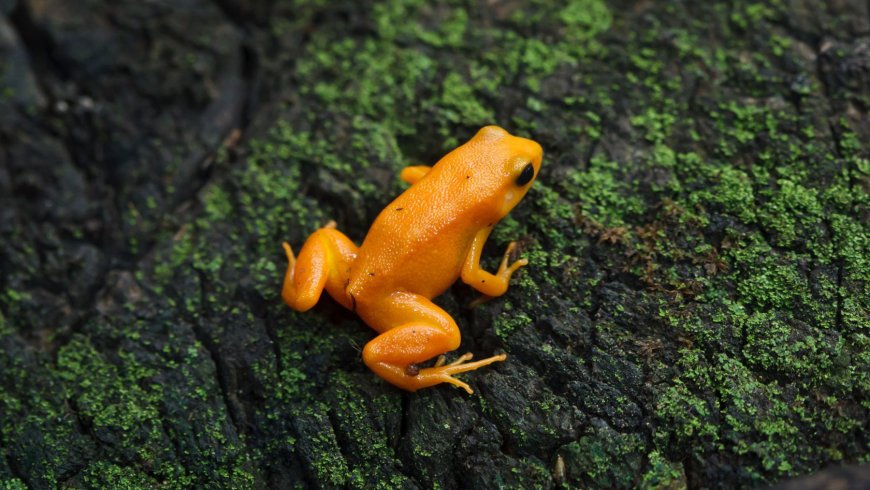
In Panama, the impact was particularly severe. Species that had once been common disappeared from the wild in a shockingly short period. Among them was one of the most iconic amphibians in the region: the Panamanian golden frog. Known for its bright color, toxicity and cultural significance, it vanished from nature by 2009.
Holding on to a Vanishing Species
Even as wild populations collapsed, some scientists refused to accept total loss. Conservationists anticipated the spread of the fungus early enough to act. Teams from institutions like the Smithsonian and partner organizations began rescuing frogs before the disease reached them.
These frogs were taken into captive breeding programs, where they could be protected from infection. It was a race against time—and for the golden frog, it worked. While it disappeared from the wild, it survived in controlled environments such as zoos and research centers.
For nearly two decades, scientists cared for these populations with a single goal: reintroduction. But one major question remained—how do you return a species to an environment where the threat still exists?
The Plan to Bring Them Back
That question led to a bold experiment. In 2025, researchers reintroduced 100 captive-bred frogs into their natural habitat under controlled conditions.
They used special enclosures called mesocosms, designed to simulate the wild while allowing close monitoring. These environments provided natural food, shelter and protection, while still exposing the frogs to real-world conditions—including the presence of the fungus.
Over a period of 12 weeks, scientists tracked survival, behavior and disease impact. The results were harsh. Around 70% of the frogs died, mostly due to chytridiomycosis.
Yet, this was not failure.
For the first time, researchers could observe the disease dynamics in a semi-natural setting. They learned how the fungus behaves, how quickly it spreads and what conditions might influence survival. Most importantly, some frogs survived.
Those survivors were later fully released into the wild—marking the first real return of the species in over a decade.
A Fragile Hope for Survival
The future remains uncertain, but there are signs of hope. Scientists are now exploring strategies such as placing frogs in warmer environments, where the fungus struggles to thrive. They are also studying species that show natural resistanceto understand possible defenses.
In other parts of the world, some amphibians are already showing adaptation to the fungus after multiple generations. If similar patterns emerge in Panama, the golden frog could slowly rebuild its population.
For now, this effort represents a crucial step forward. It is a story of extinction risk, but also of resilience, science and second chances. What once seemed like the end may now be the beginning of a long, uncertain—but possible—recovery.





























 Like
0
Like
0
 Dislike
0
Dislike
0
 Love
0
Love
0
 Funny
0
Funny
0
 Angry
0
Angry
0
 Sad
0
Sad
0
 Wow
0
Wow
0