



























The Mysterious “Portal to the Underworld” Was Discovered in Denver After Decades of Being Lost

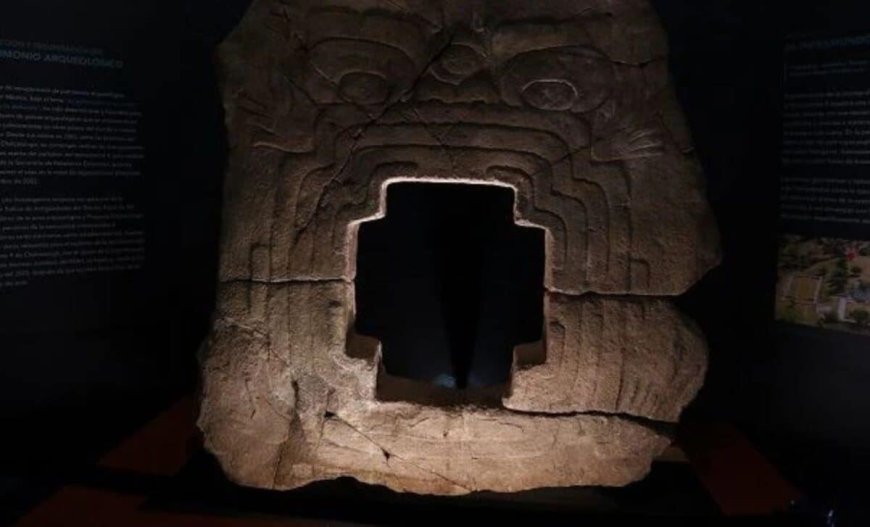
After more than a century of displacement, the priceless “Portal to the Underworld” artifact has finally made its way back to Mexico. The “Olmec Cave Mask,” a 2,700-year-old statue depicting the jaguar god Tepeyollotlicuhti, was stolen in the early 20th century and has now been restored to its rightful place.
The mask, which had been broken into pieces to facilitate its illegal journey through museums and private collections, was ultimately found in Denver, Colorado, in 2023. Thanks to the tireless efforts of international officials, including archaeologist David Grove, the artifact was returned to its rightful home after years of being lost to its cultural origins.
A Journey Across Borders
The Olmec Cave Mask was originally located in Chalcatzingo, Morelos, a region known for its rich Olmec artwork and iconography. Looters stole the “Portal to the Underworld” artifact sometime in the early 20th century, although the exact date of the theft remains unclear.

The mask, made of stone and measuring approximately six feet by five feet, depicts Tepeyollotlicuhti, the jaguar god associated with the underworld. Over the years, the artifact was smuggled between various private collections and museums around the world, passing through several hands before eventually ending up in Denver.
It was only after archaeologist David Grove, an expert on Olmec artifacts, made the critical connection that authorities began tracking down the mask’s location. According to New York District Attorney Alvin Bragg:
“This incredible, ancient piece is a rare window into the past of Olmec society,” he stated in a statement. “Representing of the passage to the afterworld, the hulking Olmec Cave Mask guarded the entrance to a ceremonial cave at the archaeological site Chalcatzingo, Mexico.”
The “Portal to the Underworld” Mask Restored
Upon its return, the Olmec Cave Mask was not in its original state. The statue had beenbroken into 25 pieces during the smuggling process, likely to make it easier to transport. Once recovered, Mexican authorities, led by the National Institute of Anthropology and History (INAH), began the delicate process of restoring the mask. As mentioned by the institute, the restoration efforts took about a year, with expertsworking on-site to reassemble the artifact and stabilize it for display.

Mario Córdova Tello, director of INAH, explained that some parts of the “Portal to the Underworld” were still original, but others had been replaced with modern materials like metal bolts and cement. These additions were deemed necessary to ensure the mask’s stability. As Castro Barrera stated in an INAH press release:
“Some elements that make it up are original, but others, such as a metal structure based on bolts, cement reinforcements and replacements of missing parts and shapes, were added to give it stability again, even though the techniques and materials were not the most appropriate.
Enjoyed this article? Subscribe to our free newsletter for engaging stories, exclusive content, and the latest news.
What's Your Reaction?
 Like
0
Like
0
 Dislike
0
Dislike
0
 Love
0
Love
0
 Funny
0
Funny
0
 Angry
0
Angry
0
 Sad
0
Sad
0
 Wow
0
Wow
0