



















The Brain Drain: Migration of Minds or Suppression of Progress?

The Brain Drain: Migration of Minds or Suppression of Progress?
Rev. Kat Carroll
For most people, the term brain drain refers to the migration of highly educated or skilled professionals, from one region or nation to another, in search of better opportunity, better pay, or a higher quality of life. It is often discussed in economic terms, as nations compete to retain their brightest minds.
But what if there is another form of brain drain—less visible, yet far more consequential?
History reminds us that suppression is not always economic or bureaucratic. At times, individuals whose discoveries or knowledge challenge powerful interests may face intimidation, attacks on reputation, financial ruin, or in some cases deaths that invite lingering questions.
Whether coincidence or by design, such events can create a climate where silence feels safer than truth—and where gifted minds may choose exile, secrecy, or withdrawal over risk.
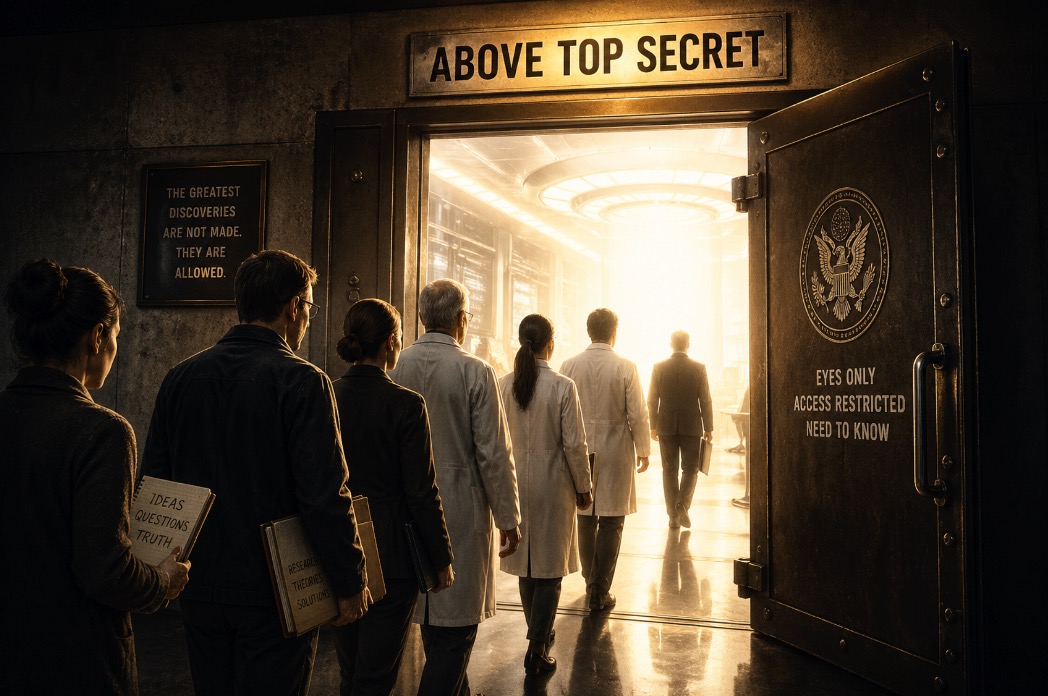
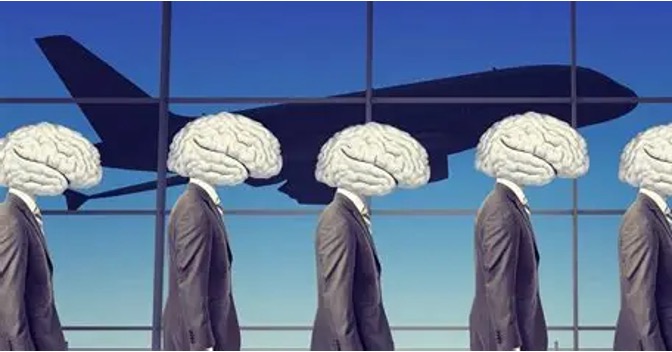 What if some of humanity’s most gifted scientists, inventors, engineers, and visionaries were not simply moving between countries, but disappearing into classified programs, private sectors, defense industries, or projects hidden from public view?
Or perhaps into protective custody.
What if some of humanity’s most gifted scientists, inventors, engineers, and visionaries were not simply moving between countries, but disappearing into classified programs, private sectors, defense industries, or projects hidden from public view?
Or perhaps into protective custody.
Beyond Borders
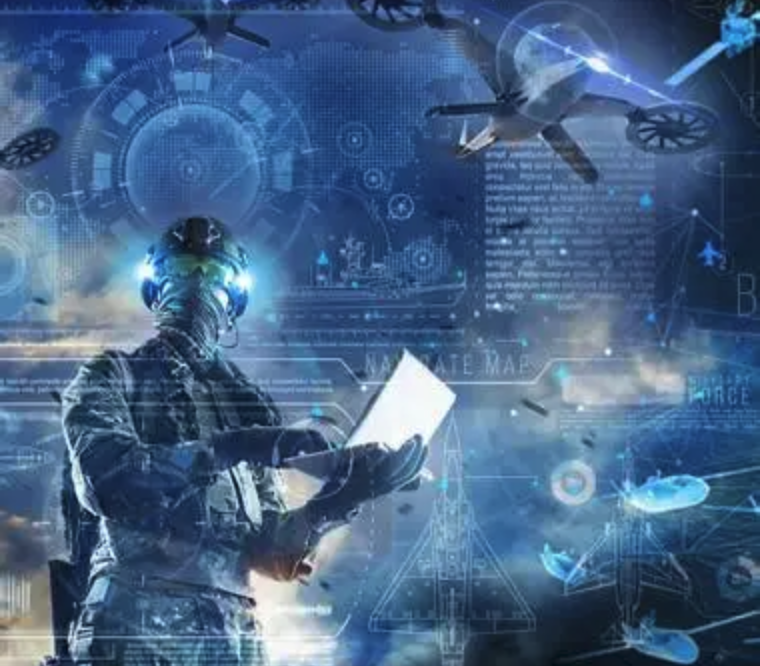 History shows that innovation often accelerates during times of war, competition, or crisis. Technologies once considered impossible suddenly become urgent. Aviation, communications, medicine, computing, and space exploration all advanced rapidly when powerful interests had reason to invest.
This raises an uncomfortable question: if extraordinary breakthroughs were possible decades ago, how much more may exist today that remains unseen by the general public?
Many researchers have long argued that certain discoveries—especially those related to energy, propulsion, surveillance, and advanced materials—have been delayed, compartmentalized, or absorbed into systems where profit and power outweigh public benefit.
The Future We Imagined
Popular culture has long reflected humanity’s sense that more is possible.
 From Star Trek in the 60s to modern science fiction, generations were inspired by visions of cleaner energy, replicator-like abundance, medical miracles, and travel beyond Earth.
Other films, such as Elysium, offered a darker warning: a future where elites live in comfort above the Earth while the struggling masses remain on a damaged world below. These stories did more than entertain; they gave form to both hope and caution about who progress may ultimately serve.
In the real world, many do struggle for basics: healthy food, clean water, affordable housing, meaningful work, and access to healthcare. The contrast is difficult to ignore.
How can a species capable of extraordinary ingenuity still fail to solve problems that seem well within reach?
Where Do the Brightest Minds Go?
Some of the world’s top talent enter aerospace, intelligence, defense contracting, private research labs, or data-driven corporations whose work is largely hidden from the public sector. That does not automatically imply wrongdoing; secrecy can serve legitimate national security purposes.
 But secrecy also creates distance between what is possible and what the public is permitted to know. Imagine the difficulty of living with family and friends while being unable to discuss your life’s work due to non-disclosure agreements.
When innovation is locked indefinitely behind patents and walls of secrecy, trust erodes. Citizens begin to wonder whether breakthroughs that could improve life, are being withheld not for safety, but for control, leverage, and/or profit.
The Cost of Hidden Progress
[caption id="attachment_108696" align="alignnone" width="1048"]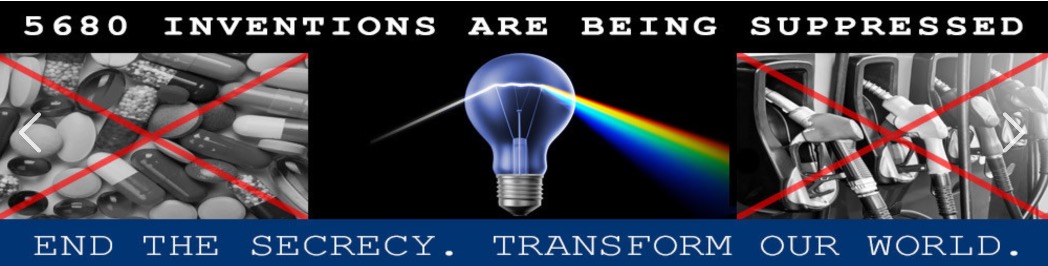 Click image to read this article[/caption]
If cleaner energy systems exist in prototype form, if medical advances are slowed by bureaucracy or incentives, if surveillance tools outpace public consent, then society pays a price measured not only in money—but in lost time, lost health, and lost human potential.
Every year a beneficial breakthrough is delayed may mean another year of unnecessary struggle for millions. And another year of lives lost due to the lack of medical intervention or environmental changes that could be healed by suppressed technology.
The greatest loss may not be the movement of talent from one nation to another. It may be the movement of talent away from the common good.
A Call for Ethical Transparency
Humanity does need protected research, responsible safeguards, and strategic confidentiality in some areas. But it also needs a serious conversation about when secrecy serves the people—and when it serves only institutions.
Progress should not become a private luxury.
If our brightest minds are helping build the future, then the public deserves to know enough to participate in shaping it.
Because when truth is buried, we do not only lose information. We lose years. We lose trust. And sometimes, we lose the future that might already exist, out of sight or beyond access by the public.
Echoes in the Present
Recent events have once again stirred public concern about how information is controlled, who gets silenced, and what truths may be delayed.
The reported death of researcher David Wilcock, long associated with disclosure themes, has prompted questions among followers and critics alike.
[caption id="attachment_108699" align="aligncenter" width="500"] David Wilcock and Wynn Free[/caption]
Interest deepened when reports also surfaced regarding the death of Wynn Free, a writer and collaborator who co-authored The Reincarnation of Edgar Cayce: Interdimensional Communication and Global Transformation with Wilcock. Dates and details surrounding Free’s passing have been disputed, and the circumstances remain publicly unclear.
I strongly suggest you listen to the video of David Wilcock talking on the subjects in this very article—12 years earlier. (Link in the resource list below)
Whether every claim proves true or not, the response itself reveals something important: a deep mistrust of official narratives and a growing sense that significant truths are often hidden behind layers of confusion.
Another Assassination Attempt?
Security concerns and disruption surrounding the White House Correspondents' Dinner (Saturday evening, April 25) have fueled speculation about what messages, policies, or disclosures may provoke resistance in today’s climate. This event came shortly after Donald Trump publicly called for the review and release of classified information related to UFOs, UAPs, extraterrestrial claims, and exotic technologies long rumored to exist beyond public reach or scrutiny.
[caption id="attachment_108700" align="alignnone" width="902"] Image courtesy of the Online Kenyon[/caption]
If such subjects were to be addressed before a room of nearly 2,000 attendees, many from the national press, some observers believe powerful interests may have preferred silence—or at least delay. When public trust is low, every interruption can take on larger meaning... Perhaps drawing more attention to what could have been shared in front of so many media personalities. My curiosity is certainly piqued! But other questions arise. Even if the shooter was staying at the hotel where the dinner was taking place, how could all the weapons mentioned have gotten past security check points, including a rifle, in the days before? It’s not up to me to convince readers in one direction or another—only to ask questions that make them think deeper.
Some say this 4th assassination attempt was scripted, and a hoax, while others do not. I, for one, am quite curious to listen to what Trump might have said, or will say, in the next 30 days once the event is rescheduled. What we hear and see from Media, needs to be carefully scrutinized. Propaganda and deliberate lies are generally allowed in U.S. public news due to First Amendment protections, which prohibit the government from censoring speech or acting as the arbiter of opinion.
That's a double-edged sword that can be used for good or ill. And perhaps that is the real issue of our time. Who and what can we trust?
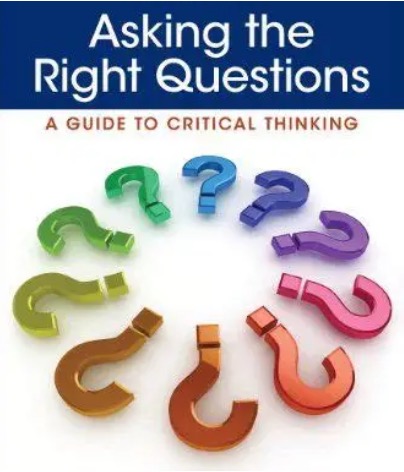 When confidence in institutions erodes, every silence becomes suspicious, every missing voice invites questions, and every unexplained delay feels like one more chapter in a story the public was never meant to read.
The antidote is not fear.
It's transparency, discernment, and the courage ask questions... Lots of questions!

Further Research: The Great American Brain Drain: US Left in the Dust as Top Scientists Flock to China https://www.timesnownews.com/technology-science/the-great-american-brain-drain-us-left-in-the-dust-as-top-scientists-flock-to-china-article-99908278 Brain drain or brain gain? Effects of high-skilled international emigration on origin countries https://www.science.org/doi/10.1126/science.adr8861 Understanding Brain Drain: Causes, Effects, and Global Examples https://www.investopedia.com/terms/b/brain_drain.asp Here is that interesting talk with David Wilcock from 12 years ago, discussing then, what is happening now: David Wilcock: The Synchronicity Key, Sacred Science of Time Cycles YouTube Video: https://www.youtube.com/watch?v=F0xwWesxI4A Audio Book intro – 4 chapters: https://www.youtube.com/watch?v=dENRB-0SQyM
What We Know About the Suspect in the White House Correspondents' Dinner Shooting https://time.com/article/2026/04/25/trump-rushed-off-stage-after-shots-fired-at-white-house-correspondents-dinner/
Mystery of the 12 missing or dead scientists as investigation launched
What's Your Reaction?
 Like
0
Like
0
 Dislike
0
Dislike
0
 Love
0
Love
0
 Funny
0
Funny
0
 Angry
0
Angry
0
 Sad
0
Sad
0
 Wow
0
Wow
0