





















A Massive Fracture Is Splitting Africa Apart: Scientists Just Found the Critical Breaking Point


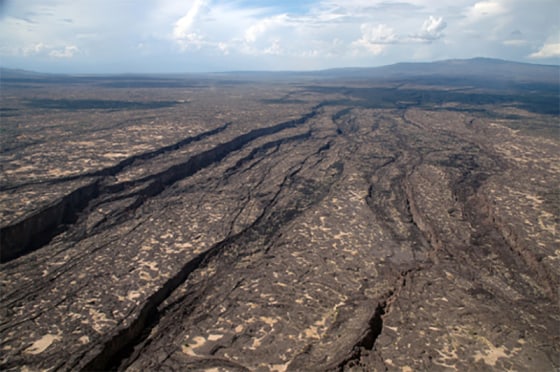
Scientists have confirmed that a geological fracture running through East Africa has reached the point of no return. A study published April 23, 2026, in Nature Communications by researchers at Columbia University’s Lamont-Doherty Earth Observatory found that the crust beneath the Turkana Rift in Kenya and Ethiopia has thinned past the threshold at which continents begin to irreversibly break apart, a stage never before caught in an active rift anywhere on Earth.
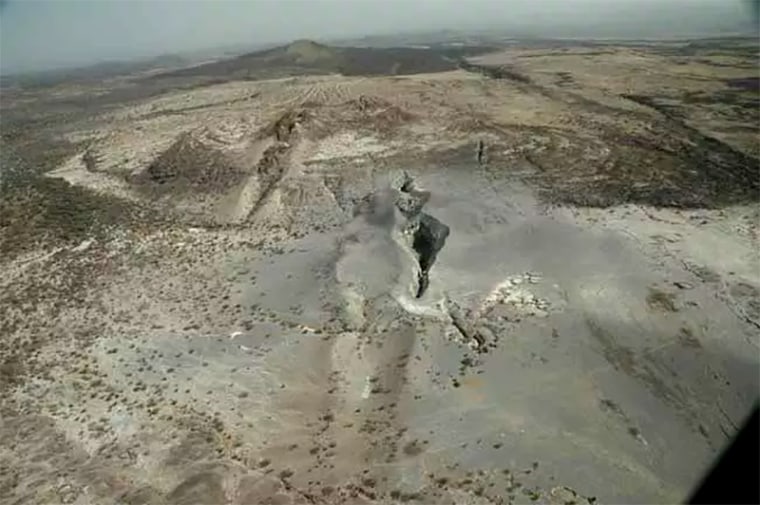
The Turkana Rift is a roughly 500-kilometer-wide depression straddling Kenya and Ethiopia, part of the East African Rift System that stretches more than 3,000 kilometers from the Afar Depression to Mozambique. At its center, the continental crust has thinned from more than 35 kilometers at the flanks to just 12.7 kilometers along the axis. That level of thinning puts the Turkana Rift in a category scientists call “necking,” the stage just before a continent fractures completely and ocean water begins to fill the gap.
The Stage Nobody Had Seen Before
Continental breakup moves through three phases. In the first, called stretching, tectonic strain spreads across a broad zone of faults with only modest crustal thinning. In the second, necking, deformation locks onto the rift axis and the crust thins sharply, growing weaker as it narrows. In the third, oceanization, magma pushes through the fractures and new seafloor forms.
Until this study, no active rift on Earth had been confirmed in the necking phase. Scientists had studied it only in ancient, frozen geology, the remains of rifts that had already completed breakup and gone cold. The Turkana Rift is the first place where necking can be measured as it happens.
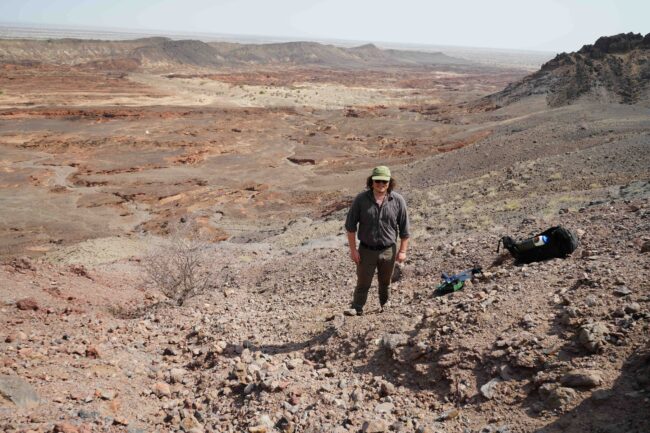
“We found that rifting in this zone is more advanced, and the crust is thinner, than anyone had recognized,” said Christian M. Rowan, a PhD student in Earth and Environmental Sciences at Lamont-Doherty and the study’s lead author. Anne Bécel, a Lamont-Doherty geophysicist and co-author, was more direct: “We’ve reached that critical threshold of crustal breakdown. We think this is why it is more prone to separate.”
Two Rifting Episodes, One Weakened Crust
The Turkana Rift did not reach this stage through a single, continuous process. The region was stretched twice, by two separate rift systems running in different directions. The older Central African Rift System pulled the crust northwest to southeast from the Mesozoic into the early Cenozoic. Then the East African Rift System began pulling it north to south roughly 40 to 45 million years ago.
What made the difference was timing. Less than 17 million years separated the end of the first episode from the start of the second, too short an interval for what geologists call lithospheric healing, the slow process by which crust restiffens after being stretched and heated. The second round of rifting hit crust that had never fully recovered, and intense volcanism compounded the weakening.
As Columbia Climate School reported, this stacked history sets the Turkana Rift apart from other segments of the East African Rift System, where the crust still exceeds 25 kilometers in thickness and remains in the early stretching phase. The Turkana Rift ran ahead of the rest of the system not because forces there are stronger, but because the ground was already compromised.
The Moment the Shift Began
The researchers traced the transition from stretching to necking to approximately 4 million years ago. The timing lines up with widespread eruptions of the Gombe basalts and a change in the chemistry of magma rising from below. Plume-derived rock gave way to material produced by decompression melting, what happens when crust thins enough that the pressure holding molten rock down begins to ease.
Since that shift, extension rates along the rift axis have nearly doubled. The Shore Fault System, the primary fault structure at the rift’s center, now accommodates extension at roughly 1.2 millimeters per year. Earthquake data show that deformation has tightened onto the necked zone, while the flanking regions have quieted.
The team’s findings came from seismic reflection data collected with oil industry partners in Kenya, combined with borehole records from the Turkana Basin Institute, founded by the late paleoanthropologist Richard Leakey. By analyzing how sound waves bounced off underground layers, the researchers mapped crustal depth across the rift at a resolution no previous survey had reached.
A New Explanation for Africa’s Fossil Trove
The Turkana Rift has yielded more than 1,200 hominin fossils covering the past 4 million years, roughly one third of all such finds across Africa. The region has long been treated as a cradle of human evolution, a place where our ancestors concentrated and diversified. The new study suggests the geology deserves more credit than the biology.
Before necking began, the rift held a patchwork of small, isolated sedimentary basins that filled slowly and inconsistently. When necking took hold around 4 million years ago, the land sank, the basins merged, and sediment began piling up at a much faster rate. Fast sediment accumulation is what buries and preserves bone. “The conditions were right to preserve a continuous fossil record,” Rowan said.
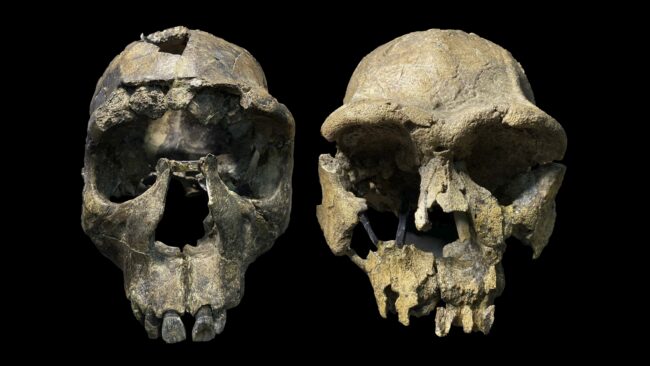
The implication is pointed. The Turkana Rift may not be where human ancestors preferentially lived. It may simply be where tectonic forces created the right conditions to save the evidence at the right time.
What the Finding Opens Up
Full separation between the African and Somali plates remains millions of years away. Researchers estimate oceanization, the phase when magma forms new seafloor and ocean water floods in from the north, will not begin for several million more years.
The immediate value is scientific. Co-author Folarin Kolawole, also of Lamont-Doherty, put it plainly: “In essence, we now have a front row seat to observe a critical rifting phase that had fundamentally shaped all rifted margins across the world.”
Every major ocean basin on Earth passed through a necking phase before it opened. The Turkana Rift is the only place where that process can now be studied live, with instruments in the ground and satellites overhead.
Enjoyed this article? Subscribe to our free newsletter for engaging stories, exclusive content, and the latest news.
What's Your Reaction?
 Like
0
Like
0
 Dislike
0
Dislike
0
 Love
0
Love
0
 Funny
0
Funny
0
 Angry
0
Angry
0
 Sad
0
Sad
0
 Wow
0
Wow
0