























Scientists Pulled a 3-Million-Year-Old Climate Mystery Out of Antarctic Ice, and It Looks All Wrong


Air bubbles trapped in Antarctic ice for 3 million years have given scientists their first direct look at Earth’s ancient atmosphere, and the findings challenge a long-held assumption. While the planet cooled substantially during this stretch, greenhouse gas levels barely budged, according to two studies published in the journal Nature.
The analysis comes from the U.S. National Science Foundation’s Center for Oldest Ice Exploration, known as COLDEX. Researchers found that atmospheric carbon dioxide sat at roughly 250 parts per million about 2.7 million years ago and slipped only modestly over the next million years. Against that backdrop of stable gases, average ocean temperatures fell by up to 2.5 degrees Celsius and enormous ice sheets took hold across the Northern Hemisphere.

“These longer records are also now raising new questions about Earth’s climate evolution and how far back in time we might be able to go with ice core data,” said Ed Brook, COLDEX director and a paleoclimatologist at Oregon State University’s College of Earth, Ocean, and Atmospheric Sciences.
Why Researchers Hunted for the Planet’s Oldest Ice
Scientists have understood for more than a century that Earth was far warmer roughly 3 million years ago, during a stretch known as the late Pliocene. Fossils of temperate forests in Alaska and Greenland, plus ancient shorelines traced from Georgia to Virginia, point to a time when sea levels sat dramatically higher than today. What remained murky was why that warmth gave way to a colder world. Continuous ice core records previously reached back only about 800,000 years, leaving a gap in direct measurements.
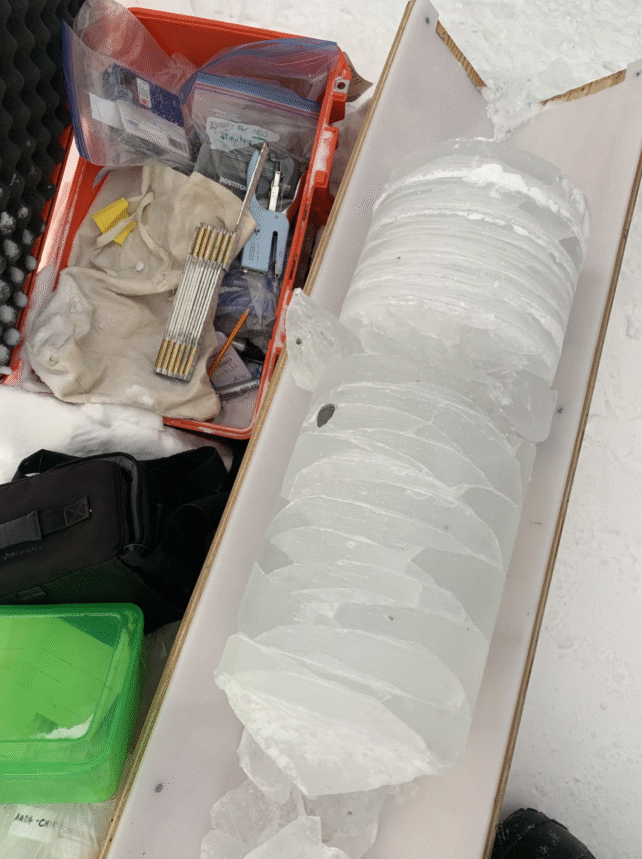
The COLDEX team focused on the Allan Hills, a wind-scoured patch at the edge of the East Antarctic ice sheet where glacial movement has shoved ancient ice toward the surface, as Oregon State University detailed in its announcement of the findings.

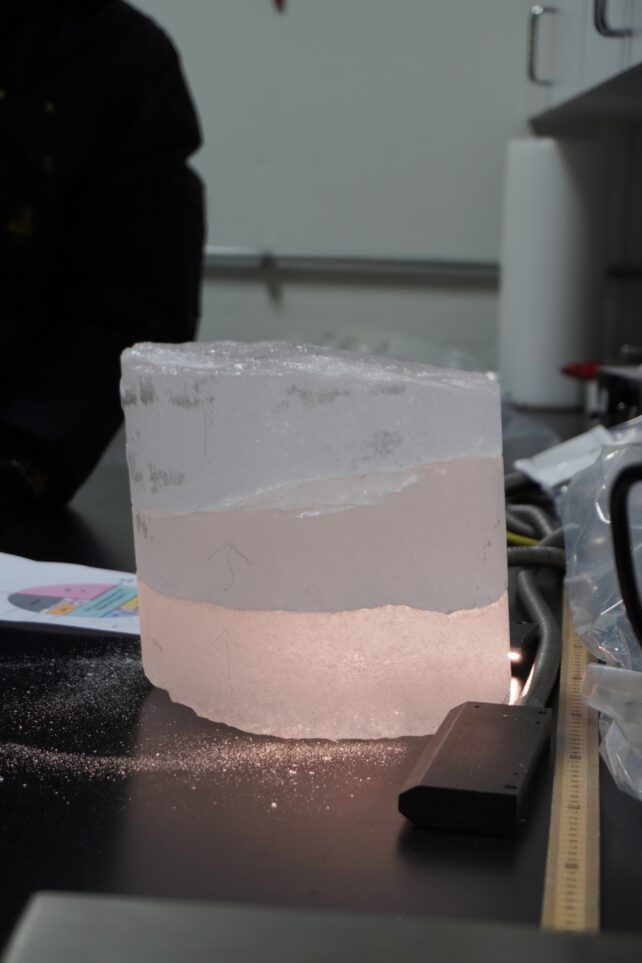
In this blue ice area, the usual layered chronology is scrambled. Instead of a neat timeline, scientists recover snapshots of climate conditions from scattered points in the past. The two Nature studies draw on those snapshots to push direct records deeper than ever before.
What the Trapped Air Revealed About the Ancient Atmosphere
Julia Marks-Peterson, a doctoral student at Oregon State University, led the effort to extract the first direct measurements of carbon dioxide and methane spanning 3 million years. Her team found that atmospheric CO₂ stayed below 300 parts per million throughout the period. Around 2.7 million years ago, levels registered near 250 parts per million, then declined by roughly 20 parts per million by 1 million years ago. Methane held steady at about 500 parts per billion.
Those numbers land well under some earlier estimates based on indirect sediment methods, which had placed Pliocene CO₂ closer to 400 parts per million. The deformed ice that holds these gases compresses long stretches of time, so the readings likely represent averages across glacial cycles, a complication the researchers acknowledge. Still, the direct measurements offer a clearer picture of the ancient atmosphere than proxies alone can provide, according to the team’s paper published in Nature.
By comparison, the National Oceanic and Atmospheric Administration reported that carbon dioxide averaged 425 parts per million in 2025. Methane reached 1,935 parts per billion during the same year.
Ocean Temperatures Fell While Greenhouse Gases Barely Moved
The second study, led by Sarah Shackleton during her postdoctoral work at Princeton University and now a professor at Woods Hole Oceanographic Institution, turned to noble gases trapped in the same ice to estimate global ocean temperatures. Xenon and krypton dissolve in seawater at rates tied to temperature, giving researchers a worldwide signal rather than a single location’s reading.
“The noble gases in ice provide a unique way to look at ocean temperature change,” Shackleton said. “Other methods can give you information about ocean temperature at a single site, but this gives a more global view.”

Her team’s reconstruction found that ocean temperatures dropped 2 to 2.5 degrees Celsius over the past 3 million years. Deep ocean cooling kicked in early, around 3 million years ago, and persisted for roughly a million years, lining up with the expansion of Northern Hemisphere ice sheets. Surface temperatures declined more slowly, lagging until about 1 million years ago. That mismatch implies that ocean circulation and the movement of heat between surface and deep waters played a sizable role separate from greenhouse gas concentrations.
The Climate Had Other Drivers Before Humans Arrived
Stable greenhouse gases paired with clear global cooling point to forces beyond carbon dioxide and methane. Shifts in Earth’s albedo, essentially how much sunlight the planet reflects, likely intensified as ice sheets spread and vegetation patterns changed. The decoupling of surface and deep ocean temperatures further suggests that changes in heat transport through the oceans carried real weight in reshaping the climate.
These findings add texture to modern climate change research. They do not diminish the dominant role of greenhouse gases in today’s rapid warming, but they reveal that natural mechanisms have, over geologic time, been powerful enough to cool an entire planet even when gas levels held steady.
ScienceAlert covered the research and noted that the work suggests ice-sheet growth and survival may have been exquisitely sensitive to minuscule changes in carbon dioxide, or that past climate shifts were driven by something else entirely. “Our hope is that this work will refine our view of past warmer climates and sharpen our understanding of how different elements of the Earth system interact,” Marks-Peterson said.
The Search Pushes Toward 6-Million-Year-Old Ice
COLDEX researchers have already spotted ice at the base of one core that may date back 6 million years, and new drilling campaigns are underway. Teams are sharpening techniques for reconstructing carbon dioxide and studying how the oldest ice survives burial and deformation. The group is now analyzing these older samples while working to identify new drilling sites that could expand the record further.
Extending the record further would open a window into periods even warmer than the Pliocene, offering a sharper test of how Earth’s machinery responds to heat. The National Science Foundation’s Office of Polar Programs supports the work, which draws on a national network of universities and research institutions.
The Allan Hills ice cores have already reset the timeline of direct climate measurement, and the deeper layers now under analysis could push that boundary back toward the Miocene.
Enjoyed this article? Subscribe to our free newsletter for engaging stories, exclusive content, and the latest news.
What's Your Reaction?
 Like
0
Like
0
 Dislike
0
Dislike
0
 Love
0
Love
0
 Funny
0
Funny
0
 Angry
0
Angry
0
 Sad
0
Sad
0
 Wow
0
Wow
0