



























Some violent stars are so dangerous they could wipe out life on a planet, and now NASA is sending a cube-shaped spacecraft to investigate

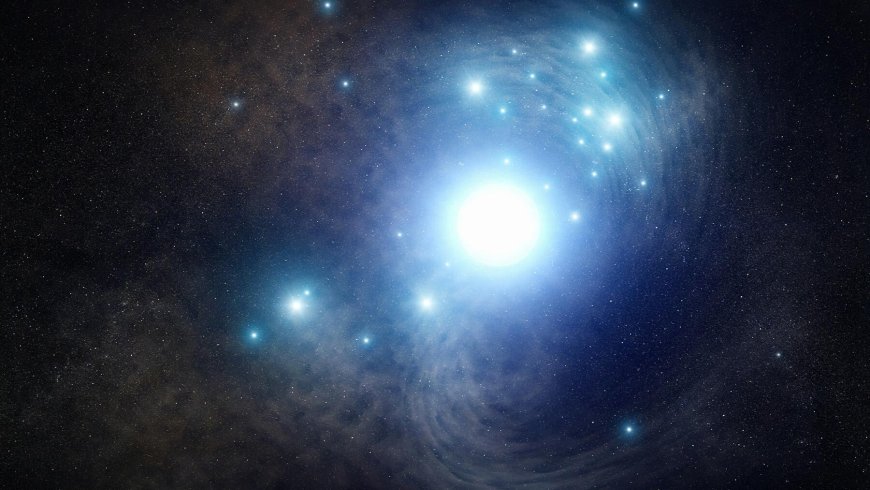
2026 has so far been a landmark year for space exploration and study.
We have launched the Artemis II mission to return to the Moon after nearly 50 years. And NASA has also recently sent a cube-shaped craft to investigate how some stars may be capable of destroying life on a planet.
How can the violence in space be explained over the coming years as science and technology advance?
How we have come to understand how violent space can be
Through decades of astronomical discoveries, we have come to understand just how violent the universe is and can be.
Our very own solar system was born from violent interstellar cosmic collisions in a chaotic process that has shaped the worlds in the Milky Way into what we see today.
We have also learnt that both the birth and death of stars are extremely violent.
Such as the discovery that stars don’t just fade away from existence, they disappear in violent supernova explosions. Much closer to home, we know that our star sends constant, violent solar winds to Earth; thankfully, the Earth’s magnetic field prevents the worst of this from harming the planet.
The world has entered a new era of space study and exploration this year
2026 will go down in history as one of the most significant years regarding our ambition to study and explore space.
The Artemis II Moon mission recently launched with no major issues following years of planning and development. It faced a tricky road to get to the launch pad as delays in February pushed the launch date back to April.
But NASA took steps to accelerate the date of the launch and reduce the risks of more delays.
This year also saw the launch of the SMILE project, led by the European Space Agency and the Chinese Academy of Sciences. It is hoping to capture the very first image in history of how the Earth’s magnetic field shields us from solar winds from the Sun.
Studying space has become a family affair, as even amateur citizen scientists are turning their attention to the skies above us.
A father-daughter team recently deciphered a strange magnetic signal from Mars that baffled even the best and brightest around the world. NASA has recently sent a cereal-box-sized spacecraft into space to understand the violent and potentially world-ending events in deep space.
NASA has sent a cube-shaped spacecraft to investigate violent stars in the cosmos
NASA has been making astonishing findings by studying deep space in recent months and years.
Such as a new lemon-shaped planet whose atmosphere is so densely packed with carbon that it is producing diamonds. The iconic space exploration agency has recently been enamored by violent stellar events in some stars in the universe and sent a cereal-box-sized craft to investigate.
Many of us have a faint idea of how these exceedingly violent stellar events play out, thanks to the never-ending wave of films and TV shows about space.
NASA recently launched the Star-Planet Activity Research CubeSat, or SPARCS

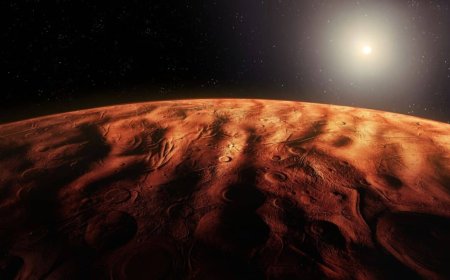
The SPARCS mission is to study ultraviolet flares from supernovae that may be so violent that they actually destroy the atmospheres of nearby planets altogether.
This leaves zero chance for any form of life to survive. NASA recently got its very first light from SPARCS, proving that the spacecraft’s instruments are operational and can monitor these violent space events in deep space.
So while most of the world has focused on Artemis II, NASA still has a lot of work to do that will better explain how and why these space events take place.
What's Your Reaction?
 Like
0
Like
0
 Dislike
0
Dislike
0
 Love
0
Love
0
 Funny
0
Funny
0
 Angry
0
Angry
0
 Sad
0
Sad
0
 Wow
0
Wow
0