



























Scientists warn the Himalayan mountains are “changing” faster than anyone expected as winter leaves them bare and rocky instead of snow-covered

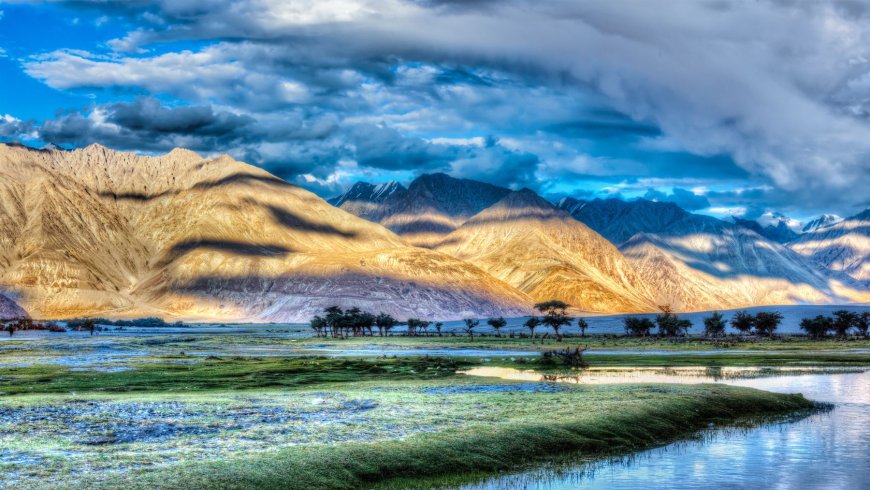
Scientists warn the mountains are changing faster than anyone expected as winter leaves the Himalayas bare and rocky instead of snow-covered
From a distance, the Himalayas still look eternal. The ridgelines cut sharply into the sky. The air feels thin and cold. Winter has arrived on the calendar. But across large stretches of the region, something is missing. The glow that usually defines the season is fading. In place of bright slopes, darker rock is pushing through — a sign of a winter without its white coat.
A winter that feels unfinished
For decades, winter followed a pattern here. Storm systems rolled in. Snow built up across high elevations. The mountains stored that frozen reserve, slowly preparing for spring. That rhythm now appears weaker, as meteorologists point to a steady decline in winter precipitation levels.
Most winters in the last five years have seen a drop compared to the average between 1980 and 2020. In December, the Indian Meteorological Department recorded no precipitation — rainfall or snowfall — in almost all of northern India, marking a month without rain or snow.
Between January and March, many parts of northwest India — including Uttarakhand, Himachal Pradesh, and the federally administered territories of Jammu and Kashmir and Ladakh — are expected to receive 86% less rainfall and snowfall than the long period average, a shortfall described as 86% below normal.
Snow that falls and fades
Even when snow arrives, it often disappears quickly. Rising temperatures mean that what little snow falls melts fast, and lower-elevation areas are seeing more rain instead of snow — a shift linked in part to global warming and warming winter temperatures.
Scientists measure how long snow remains on the ground using a concept called snow persistence. The winter of 2024–2025 recorded a 23-year record low, nearly 24% below-normal snow persistence in the Hindu Kush Himalaya region, reflecting a record low snow persistence.
At elevations between 3,000 and 6,000 metres, researchers say the region is increasingly experiencing snow droughts — winters when snow becomes significantly scarce — pointing to growing snow drought conditions.
The reveal on the mountainsides
All of this leads to a visible change. Much less winter snow is falling on the Himalayas, leaving mountains bare and rocky in a season when they should be snow-clad — a transformation now evident in exposed rock where snow once lay.
Scientists say multiple datasets confirm that winter precipitation in the western and parts of the central Himalayas is decreasing. At the same time, glaciers in the region are already melting at an accelerated rate due to global warming, creating what experts describe as double pressure on the mountains.
Why the impact reaches far beyond the peaks
Snow in the Himalayas is not just scenery; it acts as storage. As temperatures rise in spring, accumulated winter snow melts and feeds river systems that support drinking water, irrigation and hydropower — contributing about a fourth of the total annual runoff of 12 major river basins and shaping water supplies for nearly two billion people.
Less winter precipitation also increases the risk of forest fires because of dry conditions. Vanishing glaciers and declining snowfall destabilise slopes as ice and snow — which act like cement — diminish, contributing to more frequent rockfalls, landslides, glacial lake bursts and debris flows linked to weakening mountain stability.
Most meteorologists point to weakening westerly disturbances — low-pressure systems from the Mediterranean that historically brought winter rain and snow — as a key reason. Some evidence suggests they are becoming weaker and possibly tracking further northward, reducing their ability to draw moisture from the Arabian Sea, a pattern described by India’s weather department this season as a “feeble” winter disturbance.
Scientists continue to examine the details behind the shift. But across high ridges and valleys, the outcome is already visible: the Himalayas are still rising into the sky, yet more of them are standing without snow.
For full reporting and scientific detail, see the original BBC coverage.
What's Your Reaction?
 Like
0
Like
0
 Dislike
0
Dislike
0
 Love
0
Love
0
 Funny
0
Funny
0
 Angry
0
Angry
0
 Sad
0
Sad
0
 Wow
0
Wow
0