





























Scientists Thought They Were Ordinary Bones, But They Turned Out to Be 12,000-Year-Old Dice

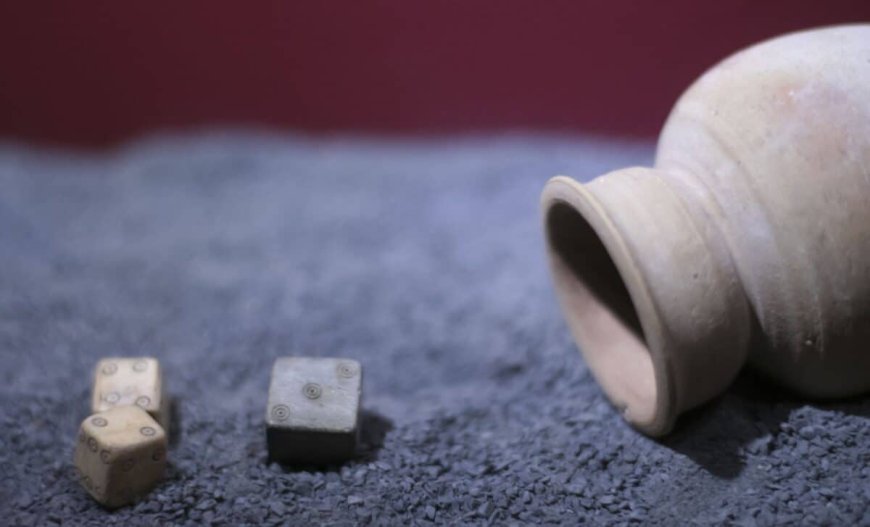
Long before casinos or even written numbers, people in North America were already playing games of chance. A study published in American Antiquity reveals that Native American hunter-gatherers were using bone dice more than 12,000 years ago.
At first glance, these discoveries from the Great Plains seem to simply push back the origins of gambling. But they also begin to unsettle a much deeper assumption about where and when humans first learned to work with chance.
The research, led by Robert J. Madden of Colorado State University, focuses on artifacts dating to the end of the last Ice Age. The paper reported that these objects are thousands of years older than similar items found in Bronze Age Eurasia.
Simple Dice, But Clearly Intentional
The oldest pieces date between 12,800 and 12,200 years ago, found in Wyoming, Colorado, and New Mexico. Based on the findings published by American Antiquity, these were not cube-shaped dice but small two-sided bone objects, often called “binary lots.”
Each piece had two different faces, sometimes marked by color or texture, so when thrown, they produced a yes-or-no type result, similar to flipping a coin. People would toss several at once and count how many landed on a specific side. Robert J. Madden pointed out that these objects were not random scraps.
“They’re simple, elegant tools,” Madden explained. “But they’re also unmistakably purposeful. These are not casual byproducts of bone working. They were made to generate random outcomes.”

A Method That Changes How Artifacts Are Identified
One reason these dice went unnoticed for so long is that archaeologists did not always have a clear way to identify them. The study introduced an attribute-based morphological test, built from a dataset of 293 historic Native American dice sets recorded by Stewart Culin in 1907.
According to Madden’s research, applying this method helped reclassify many artifacts that had been sitting in collections for decades. In total, more than 600 likely or confirmed dice were identified.
Some of these pieces came from institutions like the Smithsonian Institution and the Denver Museum of Nature and Science. The evidence was already there but had not been connected within a consistent framework.

A Practice Rooted in Generations
The study also showed how widespread these practices were. Dice have been found at 57 archaeological sites across a 12-state region, covering several cultural periods from the Paleoindian era onward. In Madden’s view, these games were not just for entertainment. They created “neutral, rule-governed spaces.” He added that games like these:
” they allowed people from different groups to interact, exchange goods and information, form alliances, and manage uncertainty. In that sense, they functioned as powerful social technologies.”
This suggested that gambling had a broader role in early societies. It helped structure interactions and manage uncertainty, long before any formal theory of probability existed.
Enjoyed this article? Subscribe to our free newsletter for engaging stories, exclusive content, and the latest news.
What's Your Reaction?
 Like
0
Like
0
 Dislike
0
Dislike
0
 Love
0
Love
0
 Funny
0
Funny
0
 Angry
0
Angry
0
 Sad
0
Sad
0
 Wow
0
Wow
0