























Scientists May Have Identified the Mechanism Beneath Africa That Could Split the Continent in Two

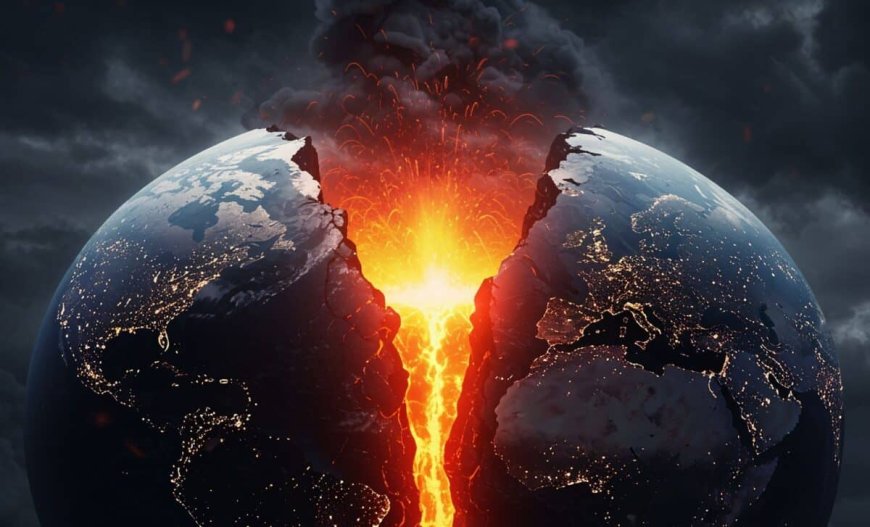
Deep under Ethiopia, scientists have found rhythmic surges of molten rock that are slowly pulling Africa apart. These pulses rise from the mantle beneath the Afar region and are tied to the first steps of a new ocean forming.
The Afar region has long stood out to geologists. It is where three major rifts meet, the Main Ethiopian Rift, the Red Sea Rift, and the Gulf of Aden Rift, making it one of the most active places on the planet. The ground there is gradually opening as tectonic plates move apart.
According to a study published in Nature Geoscience by a team led by the University of Southampton, the forces behind this process are not steady. Instead, molten rock from deep inside the Earth rises in pulses, changing how scientists understand what is happening beneath the surface.
A Mantle Plume That Pulses In Waves
Beneath Afar sits a vast plume of superheated mantle rock. What surprised researchers is that it does not rise in a constant flow. It comes up in bursts, almost like a slow heartbeat. As Dr. Emma Watts stated, the mantle here is “not uniform or stationary,” and each surge carries its own chemical signature. She added that:
“These ascending pulses of partially molten mantle are channelled by the rifting plates above. That’s important for how we think about the interaction between Earth’s interior and its surface.”
This connection between deep Earth movement and surface activity shows that the mantle reacts to what happens above, rather than acting alone.

Chemical “Barcodes” Hidden in Volcanic Rocks
To understand this system, scientists analyzed more than 130 volcanic rock samples collected across the African region. Inside them, they found repeating chemical patterns described as chemical barcodes.
As explained in the study, these patterns track each pulse of mantle material over time. They also vary depending on local conditions such as plate thickness and spreading speed. In faster areas like the Red Sea Rift, the pulses move more regularly.

Professor Tom Gernon compared this to flow through a narrow space, where movement becomes more focused. This helps explain why volcanic activity is concentrated in certain parts of the rift.
Africa Slowly Splitting Apart
These deep processes are visible at the surface. Tectonic plates in Afar are pulling away from each other, stretching the crust until it thins and fractures.
Dr. Derek Keir noted that the mantle flows can move beneath tectonic plates and concentrate volcanic activity where the crust is weakest. This is why the Africa region experiences both volcanic eruptions and earthquakes linked to the same underlying process.
“The work shows that deep mantle upwellings can flow beneath the base of tectonic plates and help to focus volcanic activity to where the tectonic plate is thinnest. Follow-on research includes understanding how and at what rate mantle flow occurs beneath plates,” he concluded.
Enjoyed this article? Subscribe to our free newsletter for engaging stories, exclusive content, and the latest news.
What's Your Reaction?
 Like
0
Like
0
 Dislike
0
Dislike
0
 Love
0
Love
0
 Funny
0
Funny
0
 Angry
0
Angry
0
 Sad
0
Sad
0
 Wow
0
Wow
0