




























Scientists Just Found Hidden Oxygen in Lunar Rocks, Suggesting the Moon Formed Differently Than Expected

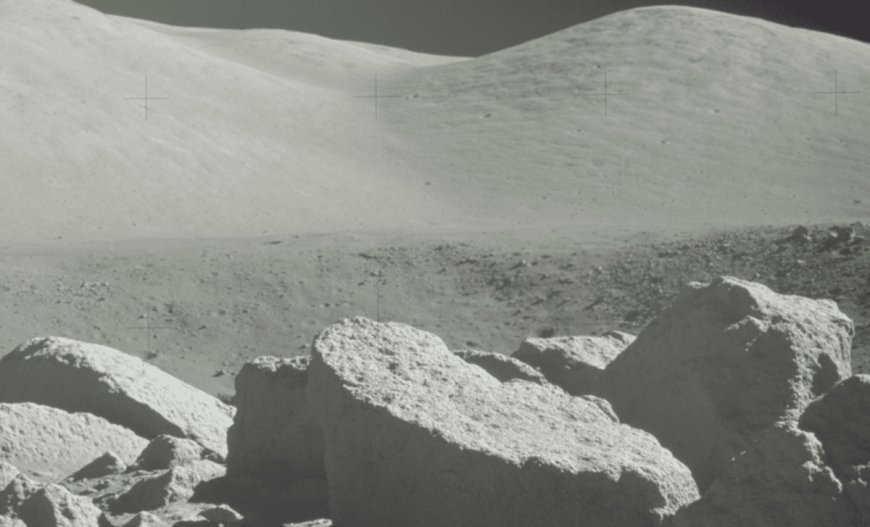
A subtle chemical trace locked inside ancient lunar samples is reshaping how scientists understand the Moon’s earliest history, pointing to the unexpected presence of oxygen during its formation. Drawing on recent research discussed by The Conversation, the finding challenges long-held assumptions about the Moon’s environment and opens new questions about how Earth and its satellite evolved together.
A Chemical Clue Hidden Inside Apollo-Era Samples
Scientists analyzing lunar rocks brought back by NASA’s Apollo missions have uncovered a chemical signature that should not be there under traditional models of Moon formation. These samples, preserved for decades and reexamined with modern techniques, contain isotopic patterns suggesting that oxygen was present in measurable amounts during a phase when the Moon was believed to be largely depleted of it. The key lies in subtle variations of elements like iron and oxygen isotopes, which act as fingerprints of the conditions under which the rocks formed.
What makes this discovery striking is how deeply buried the signal is. It does not appear as obvious oxygen compounds, but rather as a faint imbalance in isotopic ratios, something only detectable with highly sensitive instruments developed long after the samples were first collected. This means the evidence has been sitting in laboratories for years, waiting for technology to catch up. The implication is that the Moon’s early environment may not have been as chemically simple or oxygen-poor as once thought, forcing scientists to reconsider the processes that shaped its crust.
What The Study Reveals About The Discovery
According to analysis highlighted in The Conversation, this discovery could reflect a more complex interaction between the early Earth and the material that eventually formed the Moon. The prevailing theory suggests the Moon formed after a massive collision between Earth and a Mars-sized body, creating a hot, molten disk of debris. Under that scenario, volatile elements like oxygen were expected to be scarce or redistributed in predictable ways.
Yet the newly identified chemical signature hints at unexpected oxygen retention or later incorporation, suggesting that either the impact process behaved differently than models predict or that subsequent processes introduced oxygen into lunar materials. The article points to the possibility that oxygen may have been exchanged between Earth and the Moon-forming debris cloud more efficiently than previously believed. This would mean that Earth’s own atmospheric or mantle chemistry played a more direct role in shaping the Moon’s composition.
The research reframes the Moon not as a chemically isolated body, but as one deeply connected to Earth’s early evolution, sharing more than just gravitational ties.

Credit: August Davis
Rethinking The Moon’s Violent Birth
The implications extend far beyond a single chemical anomaly. If oxygen was present in meaningful quantities during key stages of lunar formation, then the giant impact hypothesis may need refinement rather than replacement. Scientists may have to account for conditions where oxygen was either trapped in molten material or reintroduced during cooling phases.
One possibility is that the debris disk surrounding Earth after the impact contained pockets of oxygen-rich material that did not fully escape or dissipate. Another is that interactions with Earth’s early atmosphere allowed oxygen to mix back into forming lunar rocks before they solidified. Both scenarios suggest a more dynamic and less uniform environment than the simplified models often used in simulations.
This also raises questions about how other elements behaved during the same period. If oxygen’s story is more complex than expected, then elements like hydrogen, carbon, and sulfur may also hold hidden clues waiting to be uncovered with improved analytical tools.

Credit: Advik Vira
Why This Discovery Matters For Planetary Science
This finding does more than refine the Moon’s origin story, it influences how scientists interpret the formation of rocky planets across the solar system and beyond. The Moon has long served as a reference point because its surface preserves ancient history with minimal geological recycling. Any new insight into its chemistry ripples outward into broader models of planetary formation.
Understanding how oxygen behaved during such a high-energy event could help researchers interpret observations of exoplanets and other celestial bodies formed through collisions. It also underscores the value of revisiting old samples with new technologies, as they may still contain untapped information capable of reshaping entire scientific frameworks.
As new missions like NASA’s Artemis program prepare to return humans to the Moon and collect fresh samples, scientists now have a clearer sense of what to look for. The next generation of lunar exploration may confirm whether this hidden oxygen signal is a localized anomaly or part of a global pattern embedded in the Moon’s ancient crust.
Enjoyed this article? Subscribe to our free newsletter for engaging stories, exclusive content, and the latest news.
What's Your Reaction?
 Like
0
Like
0
 Dislike
0
Dislike
0
 Love
0
Love
0
 Funny
0
Funny
0
 Angry
0
Angry
0
 Sad
0
Sad
0
 Wow
0
Wow
0