





























Scientists Just Found a Mysterious Ancient Skull Trapped Inside Cave Rock for 300,000 Years

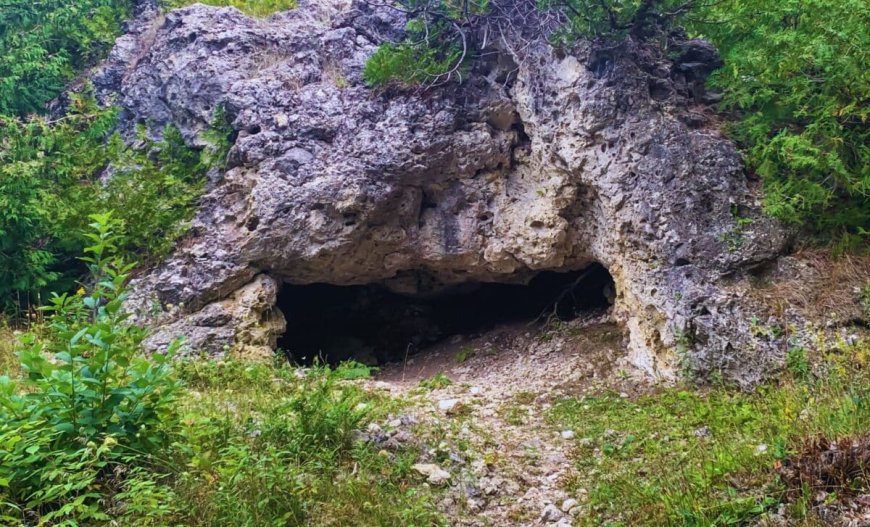
Buried deep within a limestone cave in northern Greece, the Petralona skull has stumped scientists for decades. Found embedded in rock and encased in mineral deposits, it doesn’t fit neatly into the known branches of human evolution. The cranium, which was discovered in the 1960s, has sparked intense debate about the species to which it belongs.
The Petralona skull is unique not only because of its age but also due to its enigmatic features. Initially, it was thought to belong to either Homo erectus or Neanderthals. However, further research revealed that it doesn’t match the defining traits of these species.
A Skull That Defies Classification
When the Petralona skull was first discovered, it was thought to belong to Homo erectus or an early form of Homo sapiens. However, closer examination revealed it didn’t match the typical characteristics of these species. According to Professor Chris Stringer, a leading paleontologist at the Natural History Museum in London:
“Morphologically, they [the Petralona skull and the one from Zambia] belong together, and dating-wise they seem to be close too,” he said.

Complicated Dating Methods
One of the main challenges for researchers has been determining the exact age of the Petralona skull. Traditional dating methods have been difficult to apply due to the mineral layers that encase the skull. When it was first discovered, the skull was thought to be anywhere between 170,000 and 700,000 years old. However, a breakthrough came in 2025 when researchers used uranium-series dating on the calcite that had formed around the skull.

As explained in the study published in the Journal of Human Evolution, a more reliable minimum age of around 286,000 years was revealed, placing the Petralona skull in a time period close to the cranium from Zambia, identified as Homo heidelbergensis. As Professor Stringer explained:
“If the calcite on the fossil developed very quickly after the fossil was deposited in the cave, then our age of about 288,000 to 290,000 is a good age for the fossil.”
A Bold New Take on Human Evolution
The Petralona skull has sparked new discussions about the connections between early human populations in Europe and Africa. While its exact species remains uncertain, its features suggest that early human groups may have been more interconnected than previously believed.
As per research conducted in 2025, the age of the Petralona skull and its similarities to the Zambian specimen support the idea that European and African human populations shared a common ancestor and lived in large, interconnected regions. This challenges the notion that these groups were separate and isolated, showing that migration and interaction played a significant role in the evolution of different human species, including Neanderthals and Homo sapiens. Stringer noted:
“We’ve known for a while that human evolution was complex… But it’s even more diverse than we thought, with many different experiments in how to be human. We’re just the only survivors, of course.”
Enjoyed this article? Subscribe to our free newsletter for engaging stories, exclusive content, and the latest news.
What's Your Reaction?
 Like
0
Like
0
 Dislike
0
Dislike
0
 Love
0
Love
0
 Funny
0
Funny
0
 Angry
0
Angry
0
 Sad
0
Sad
0
 Wow
0
Wow
0