



























Scientists Fled a Storm in Antarctica’s ‘Danger Zone’ and Accidentally Found Land That Should Not Exist on Any Map

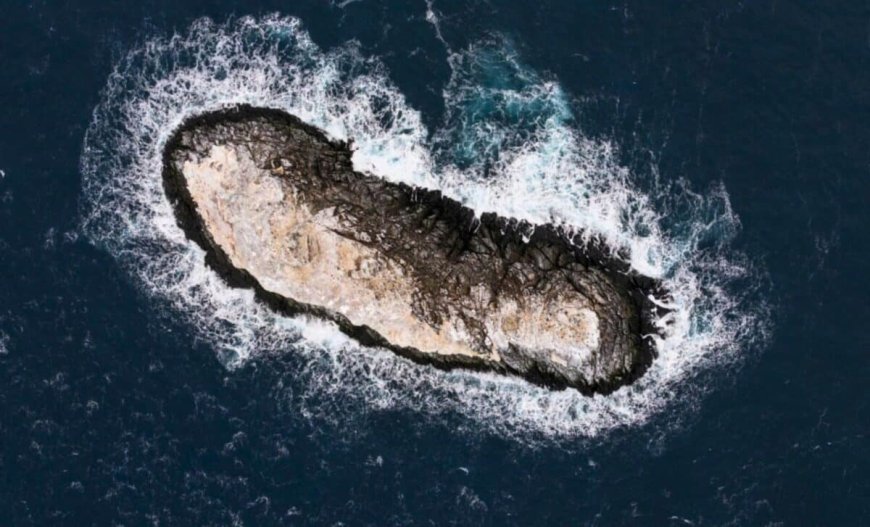
A German research vessel seeking shelter from rough weather has discovered a previously unknown island in a remote and poorly charted corner of Antarctica. The rocky outcrop, measuring 130 meters long and 50 meters wide, was encountered in February 2026 as the icebreaker navigated a region of the northwestern Weddell Sea historically marked on nautical charts as an “unexplored danger zone.”
The island was not visible on satellite imagery used for navigation planning. It appeared initially as a dirty iceberg before closer inspection confirmed exposed bedrock. The feature will soon receive an official name and be added to international nautical charts for the first time.
A Navigation Hazard Hidden in Plain Sight
The discovery occurred during an expedition led by the Alfred Wegener Institute aboard the RV Polarstern. A 93-person international science team was en route to study ice and water outflow from the melting Larsen Ice Shelf when deteriorating weather forced a course change. The ship sought shelter in the lee of Joinville Island, traversing an area where existing charts carried only a vague warning, as detailed in a press release from the Alfred Wegener Institute.
Simon Dreutter, an AWI specialist in underwater mapping, described the moment: “Looking out of the window, we saw an ‘iceberg’ that looked kind of dirty. On closer inspection, we realised that it was probably rock.” The crew initially dismissed the dark smudge as sediment trapped within a standard iceberg, a common sight near the Antarctic Peninsula. Only when the ship drew closer did the angular profile of exposed stone become unmistakable.

The ship’s multibeam echo sounder and an onboard drone measured the island precisely. Dimensions: 130 meters long, 50 meters wide, and 16 meters high. For reference, the Polarstern itself measures 118 meters from bow to stern, making the island only slightly longer than the ship that found it. The total surface area is roughly 6,200 square meters.
Why the Island Was Missing from Charts
The reason this landmass escaped cartographic notice is twofold. First, the island is covered in ice and snow, rendering it nearly indistinguishable from the countless icebergs that drift through the Weddell Sea. Satellite images show a white speck amid a vast field of white specks. The ice cap atop the bedrock blends seamlessly with surrounding sea ice during winter and with calved glacial fragments during summer.
Second, the region has been deliberately avoided by mariners for generations. Nautical charts designated the area as an “unexplored danger zone” based on incomplete or unverified data. Dreutter noted: “On our route, the nautical chart showed an area with unexplored dangers to navigation, but it wasn’t clear what it was or where the information came from.” Such designations often stem from sporadic early explorer reports or gaps in sonar surveys.

The Polarstern crew determined that the island’s true position was approximately one nautical mile, or 1.85 kilometers, from where existing chart data had placed the suspected hazard. This discrepancy highlights the value of direct bathymetric survey in polar regions. The island’s existence was likely noted in the past as a potential shoal, but no vessel had ever approached closely enough to confirm the obstruction.
Naming the Unnamed Outcrop
The island currently has no official name. Under Antarctic Treaty System protocols, newly discovered features must be submitted for review and approval by international naming authorities before appearing on official charts. The AWI team has initiated this registration process through the German Federal Maritime and Hydrographic Agency.
Once the name is formally accepted, the exact coordinates will be published in nautical charts, scientific databases, and the Geographic Names of Antarctica gazetteer maintained by the United States Geological Survey. This document serves as the authoritative reference for place names on the continent. The registration process can take several months to over a year.

As Gizmodo reported, the public has already offered informal suggestions. Proposed names include Eisberg, the German word for iceberg, reflecting its initial mistaken identity. Others suggested Lummerland, a reference to a tiny fictional island from a children’s book. Another submission, Bird Rendezvous Island, references the potential for seabirds to use the exposed rock as a resting spot.
A Comparison to Sif Island
The 2026 discovery echoes a similar event six years earlier involving the same research vessel. In February 2020, the Polarstern crew located Sif Island in Pine Island Bay, a 350-meter rocky outcrop revealed by the retreat of the Pine Island Glacier. That island was also uncharted and emerged from beneath a thinning ice shelf, a finding covered extensively by the Daily Mail.
The two discoveries differ significantly in origin. Sif Island was exposed by glacial retreat and ice shelf collapse. For decades, the Pine Island Glacier’s floating ice shelf extended far into the bay, pressing down on the rocky pinnacle and burying it beneath hundreds of meters of compressed ice. When the ice thinned and retreated, the bedrock was uncovered. The 2026 Weddell Sea island appears to have been a persistent, ice-covered feature that simply went unnoticed due to its remote location.

Official geographic records confirm Sif Island’s status. The United States Geological Survey gazetteer includes the feature with coordinates near 75°05’S, 101°12’W. The AWI has confirmed that the newly discovered 2026 island’s coordinates will be transmitted to the German Federal Maritime and Hydrographic Agency for inclusion in the next revision of official nautical charts. The Polarstern continues its primary mission studying ice dynamics at the Larsen Ice Shelf.
Enjoyed this article? Subscribe to our free newsletter for engaging stories, exclusive content, and the latest news.
What's Your Reaction?
 Like
0
Like
0
 Dislike
0
Dislike
0
 Love
0
Love
0
 Funny
0
Funny
0
 Angry
0
Angry
0
 Sad
0
Sad
0
 Wow
0
Wow
0