
























Scientists Discover Humans Can Feel Objects Without Touching Them: A Hidden “Seventh Sense”

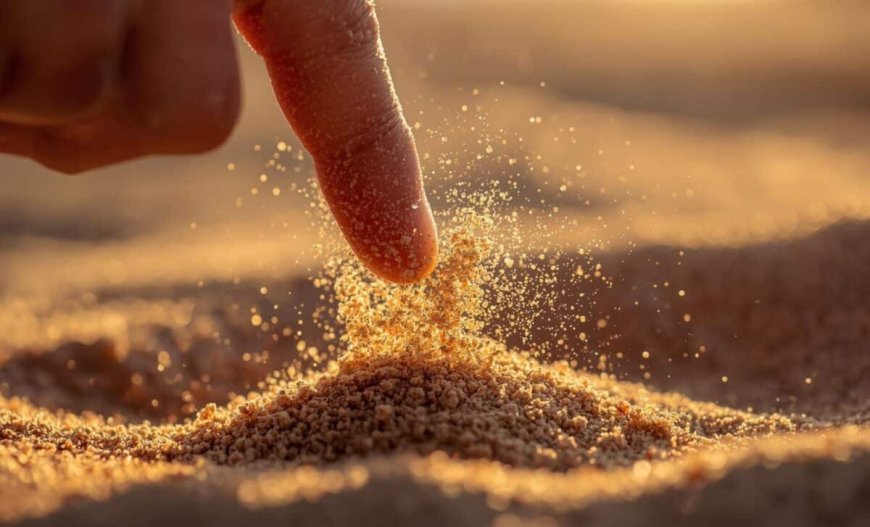
A finger moving across dry sand meets resistance that the eye cannot see. The sand shifts in ways too small for conscious measurement, yet something in the hand registers the change. Beneath the surface, seven centimetres away, a solid object waits.
Twelve people sat at laboratory apparatus in London last year and did something neuroscientists had never systematically measured. They found objects they never touched. They did this more than seven times out of ten. And they did it at distances that approach the absolute physical limits of what moving sand can transmit.
The finding, presented at a peer reviewed engineering conference in September 2025 and subsequently published in the IEEE Xplore digital library, does not announce a new sense. It announces that one of the oldest senses has been operating at a range nobody bothered to test.
Detection Distances Verified Across Human and Robotic Trials
Researchers at Queen Mary University of London and University College London designed the experiment around a single question: how far ahead can a human finger detect a buried object through sand, when the finger never makes contact with the object itself.
Twelve participants moved their index fingers across the surface of dry sand following trajectories marked by LED lights. A small cube lay buried in some trials and absent in others. The instruction was to stop the moment the presence of an object became perceptible, before any contact occurred. No participant touched the cube in any successful trial.
Data from the study, documented in the IEEE conference record, show participants correctly identified the buried object in 70.7 percent of trials. The average detection distance measured 6.9 centimetres. The median distance was 2.7 centimetres. Researchers compared these figures against physical models of how forces propagate through granular media. The models predicted a maximum detectable distance of approximately seven centimetres. Human performance fell within that predicted range.
A parallel robotic experiment using a tactile sensor arm and a Long Short Term Memory algorithm detected objects from an average distance of 7.1 centimetres, slightly exceeding the human average. Its median detection distance of six centimetres substantially exceeded the human median. However the system registered false positives at a rate that reduced its precision to 40 percent.
The research team documented the performance disparity in materials presented at the 2025 IEEE International Conference on Development and Learning. “The robot was able to detect objects from 7.1 centimetres on average, slightly farther than the human participants. However its precision dropped to just 40 percent, and it frequently generated false positives,” the researchers reported.
Mechanical Cues Replace Visual Information in Granular Environments
The mechanism does not involve extrasensory perception, magnetic sensitivity, or any physiological apparatus beyond the standard mechanoreceptors present in human fingertip skin. When a finger moves through sand, it displaces grains ahead of its path. A buried object alters the pattern of that displacement. The altered resistance and vibration profile propagates back through the granular column to the finger. The brain interprets this altered profile as proximity.
The investigation drew explicit inspiration from shorebirds such as sandpipers and plovers, which locate buried prey by detecting mechanical disturbances through sediment. Lorenzo Jamone, associate professor in robotics and AI at UCL, described the bidirectional value of the human and robot studies in a statement released through Queen Mary University.
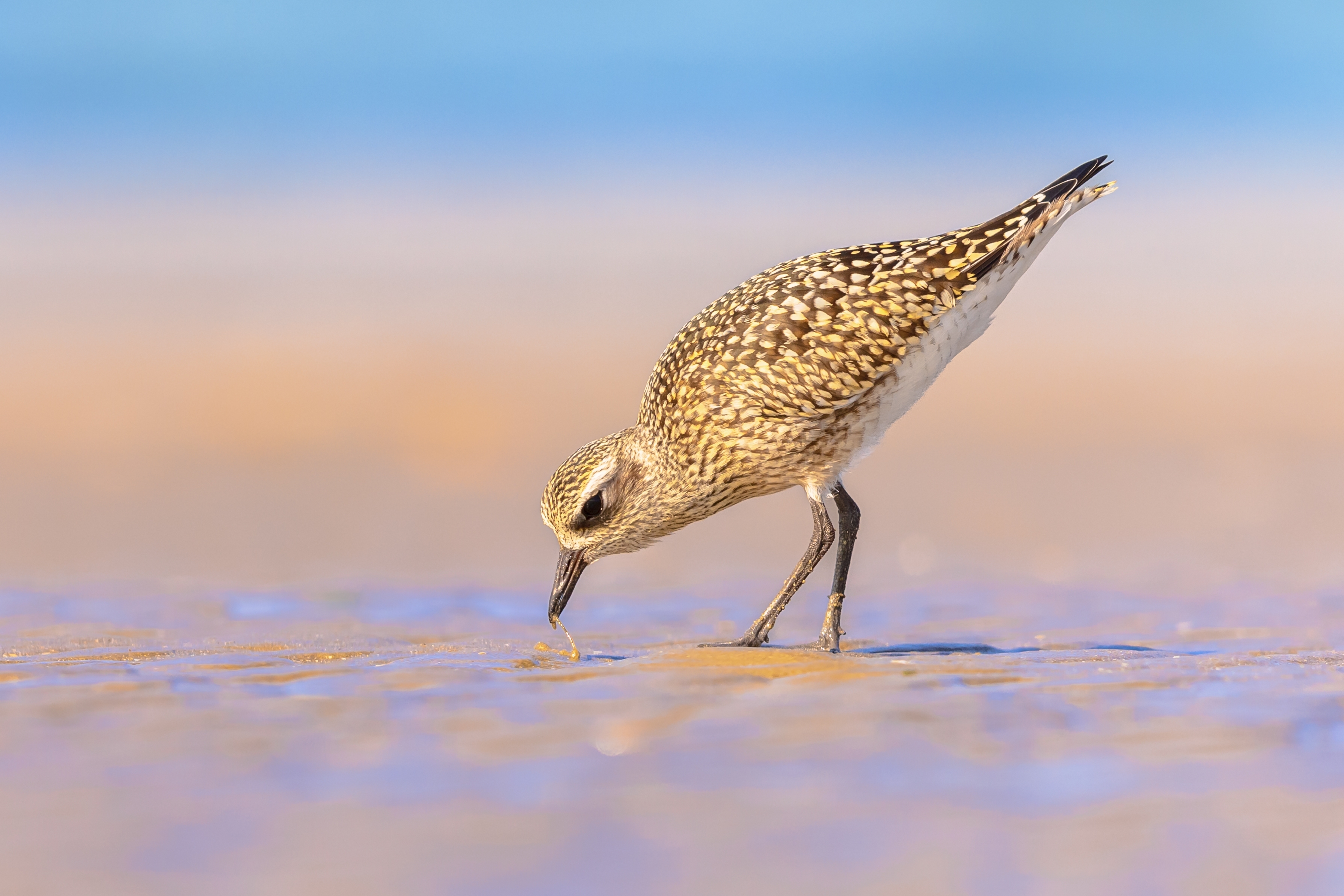
“What makes this research especially exciting is how the human and robotic studies informed each other. The human experiments guided the robot’s learning approach, and the robot’s performance provided new perspectives for interpreting the human data.”
Birds possess specialized bill tip organs. Humans do not. The study therefore investigates whether a generalist mammalian tactile perception system, without anatomical specialization for granular probing, can nonetheless extract useful information from the same physical phenomena.
Data indicate it can, though the researchers note the experimental conditions were narrowly constrained. Sand was dry and uniform. Movement was slow and unidirectional. Object shape was consistent. Whether the effect persists in wet sand, mixed debris, irregular motion, or with non cubic objects has not been measured.
Sensory Terminology Debated Following Public Coverage
Media reports following the September conference described the finding as a hidden seventh sense or a form of remote touch. The study authors do not use this language in their technical paper. The paper’s abstract describes “a tactile ability not previously documented in humans” and quantifies its range and precision. It does not claim discovery of a new sensory modality.
Elisabetta Versace, senior lecturer in psychology at Queen Mary and lead author of the human study, addressed the terminology in prepared remarks carried by multiple publications. “It is the first time that remote touch has been studied in humans and it changes our conception of the perceptual world, what is called the receptive field, in living beings, including humans,” Versace said.
The distinction matters for both neuroscience and engineering. If the phenomenon represents an undiscovered sense, researchers would need to locate its anatomical basis and neural pathways. If it represents an unmeasured capability of the existing tactile system, the research problem shifts to understanding why that capability was not quantified earlier and how the brain extracts signals from noise so effectively.
Field Applications Remain Distant as Variables Remain Unmapped
The research team has suggested potential applications in archaeology, where buried artefacts could be located without excavation damage, and in planetary exploration, where rovers might detect subsurface features on Mars or ocean floors without deploying contact instruments. Zhengqi Chen, a PhD student in the Advanced Robotics Lab at Queen Mary and a coauthor of the study, described the possibilities in a university statement documented by IEEE Xplore.
“The discovery opens possibilities for designing tools and assistive technologies that extend human tactile perception. These insights could inform the development of advanced robots capable of delicate operations, for example locating archaeological artifacts without damage, or exploring sandy or granular terrains such as Martian soil or ocean floors,” Chen said.
No such tools currently exist. The robotic system in the study, while capable of detection, produced false positives at rates that would render it unreliable outside laboratory conditions. Its 40 percent precision compares unfavourably with the 70.7 percent precision of untrained human participants. Engineers do not yet know whether this gap reflects limitations in current sensor hardware, limitations in the machine learning architecture, or fundamental differences between biological and artificial tactile sensing.
The study did not measure whether training improves human tactile sensitivity, whether sensitivity varies across individuals, or whether the effect degrades with age or manual experience. These variables remain unexamined. The research team has indicated these questions are priorities for subsequent investigation, according to the November 2025 coverage of the conference proceedings.
Enjoyed this article? Subscribe to our free newsletter for engaging stories, exclusive content, and the latest news.
What's Your Reaction?
 Like
0
Like
0
 Dislike
0
Dislike
0
 Love
0
Love
0
 Funny
0
Funny
0
 Angry
0
Angry
0
 Sad
0
Sad
0
 Wow
0
Wow
0