




























Scientists Built a Smart Contact Lens That Monitors Glaucoma and Administers Its Own Treatment Autonomously

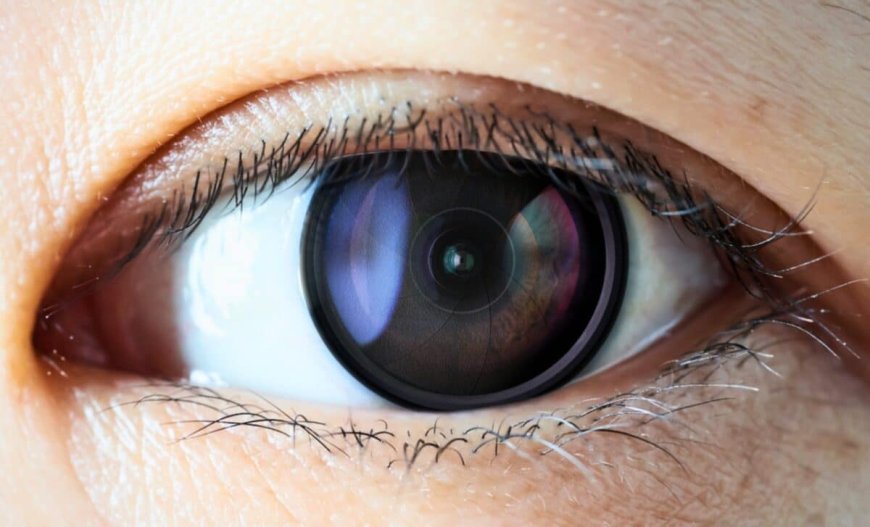
A soft contact lens that watches for dangerous pressure spikes inside the eye and releases medication the moment they occur has moved closer to human testing, potentially offering millions of glaucoma patients an alternative to remembering daily eye drops. The device, described in Science Translational Medicine, contains no batteries, wires, or rigid electronics and was developed at the Terasaki Institute for Biomedical Innovation in Los Angeles.
The lens works entirely through mechanical deformation. When pressure builds inside the eye, the cornea bulges slightly, physically squeezing tiny drug reservoirs built into the polymer structure. Dr. Yangzhi Zhu and colleagues designed the system as a closed loop: it senses a problem and responds without patient intervention or external power.
How Corneal Movement Triggers Treatment
The lens contains two integrated systems layered within its polymer body. The first is diagnostic. A pouch of fluid sits against the cornea. Rising intraocular pressure distorts the cornea’s shape, compressing that pouch and pushing liquid through a narrow serpentine channel. A smartphone photo lets an AI application measure how far the fluid moved and convert that distance to a precise pressure reading. This eliminates the need for bulky tonometry equipment during routine checks.
The second system is therapeutic and entirely autonomous. Drug reservoirs made with a silk-based sponge material sit adjacent to the diagnostic layer. If pressure crosses a predetermined dangerous threshold, the same corneal bulging that moved the diagnostic fluid now compresses those reservoirs, releasing timolol or brimonidine directly onto the eye. The release happens without any electronic signal or patient action.

The reservoirs are not uniform. Different chambers have different mechanical triggers. A moderate pressure increase might compress one reservoir. A severe or sustained spike activates a second, releasing a different medication. According to the Terasaki Institute, this tiered approach allows the lens to make treatment decisions based purely on physical force, with no electronic computation required. The device essentially functions as a tiny mechanical pharmacy that only dispenses when the eye truly needs it.
“We wanted to create a platform that not only monitors disease in real time but also responds to it immediately,” Zhu said. “By integrating sensing and drug delivery into a single smart contact lens, we are moving toward a more precise and patient-friendly approach.”
Testing Across Artificial Eyes, Cow Eyes, and Living Rabbits
The team validated the approach in three distinct phases, each adding a layer of biological realism. First, artificial eye models confirmed that the microfluidic channels produced linear, predictable readings as pressure changed. These bench tests established that fluid displacement corresponded reliably to specific pressure values, a prerequisite for accurate monitoring.
Second, researchers used enucleated bovine eyes because their elastic properties and size closely resemble human eyes. This allowed the team to precisely control internal pressure while verifying the sensor’s accuracy against standard tonometry instruments. The bovine eye tests demonstrated that the lens could detect pressure changes across the clinically relevant range for glaucoma management.

Third came living rabbits with induced ocular hypertension. These animals provided the most realistic test environment: blinking, tear film disruption, and natural eye movement all occurred while the lens tracked pressure in real time. When the rabbits’ intraocular pressure reached the engineered threshold, the lens released medication without any external command. The resulting pressure reduction matched or exceeded what conventional eye drops achieved. R&D World detailed the testing methodology, noting that the rabbit studies confirmed the device could function amid the mechanical chaos of a living eye.
Why Eliminating Electronics Matters
Previous smart contact lens prototypes typically required rigid components: microchips, antennas, or thin-film batteries. These elements compromised comfort, transparency, and long-term wearability. A lens made entirely from biocompatible polymers avoids those tradeoffs entirely. Patients could theoretically wear the lens for extended periods without the irritation associated with embedded electronics.
The silk sponge structure inside the drug reservoirs serves a dual purpose. It holds more medication than a simple hollow chamber would allow, extending the time between lens replacements. It also provides structural reinforcement that keeps microchannels from collapsing under normal eyelid pressure. The lens remains transparent enough for daily wear while carrying a meaningful drug payload. This material choice reflects a broader shift in biomedical engineering toward devices that mimic biological structures rather than simply miniaturizing conventional electronics.
Glaucoma affects more than 70 million people globally and has caused irreversible blindness in at least 8.4 million. The disease progresses when pressure inside the eye damages the optic nerve, yet clinic visits capture only isolated pressure readings. Patients often struggle to maintain consistent drop schedules, and even diligent users cannot replicate the continuous protection this lens would provide. A device that monitors continuously and treats autonomously addresses both gaps simultaneously.
What Comes Next
Before the lens reaches patients, researchers must prove its long-term safety and effectiveness in human clinical trials. Manufacturing the multilayered polymer devices at commercial scale also remains an unresolved engineering challenge. Producing millions of lenses with consistent mechanical thresholds and drug payloads requires fabrication techniques that do not yet exist at industrial volumes.
The institute is already adapting the platform for dry eye disease and tumor diagnostics. Dr. Zhu is named on a patent application for the theranostic lens, which may one day do for chronic eye disease what continuous glucose monitors did for diabetes: replace sporadic checkups with round-the-clock, responsive care that patients barely have to think about.
Enjoyed this article? Subscribe to our free newsletter for engaging stories, exclusive content, and the latest news.
What's Your Reaction?
 Like
0
Like
0
 Dislike
0
Dislike
0
 Love
0
Love
0
 Funny
0
Funny
0
 Angry
0
Angry
0
 Sad
0
Sad
0
 Wow
0
Wow
0