



























Say Goodbye to Traditional Induction Stovetops: In 2026, This Disappearing Tech Took Over Kitchens Worldwide

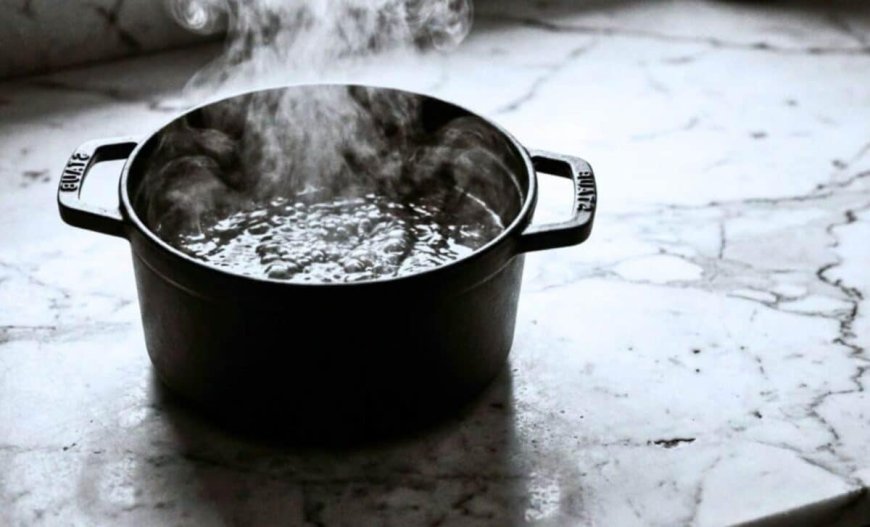
At the tile fair in Bologna in 2021, a crowd gathered around a slab of stone that appeared utterly ordinary. The chef placed a pan on its surface. Water began to simmer, then boil. No flame emerged from the material. No glass panel reflected the overhead lights. No burner marks indicated where heat originated.
The audience pressed forward, phones raised, trying to capture something the camera could not register. Four years later, in early 2026, that invisible boundary between countertop and cooktop has become a measurable line item in high end residential construction.
The installers who now embed induction coils beneath engineered stone report a recurring conversation with clients. The question is rarely about wattage or efficiency. It is about whether the surface will mark, whether the heat will spread, whether a kitchen island that disappears into itself can also produce a proper sear.
What the Systems Actually Deliver
Invisible induction cooktops operate on the same electromagnetic principle as conventional induction hobs. A copper coil beneath the counter generates a field that induces heat directly in ferromagnetic cookware. The counter material itself is not the heat source. But material properties determine whether the system functions at all.
Based on manufacturer compatibility documentation, only specific engineered stones, high-density porcelains, and certain sintered composites meet the necessary specifications. The surface must be nonconductive, thermally resistant, and held to thickness tolerances between 12 and 20 millimetres. Thicker slabs weaken field strength. Thinner slabs risk structural failure. Natural granite is almost universally excluded. So are most quartz blends.

Records show Invisacook addressed one persistent usability constraint in March 2023 with the launch of Invisacookware. The pots and pans incorporate integrated risers that serve the same protective function as the earlier Invisamat, keeping the counter surface from overheating during prolonged use. Time magazine, in its October 2023 Best Inventions issue, described the cookware as improving both performance and aesthetics.
Energy efficiency data cited in installer guidance materials indicates transfer rates of 84 to 90 percent, consistent with visible induction units. Cooking speed, however, has generated conflicting user accounts. Jonathan Scott, in remarks quoted by The Kitchn, stated that an Invisacook system can boil water almost twice as fast. Invisacook California posted a demonstration showing boiling in four minutes. But user discussions on Reddit, also cited by The Kitchn, describe slower performance. Some users reported electrical faults. Others reported countertop cracking.
Surface Heat, Surface Tension
One claim recurs across nearly all consumer-facing descriptions: the counter stays cool. Manufacturer technical documentation tells a more qualified story. Invisacook’s own specifications acknowledge that surface temperature rises approximately 15 to 20 degrees Celsius after ten minutes of continuous use at maximum output. That is not cool. It is warm, and with sustained cooking, hot.
A surface that accumulates heat cannot simultaneously serve as food preparation space. A cook who finishes searing cannot immediately begin chopping on the same zone. The seamlessness of the design is real. The multifunctionality is conditional.

Gina D’Amore Bauerle of D’Amore Interiors, in comments recorded by the National Kitchen and Bath Association, identified Invisacook as one of her preferred brands for adding luxury and functionality to small spaces. Her characterization emphasized the liberation of counter surface for other purposes. It did not address the thermal recovery period required after cooking.
The Installation Premium and the Repair Question
Invisacook’s 2025 pricing disclosures place the cost of a four zone system at $2,800. That figure excludes the counter itself. It excludes fabrication. It excludes installation. The company’s own all in estimate, cited in a 2025 report by The Kitchn, ranges from $5,000 to $8,000. Induction compatible cookware adds another $550 to $850.
Those figures describe new construction or full renovation. Retrofitting into an existing kitchen requires lifting or replacing the entire counter slab. Base cabinets often require modification to accommodate the coil housings. Electrical work requires dedicated 240 volt circuitry. No component of this system is plug and play.

Repair access presents a more structurally complicated constraint. The induction coils are mounted beneath a bonded surface. Troubleshooting requires either lifting the slab or accessing from below. In multi story dwellings, that may mean removing finished ceilings. Several German installer networks have introduced premium service contracts specifically to address this configuration. No standardized repair protocol exists across manufacturers.
Who Is Buying, and What They Are Buying For
The most telling indicator of market position is not unit volume but procurement channel. Based on late 2025 statements from Invisacook and Bora, more than 60 percent of invisible system orders now originate from architects or design build firms rather than individual consumers. The technology is being specified at the blueprint stage.
Design professionals prioritize visual continuity, material finish, and surface integration. Future development will therefore likely emphasize thinner counter profiles, expanded material palettes, and more discreet interface elements rather than higher wattage. Touch sensitive edge controls and subtle LED zone indicators are already standard. The direction of travel is toward further invisibility, not further power.
San Diego based designer Selena Michele, in social media posts quoted by The Kitchn, described the value proposition succinctly. The goal, she said, is to avoid ruining the aesthetic of a kitchen with a bulky range or cooktop.
Enjoyed this article? Subscribe to our free newsletter for engaging stories, exclusive content, and the latest news.
What's Your Reaction?
 Like
0
Like
0
 Dislike
0
Dislike
0
 Love
0
Love
0
 Funny
0
Funny
0
 Angry
0
Angry
0
 Sad
0
Sad
0
 Wow
0
Wow
0