





























Researchers Reveal Cement 17x Tougher Than Traditional Concrete, and It Could Redefine Modern Construction

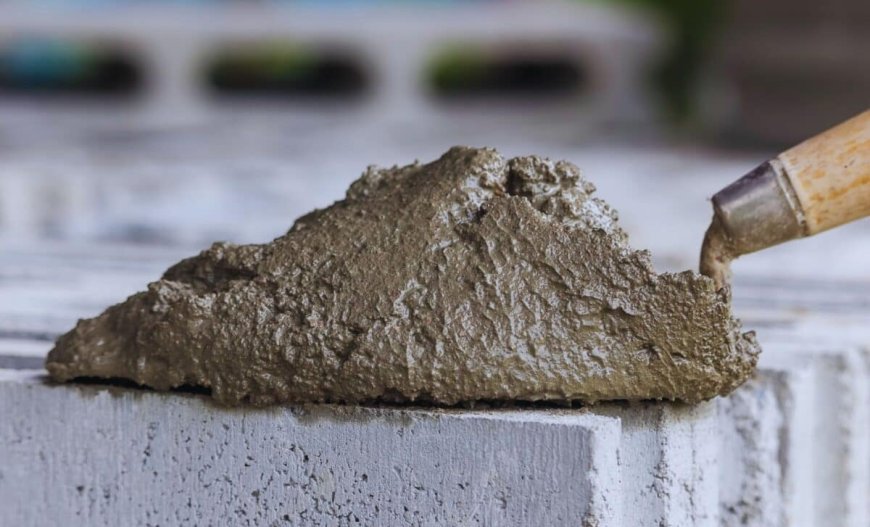
In a new study, Princeton engineers have unlocked the secret to creating cement that is 17 times tougher than conventional materials. Inspired by the unique properties of oyster shells, this bio-engineered cement could transform construction.
Cement is one of the most widely used materials in construction, but it is also responsible for a significant portion of global greenhouse gas emissions. Engineers have long sought ways to improve cement’s strength and durability, as its brittleness often leads to cracks and structural failure. In a surprising twist, a team at Princeton University turned to nature for inspiration, looking at the incredible toughness of oyster shells as a model for redesigning cement.
Nature’s Blueprint for Oyster Strength
The key to this breakthrough lies in the shell of an oyster. Inside the shell, there is a material called nacre, or “mother of pearl,” known for its impressive durability and flexibility. Nacre is made up of microscopic hexagonal plates of aragonite, a form of calcium carbonate, bound together by soft biopolymers. This combination of hard and soft components gives nacre its ability to absorb and distribute stress, preventing cracks from spreading. According to Shashank Gupta, a graduate student and co-author of the study:

“This synergy between the hard and soft components is crucial to nacre’s remarkable mechanical properties,” He stated in a press release issued by Princeton Engineering. “If we can engineer concrete to resist crack propagation, we can make it tougher, safer and more durable.”
The Princeton team focused on mimicking the structure of nacre to create a more resilient form of cement. In the study published in Advanced Functional Materials, engineers demonstrated how incorporating polymer layers between cement sheets and creating hexagonal patterns in the cement replicates the microscopic mechanics of nacre’s durability. The results were impressive, with cement that was far more flexible and crack-resistant than the traditional material.
Flexible Cement Engineering
The team tested three different designs for multi-layered cement beams. The first design simply stacked cement paste and polymer layers together. The second featured hexagonal grooves within the cement, while the third took inspiration directly from nacre, using hexagonal cement plates that mimicked the natural structure of oyster shells. In experiments, the third design, incorporating the hexagonal plates, proved to be the most effective, providing 17 times the toughness and 19 times the ductility of regular cement, all while maintaining the same strength.

The key to this improvement lies in the ability of the hexagonal plates to slide against each other, a process that mimics the movement of nacre’s components. This allows the cement to resist crack propagation and deformation, making it more flexible without losing strength. The polymer layers further enhance the material’s ability to bend and absorb stress, providing a perfect balance of strength and flexibility.
Eco-friendly Construction: A Step Forward
Cement production is a major source of carbon emissions, responsible for roughly 8 percent of global greenhouse gases. As the demand for construction materials increases, finding ways to reduce cement’s environmental footprint is critical. Reza Moini, another co-author of the study, explained:
“Our bio-inspired approach is not to simply mimic nature’s microstructure but to learn from the underlying principles and use that to inform the engineering of human-made materials. One of the key mechanisms that makes a nacreous shell tough is the sliding of the tablet at the nanometer level.”

While the results are promising, the new cement will need further testing and refinement before it can be implemented on a large scale in the construction industry. But the potential is clear: if adopted widely, this bio-inspired material could change the way buildings are designed and constructed.
“We are only scratching the surface; there will be numerous design possibilities to explore and engineer the constitutive hard and soft material properties, the interfaces, and the geometric aspects that play into the fundamental size effects in construction materials,” he commented.
Enjoyed this article? Subscribe to our free newsletter for engaging stories, exclusive content, and the latest news.
What's Your Reaction?
 Like
0
Like
0
 Dislike
0
Dislike
0
 Love
0
Love
0
 Funny
0
Funny
0
 Angry
0
Angry
0
 Sad
0
Sad
0
 Wow
0
Wow
0