



























Over 2.5 million pounds of “forever chemicals” were sprayed on California crops — now a new bill aims to end it

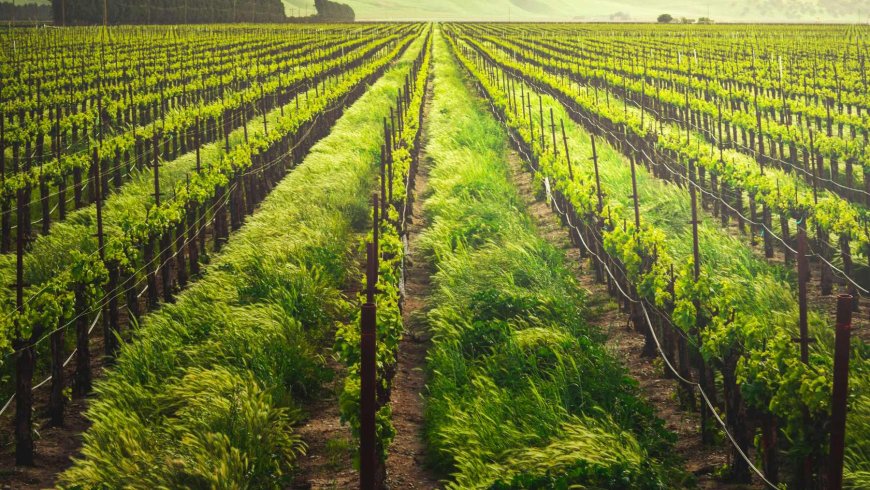
Between 2018 and 2023, more than 2.5 million pounds of pesticides containing PFAS — synthetic compounds engineered to resist breaking down — were sprayed on fruits and vegetables in California, the nation’s top agricultural producer.
The scale of that application is only part of the picture. Residues of at least one PFAS pesticide have since been detected on nearly 40 percent of conventional produce grown in the state. Now, California lawmakers are moving to change how these chemicals are used on the food supply — and when.
PFAS in the fields: What the data reveals
The 2.5 million pound figure comes from an Environmental Working Group analysis of California’s own pesticide use records — data the state had been collecting but had never been examined through a PFAS lens. EWG also tested produce directly, finding residues of at least one PFAS pesticide on nearly 40 percent of conventional California-grown fruits and vegetables.
One compound stood out sharply. Fludioxonil, a PFAS fungicide linked to hormone disruption and reproductive problems, turned up on 90 percent of tested nectarine, plum, and peach samples from the state. The EPA has approved 70 active-ingredient PFAS pesticides at the federal level. California currently allows 53 of them.
Why “forever chemicals” on food are especially concerning
PFAS compounds are built with nearly indestructible chemical bonds that resist water, grease, and heat — durability that makes them commercially useful and, at the same time, makes their presence on produce particularly hard to address. EWG recommends washing fruits and vegetables, but whether rinsing actually removes chemicals specifically designed to repel water remains an open question.
The health concerns extend well beyond the farm. Nearly every American already carries PFAS in their blood, where the compounds have been linked to impaired vaccine response, elevated cholesterol, increased risk of kidney and testicular cancer, and lower birth weight. These aren’t speculative risks — they reflect years of accumulated research.
The burden isn’t evenly distributed. In Monterey County, where more than half a million pounds of PFAS pesticides were applied over the six-year period, University of California, Berkeley researchers have spent decades documenting health effects in farmworker communities — linking pesticide exposure to early cognitive difficulties in children and behavioral and mental health problems into adolescence and adulthood. Crucially, the PFAS showing up on California produce wasn’t an accidental byproduct of packaging or storage. It was sprayed there intentionally.
A.B. 1603: the bill to phase out PFAS pesticides
Assemblymember Nick Schultz, a Democrat from Burbank, introduced A.B. 1603 to ban the use, sale, and manufacture of PFAS pesticides in California by 2035. For the 23 PFAS pesticides already prohibited in the European Union, the ban would take effect five years earlier, in 2030.
Schultz said he was already familiar with California’s extensive legislative record on PFAS in consumer products and home environments. That background made it more striking to learn that pesticides with intentionally added PFAS were being routinely applied to the state’s crops. “I was even more startled to find out that these PFAS pesticides are present on the fruit and vegetables that we purchase at the grocery store,” he said. The bill would also require that farmers and local communities be notified when PFAS pesticides are in use during the phase-out period. EWG is co-sponsoring the legislation alongside other public-interest and health organizations.
California vs. Europe: a regulatory gap
Two of the most commonly applied PFAS pesticides in California — bifenthrin and trifluralin — are already banned in the European Union over health and environmental concerns. Despite those prohibitions, California farmers sprayed nearly 4 million pounds of these two chemicals on produce over the six-year period studied.
Schultz frames the bill as a matter of alignment. “We are trying to bring California into alignment with the European Union, which is already meeting this moment and banning certain PFAS-contaminated pesticides from deployment in their crops,” he said. California, he argued, should meet at least an equivalent standard. Several other U.S. states have already passed or are actively considering similar bans, suggesting the regulatory momentum is building well beyond California’s borders.
What’s at stake beyond California
California’s agricultural output doesn’t stay in California. As the nation’s largest producer of fruits, nuts, and vegetables, the state supplies grocery stores and dinner tables across the country. When PFAS residues are found on California-grown produce, EWG science analyst Varun Subramaniam noted, they effectively spread the contamination nationwide.
Limited awareness compounds the problem at every level of the supply chain. Farmers may not know they’re applying PFAS to their land, and local governments and water agencies typically aren’t informed either. A.B. 1603 would change that, at minimum requiring disclosure while the phase-out is underway.
There’s also a direct regulatory tension at the center of this debate. The EPA maintains that PFAS pesticides pose no risks when used as directed — a position that stands in contrast to the health findings cited by EWG and the bans already enacted in Europe. That disagreement between federal regulators and public health researchers isn’t likely to be resolved quickly.
What comes next
A.B. 1603 still has to move through the California legislature, and its path will likely include pushback from agricultural and pesticide industry interests. The bill arrives, though, at a moment when public and political attention to PFAS contamination — in water, soil, food packaging, and now crops — has been steadily growing.
If it passes, California’s phase-out timeline would give farmers and pesticide manufacturers more than a decade to find alternatives, while setting a precedent that other states could follow. Whether the federal government eventually moves to restrict PFAS pesticides more broadly — or whether states continue acting independently — may define the next chapter of this issue. For now, California’s bill represents the clearest signal yet that the era of unregulated PFAS on the nation’s produce may have a foreseeable end date.
What's Your Reaction?
 Like
0
Like
0
 Dislike
0
Dislike
0
 Love
0
Love
0
 Funny
0
Funny
0
 Angry
0
Angry
0
 Sad
0
Sad
0
 Wow
0
Wow
0