





























Orion’s Belt Stars Shine 200,000 Times Brighter Than Our Sun: Here’s Why Winter is the Best Time to See Them

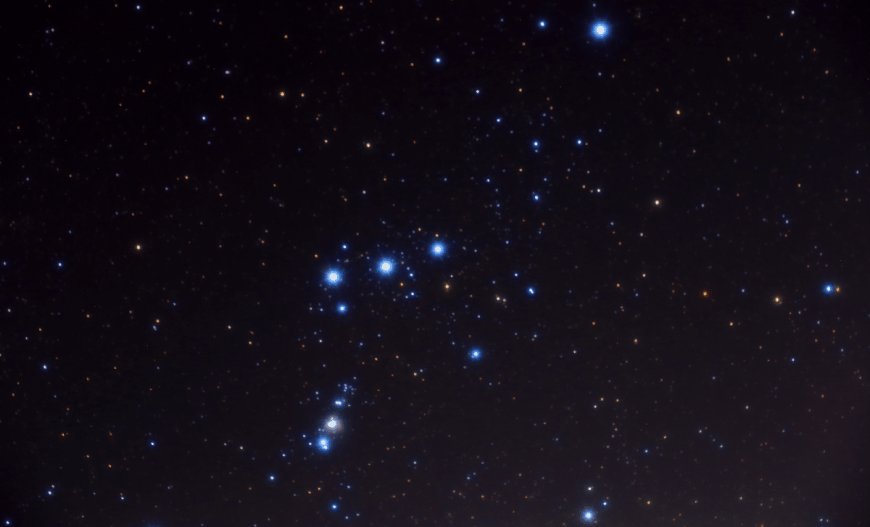
The stars of Orion’s Belt are some of the brightest and most captivating sights in our night sky, offering an unparalleled spectacle for winter stargazers. As highlighted by Space.com, the three stars that form Orion’s Belt, Alnitak, Alnilam, and Mintaka, are blue supergiants, shining with a luminosity that is over 200,000 times that of our Sun. These stars are visible throughout the winter months, providing a stunning reminder of the wonders above us. In this article, we delve into the significance of these stars, their cultural impact, and why winter is the perfect season to observe them.
Orion’s Belt: A Cosmic Wonder
Orion’s Belt is one of the most iconic constellations in the night sky. Comprised of three bright stars, Alnitak, Alnilam, and Mintaka, it forms a perfect straight line, making it easily recognizable from Earth. These stars are located between 900 and 2,000 light-years away from our planet, and they burn with intense blue-white light, making them a striking feature of the winter sky. The stars of Orion’s Belt are part of a larger stellar grouping called Gould’s Belt, named after astronomer Benjamin Apthorp Gould.
In his book Introducing the Constellations (Viking Press), astronomer Robert H. Baker eloquently described the enduring nature of this cosmic display, noting:
“The same drama will be repeated next winter, and the next. Each year it will be watched by vast and appreciative audiences as it has been watched since man first turned intelligent eyes to the heavens.
The Significance of Orion’s Belt in Different Cultures
Throughout history, the stars of Orion’s Belt have held cultural significance in many parts of the world. In ancient Egypt, the three stars were associated with the gods and were part of the mythology surrounding the afterlife. The Egyptians believed that the souls of the pharaohs traveled to the heavens to join the gods, with Orion representing the god Osiris, the ruler of the afterlife.

NASA/STScI
Similarly, the ancient Chinese viewed Orion’s Belt as a weighing beam, a symbol of cosmic balance. In Australian Aboriginal cultures, the stars were seen as three young men dancing to the music of the nearby Pleiades, creating a rich tapestry of stories and beliefs around these celestial bodies. Even in the modern world, the stars of Orion continue to inspire awe and wonder, serving as a reminder of the deep connection between humanity and the cosmos.
A Winter Stargazing Event Like No Other
Winter is the perfect time to observe Orion’s Belt due to the clarity of the night sky. During this season, the Earth’s atmosphere is generally clearer, allowing stargazers to see fainter stars that are often obscured by the haze of warmer months. As the cold, crisp air settles in, Orion rises higher in the sky, making it more prominent and visible to those who venture outside after dark. The constellation’s three stars can be seen from nearly every part of the world, but they are particularly prominent in the northern hemisphere during the winter months.
As Space.com notes, this enhanced visibility allows for an extraordinary view of the celestial bodies in Orion’s Belt, and it is the perfect opportunity for amateur astronomers to spot these magnificent stars. Whether you are a seasoned stargazer or a newcomer to the night sky, winter provides an unparalleled opportunity to marvel at the beauty of Orion and its shining belt of stars.
The Life Cycle of the Stars in Orion’s Belt
The stars of Orion’s Belt are blue supergiants, some of the most luminous and hot stars in our galaxy. These stars burn through their fuel at an accelerated rate compared to our Sun, which means they have relatively short lifespans. While our Sun will shine for about 10 billion years, the blue supergiants in Orion’s Belt will only live for a few million years before they exhaust their nuclear fuel and ultimately collapse into supernovae, creating spectacular explosions that can outshine entire galaxies.
Their intense brightness and short lifespans make these stars fascinating to astronomers. Despite their relatively brief existence, they burn with such ferocity that they illuminate the entire region of space around them. Their position in the Orion constellation places them in the part of the Milky Way known as Gould’s Belt, a region containing many young, massive stars that contribute to the stunning beauty of our galaxy. These stars are indeed burning the candle at both ends, and while their time in the sky is limited, their brilliance continues to inspire.
Enjoyed this article? Subscribe to our free newsletter for engaging stories, exclusive content, and the latest news.
What's Your Reaction?
 Like
0
Like
0
 Dislike
0
Dislike
0
 Love
0
Love
0
 Funny
0
Funny
0
 Angry
0
Angry
0
 Sad
0
Sad
0
 Wow
0
Wow
0