



























Northern Lights Could Light Up the Sky in 18 States Tonight: Here’s Where to See Them!

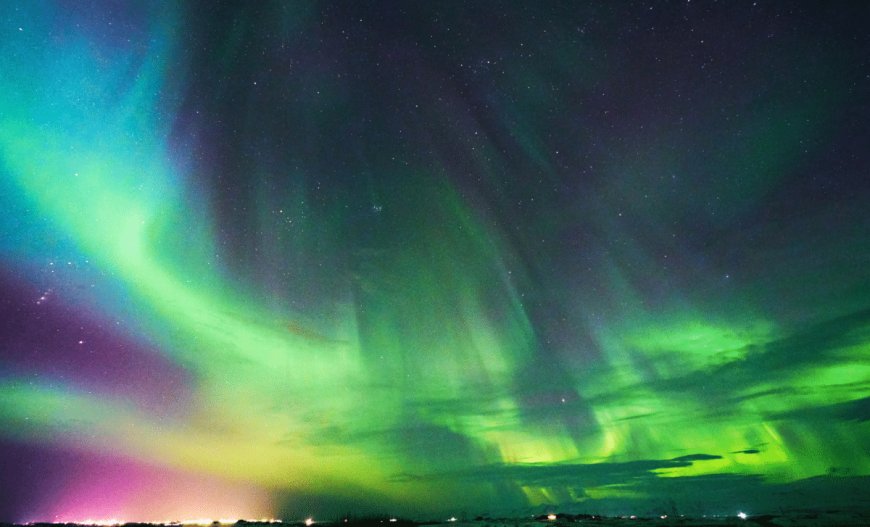
A powerful solar storm is expected to hit Earth, sparking significant geomagnetic activity, and it’s expected to be visible across several northern U.S. states tonight, according to NOAA’s latest space weather forecast. The storm, which originated from an intense solar flare, could lead to stunning auroras, with the potential to disrupt satellite communications and power grids. This rare event presents a once-in-a-lifetime opportunity for skywatchers and comes with important implications for both technology and the natural world.
A Rare Solar Storm: What’s Happening in Space?
Solar storms, also known as geomagnetic storms, occur when particles from the Sun interact with Earth’s magnetic field. The latest storm, classified as a G3-level (strong) solar storm, was triggered by a massive solar flare that erupted from the Sun earlier this week. According to the National Oceanic and Atmospheric Administration (NOAA), the storm’s intensity is high enough to cause potential disruptions in technology systems, especially satellites and communication networks.
Solar flares, while not uncommon, can cause various effects here on Earth. They can induce currents in power lines, potentially causing outages or malfunctions in electrical grids. GPS and communication systems, especially those used by airlines and military operations, might experience interruptions. Furthermore, the storm’s radiation could pose risks to astronauts and high-altitude flights.
What makes this solar storm particularly exciting is its visibility. The powerful flare has triggered what NOAA predicts will be an exceptional aurora display in several northern U.S. states. The Northern Lights, typically seen in regions closer to the Arctic, are expected to reach as far south as Illinois and New York tonight. This rare visibility makes the event an exciting opportunity for both professional astronomers and everyday skywatchers.

Where and When to See the Aurora: Best Viewing Locations for the Solar Storm
While the storm is a significant scientific event, it’s also a thrilling spectacle for anyone in the affected regions. The aurora, or Northern Lights, will be visible across several northern U.S. states, including Alaska, North Dakota, Minnesota, Montana, Washington, Idaho, Wisconsin, South Dakota, Michigan, Maine, Vermont, New Hampshire, Oregon, Wyoming, Iowa, Nebraska, New York, and Illinois. These states will have the best chance of seeing the aurora, provided the skies are clear and dark enough to block out artificial lighting.
The best time to view the Northern Lights will be after dark, with the peak activity expected to occur between 10 p.m. and 2 a.m. local time. To maximize visibility, viewers should find a location away from city lights, preferably in rural or mountainous areas. The aurora will be visible as a glowing curtain of light that dances across the sky, with shades of green, pink, and sometimes red and purple.
While the storm’s effects are most likely to be visible in the northern states, other regions across the U.S. may experience a milder version of the aurora display. However, those further south are unlikely to witness the full intensity of the event.

Credit:NOAA’s Space Weather Prediction Center.
The Science Behind the Storm: NOAA’s Forecast and Research
According to NOAA’s Space Weather Prediction Center, the solar storm was triggered by a large coronal mass ejection (CME) released from the Sun. This CME shot millions of tons of charged particles into space, traveling at speeds that reached up to 2,500 kilometers per second. When these particles collide with Earth’s magnetic field, they cause the stunning auroral displays that are so prized by skywatchers.
NOAA has been monitoring solar activity for decades, providing crucial data to help mitigate the impacts of solar storms on Earth’s technology. The organization uses a network of satellites and space-based sensors to predict solar storms and track their progress, providing warnings about potential disruptions. The information provided by NOAA not only helps scientists understand the Sun’s behavior but also aids in protecting satellites, power grids, and other critical infrastructure.
For people living in areas that may be affected by the storm, NOAA has issued alerts and is working with local governments to ensure that any necessary precautions are taken. While the immediate effects on technology are expected to be minimal, the storm serves as a reminder of the importance of space weather forecasting.
Enjoyed this article? Subscribe to our free newsletter for engaging stories, exclusive content, and the latest news.
What's Your Reaction?
 Like
0
Like
0
 Dislike
0
Dislike
0
 Love
0
Love
0
 Funny
0
Funny
0
 Angry
0
Angry
0
 Sad
0
Sad
0
 Wow
0
Wow
0