






















Nigeria Builds One of the World’s Biggest Solar Grids as the US, UK, and China Rush to Secure a Piece of the Deal

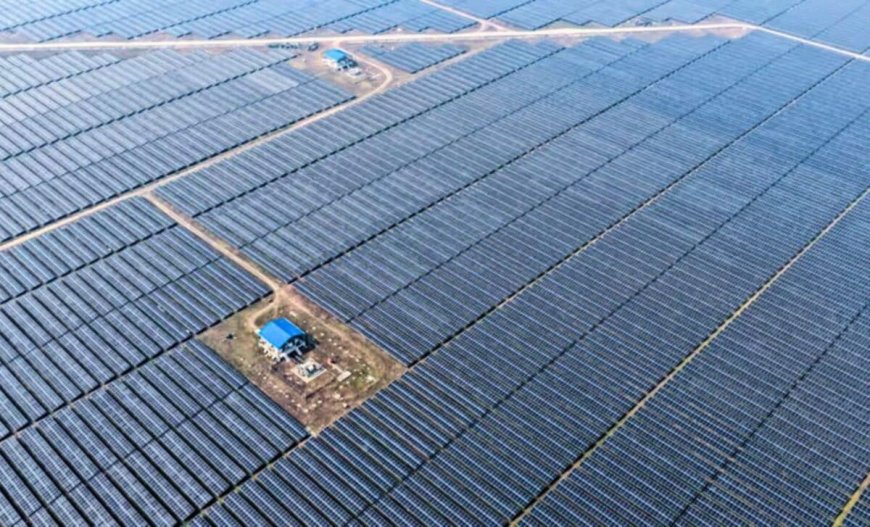
In several rural communities across Nigeria, workers have recently begun installing rows of solar panels beside clusters of homes and small businesses. The installations are not connected to the national transmission network. Instead, they form localized electricity systems designed to power nearby villages directly. These installations are part of a rapidly expanding network of solar mini-grids appearing across rural parts of the country.
Each installation includes photovoltaic panels, battery storage units, and short distribution lines linking homes and shops. Electricity is generated locally and delivered to customers without relying on distant power plants or long transmission lines. For many communities, the systems provide the first stable electricity supply in years. The installations are being accelerated by a $750 million energy program backed by the World Bank.

For decades, unreliable electricity has remained one of the largest infrastructure challenges in Africa’s most populous country. Power outages frequently force households and businesses to operate petrol or diesel generators to maintain daily activities. These machines supply electricity during grid failures but require constant fuel purchases. A new financing program now aims to expand clean power systems much closer to the communities that need them.
The $750 Million Plan Approved for Rural Solar Expansion
In December 2023, the World Bank approved a $750 million credit for renewable electricity expansion in Nigeria. The initiative is officially called the Distributed Access through Renewable Energy Scale-Up project, commonly known as DARES. Financing comes through the International Development Association, the concessional lending arm of the World Bank Group. The program focuses on decentralized renewable infrastructure rather than expanding large centralized power stations.
Implementation is being coordinated by Nigeria’s Rural Electrification Agency, which is responsible for improving electricity access in underserved regions. The agency works with private energy developers that build and operate solar installations. These developers receive targeted grants and technical support while installing systems in communities beyond the reach of the national grid. Project documents show the initiative aims to provide new or improved electricity access to 17.5 million people.
The funding model encourages private investment in distributed energy infrastructure. Developers receive performance-based grants after connecting homes or businesses to operational systems. This approach reduces the financial risk associated with rural electricity projects. It also encourages companies to deploy renewable installations more quickly.
Why Millions Still Depend on Petrol Generators
Despite its large economy, Nigeria continues to face a major electricity access gap. Estimates suggest around 86 million Nigerians still lack reliable electricity supply. Even households connected to the grid often experience frequent outages that can last several hours. As a result, petrol and diesel generators remain widespread across cities and rural towns.
These generators allow businesses to continue operating during blackouts. However, they require daily fuel purchases and frequent maintenance. The engines also produce significant noise and local air pollution. For small enterprises, generator fuel often represents one of the highest operating expenses.

A solar mini-grid provides a different approach to supplying electricity. Solar panels generate power during daylight hours while batteries store energy for evening use. The electricity then flows through short cables connecting nearby homes, shops, and workshops. Because the system operates locally, communities can receive power without waiting for long-distance grid expansion.
The Solar Program Designed to Attract Developers
The DARES program supports two main types of renewable energy systems. The first includes community-scale solar mini-grids capable of powering entire villages. The second involves solar home systems, which provide smaller household installations. Both technologies focus on communities located far from existing electricity infrastructure.
According to Business Insider Africa, developers must complete installations before receiving program incentives. Funding is released only after systems are operational and customers are connected. This performance-based financing model encourages developers to maintain working electricity networks. It also helps ensure projects deliver functioning infrastructure rather than incomplete installations.
The program also aims to support economic activity in rural areas. According to World Bank estimates, up to 237,000 micro, small, and medium-sized enterprises could gain improved electricity access through the initiative. These businesses include welding shops, grain mills, restaurants, and small retailers. Stable electricity supply allows them to operate equipment without relying on fuel-powered generators.
Earlier Projects Helped Test the Mini-Grid Model
The DARES initiative builds on an earlier program called the Nigeria Electrification Project. That initiative tested decentralized renewable energy systems in communities with limited grid access. Developers installed solar infrastructure in several states where transmission expansion was unlikely in the short term. The results provided technical and financial lessons for future electrification efforts.

Under the Nigeria Electrification Project, companies installed 125 solar mini-grids across multiple regions. Developers also deployed more than one million solar home systems to households located beyond the national grid. According to World Bank data, the installations provided electricity access to more than 5.5 million people. The experience helped shape the structure of the larger DARES program.
Mini-grid projects can be deployed faster than conventional power infrastructure. Once permits and financing are secured, installation can often be completed within a few months. Developers do not need to construct long transmission corridors or large substations. This makes decentralized solar systems particularly effective for remote settlements.
The Push to Replace Hundreds of Thousands of Generators
One of the most immediate impacts of the DARES program could be a reduction in generator use across Nigeria. Petrol and diesel generators remain the most common backup electricity source for households and businesses. During outages, these machines often operate for several hours each day. Fuel costs can accumulate quickly.
According to World Bank estimates, renewable installations under the program could replace more than 280,000 petrol and diesel generators. Solar mini-grids paired with battery storage can deliver consistent electricity without burning fuel. Businesses can operate tools, refrigeration systems, and lighting equipment throughout the day. This shift reduces both fuel costs and local emissions.
Reliable electricity can also influence local commerce. Shops can remain open later while refrigeration systems help preserve food products. Workshops that rely on electric machinery can operate without interruption. These changes often appear soon after mini-grid systems begin operating.
Enjoyed this article? Subscribe to our free newsletter for engaging stories, exclusive content, and the latest news.
What's Your Reaction?
 Like
0
Like
0
 Dislike
0
Dislike
0
 Love
0
Love
0
 Funny
0
Funny
0
 Angry
0
Angry
0
 Sad
0
Sad
0
 Wow
0
Wow
0