



























Newly Discovered Bus-Sized Asteroid to Whiz Past Earth Tonight at 34,621 KM per Hour!

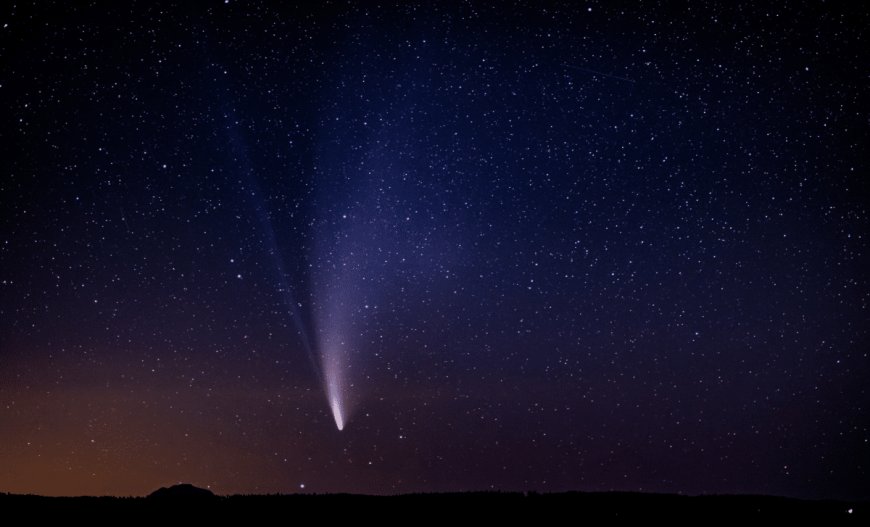
A newly discovered asteroid, 2026 EG1, is set to make an exceptionally close pass by Earth on the night of March 12, 2026. Discovered only days ago, this asteroid will come within 197,466 miles of Earth, closer than the moon itself. This flyby presents an intriguing opportunity to explore the unpredictable nature of near-Earth objects.
Understanding the Significance of Asteroid 2026 EG1
The asteroid 2026 EG1, measuring between 32 and 72 feet in width, was first spotted on March 8, 2026, making it one of the latest objects to be added to NASA’s growing database of near-Earth asteroids. With an elliptical orbit that spans approximately 655 days, this asteroid swings in and out of Earth’s orbit, often getting closer to our planet than many others. According to Space.com, It will make its closest pass at 11:27 p.m. EDT on March 12, traveling at an astonishing speed of 21,513 miles per hour (34,621 kilometers per hour), all the while safely passing under the southern hemisphere.
Though many may have concerns about the proximity of such a large object, experts emphasize that there is no risk to Earth or the Moon from this flyby. Instead, it offers a valuable opportunity for astronomers to gather data on asteroid behavior and characteristics. The passage of asteroid 2026 EG1 will be swift, taking just a few hours to fly by, and it will continue on its elliptical path around the sun.

Why Asteroid 2026 EG1 is Not a Threat to Earth
Despite its close approach, the asteroid presents no danger to Earth. The distance of 197,466 miles is relatively close compared to many other space objects, but it is still far enough to ensure safety. For reference, the average distance between the Earth and the Moon is about 238,855 miles, so this asteroid will pass at a distance significantly closer, but still well within the range that NASA considers non-threatening.
NASA’s Center for Near-Earth Object Studies (CNEOS) has been tracking such asteroids for decades. While the number of near-Earth objects has been steadily increasing, no significant asteroid impact capable of causing major damage is predicted to occur in the next 100 years, according to experts. This fact has eased the public’s concerns about asteroid impacts, and with new technologies like the Vera Rubin Observatory’s advanced capabilities, scientists continue to monitor and predict the paths of asteroids in our solar system.
Tracking the Growing Number of Near-Earth Objects
NASA’s efforts to monitor near-Earth objects like 2026 EG1 are more important than ever. As of now, NASA tracks over 41,000 near-Earth asteroids, with thousands more expected to be discovered in the coming years. In fact, the Vera Rubin Observatory has already contributed to the discovery of over 2,000 previously unknown objects in the solar system. As these asteroids become more accurately tracked, the potential for asteroid impact scenarios is being analyzed, which could lead to more effective planetary defense strategies.
Astronomers use advanced technologies and telescopes to study these objects from millions of miles away. By observing the size, speed, and trajectory of these asteroids, scientists can predict their future orbits and calculate potential risks. The increasing number of asteroid discoveries highlights the importance of global collaboration and research to protect Earth from potential impacts.
The Role of Asteroid Defense in Protecting Earth
NASA and international space agencies are not only focused on discovering and tracking asteroids but are also developing strategies for potential asteroid deflection. A critical part of planetary defense efforts involves conducting mock asteroid impact scenarios to improve global communication and response. These drills help prepare governments and space agencies for the unlikely event of a dangerous asteroid approaching Earth.
In addition, NASA has initiated groundbreaking missions aimed at learning how to redirect asteroids. These efforts could one day provide the technology needed to deflect an asteroid on a collision course with Earth. While such a scenario remains unlikely in the near future, preparation is crucial for the continued safety of our planet.
Enjoyed this article? Subscribe to our free newsletter for engaging stories, exclusive content, and the latest news.
What's Your Reaction?
 Like
0
Like
0
 Dislike
0
Dislike
0
 Love
0
Love
0
 Funny
0
Funny
0
 Angry
0
Angry
0
 Sad
0
Sad
0
 Wow
0
Wow
0