




























New 3D Map Unveils Hidden ‘Sea of Light’ Between Distant Galaxies

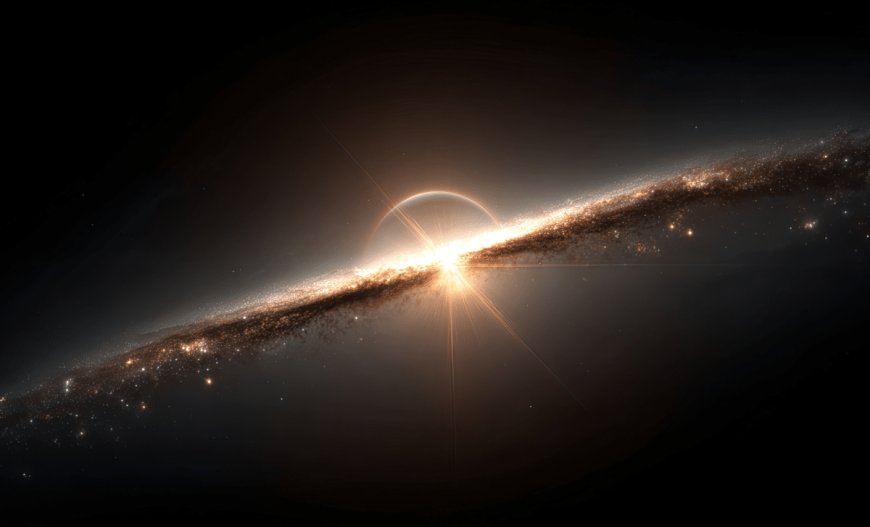
For decades, astronomers have struggled to visualize the universe during its early stages, when galaxies were forming and cosmic structures were taking shape. While the brightest galaxies are visible across billions of light-years, much of the faint matter in between remains hidden. A new study published in The Astrophysical Journal reveals that these seemingly empty regions are filled with a vast “sea of light” from excited hydrogen. Using data from the Hobby-Eberly Telescope Dark Energy Experiment (HETDEX), researchers created the most detailed 3D map yet of this cosmic glow, uncovering faint galaxies and intergalactic gas from 9 to 11 billion years ago.
Exploring The Early Universe’s Evolution Through Light
“Observing the early universe gives us an idea of how galaxies evolved into their current form, and what role intergalactic gas played in this process,” said Maja Lujan Niemeyer, a HETDEX scientist and recent graduate from the Max Planck Institute for Astrophysics, who led the development of the new map. She explains that the challenge with studying such distant objects is their faintness, making them incredibly difficult to observe directly. The new map, however, focuses on the faint but crucial light emitted by hydrogen atoms in their excited state, a light that is key to understanding the gas surrounding these distant galaxies.
This unprecedented map sheds light on galaxies from a time in the universe’s history when rapid star formation was taking place, a period when the cosmos was transitioning from a young and chaotic state to something more stable. The light captured by HETDEX reveals not only the galaxies themselves but also the surrounding gas clouds, which have remained largely unobserved in previous studies. This data could lead to new revelations about the early stages of galaxy formation and the impact of cosmic gas on shaping our universe.
Line Intensity Mapping: A Revolutionary Technique for Cosmic Mapping
At the heart of the study, published in The Astrophysical Journal, is the technique of Line Intensity Mapping, a method that allows astronomers to observe the distribution of elements like hydrogen across vast stretches of sky without focusing on individual galaxies. According to Julian Muñoz, a HETDEX scientist and assistant professor at The University of Texas at Austin, “Imagine you’re in a plane looking down. The ‘traditional’ way to do galaxy surveys is like mapping the brightest cities only: you learn where the big population centers are, but you miss everyone that lives in the suburbs and small towns.” Intensity mapping, in contrast, allows astronomers to capture the full extent of light across these areas, offering a much clearer view of the entire cosmic landscape.
By charting the distribution of Lyman alpha emissions, HETDEX captures both the bright galaxies and the less visible structures in between. These fainter objects, which have been largely overlooked in past research, are crucial for understanding how galaxies interacted with the gas around them during this early period. The data collected by HETDEX gives researchers a far more nuanced view of the universe at this critical stage in its development, revealing hidden patterns and connections that were previously unknown.

The Power of HETDEX’s Data: Unlocking a Treasure Trove of Cosmic Insights
Despite the vastness of the data collected by HETDEX, only a small portion has been analyzed so far. “However, we only use a small fraction of all the data we collect, around 5%,” explained Karl Gebhardt, HETDEX principal investigator and chair of UT Austin’s astronomy department. “There’s huge potential in using that remaining data for additional research.” This highlights the potential for future breakthroughs, as the remaining 95% of the data is expected to yield even more information about the universe’s early days.
Lujan Niemeyer also emphasized that HETDEX observes everything in a patch of sky, but only the brightest galaxies are currently analyzed. “But those galaxies are only the tip of the iceberg,” she said. “There’s a whole sea of light in the seemingly empty patches in between.” This “sea of light” is where much of the hidden cosmic history lies, offering a wealth of information about the diffuse gas and fainter galaxies that exist between the bright, well-known stars.
Supercomputing Power: Analyzing Half a Petabyte of Data
Creating this comprehensive map required immense computational power. The team used custom programming and supercomputers at the Texas Advanced Computing Center to sift through half a petabyte of data collected by the Hobby-Eberly Telescope. This data encompasses over 600 million spectra, charting the positions of more than one million bright galaxies. By combining this data with the knowledge of known galaxies, the team was able to predict the locations of fainter galaxies and gas clouds, creating a more detailed and accurate picture of the early universe.
In the words of Eiichiro Komatsu, a HETDEX scientist and scientific director at the Max Planck Institute for Astrophysics, “So, we can use the location of known galaxies as a signpost to identify the distance of the fainter objects.” This method not only brings the regions around bright galaxies into sharper focus but also adds clarity to the empty stretches in between.
Enjoyed this article? Subscribe to our free newsletter for engaging stories, exclusive content, and the latest news.
What's Your Reaction?
 Like
0
Like
0
 Dislike
0
Dislike
0
 Love
0
Love
0
 Funny
0
Funny
0
 Angry
0
Angry
0
 Sad
0
Sad
0
 Wow
0
Wow
0