





























NASA’s Artemis program isn’t just going to the moon but it’s turning astronauts into deep-space test subjects

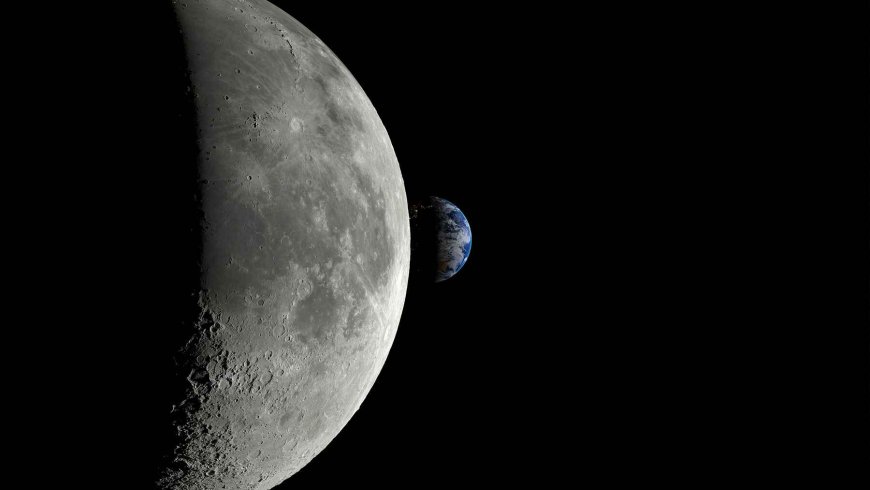
We are finally returning to the moon after decades of waiting.
The Artemis missions have become a major point of focus for the world as we prepare to return to the moon. But how exactly will the mission unfold, and what tests are the astronauts undertaking while in deep space? Thankfully, NASA has provided a few answers.
How will the Artemis II mission lay the foundation for future space exploration?
How the Artemis Moon missions will reopen the door to space exploration
The Artemis program officially started in 2017.
The first Artemis mission sent an unmanned craft via the Space Launch System (SLS) megarocket and the Orion spacecraft. It sent an Orion capsule all the way around the Moon and back to Earth in just 25.5 days.
The mission validated the performance and safety of the SLS megarocket and Orion spacecraft for future manned missions to the Moon.
While a few issues were identified and subsequently addressed, the next Artemis mission is the one that humanity has really been waiting for: a manned crew sent to the Moon and back.
After decades of stagnation, space study and exploration have reemerged
The last manned mission to the Moon took place in the 1970s, and since then, we have been relegated to telescopes to study space.
That’s not to say that we have not made revolutionary progress in the study of space in recent years. The Vera Rubin Observatory has opened the door to deep space study with astonishing results.
And that’s before we get to the latest and most notable innovation in space study, the James Webb Telescope.
Webb recently detected a strange lemon-shaped planet where the atmosphere is so dense and packed with carbon that astronomers believe that diamonds are being formed in its atmosphere.
Studying space and all that’s out there has recently been given somewhat of a PR boost.
A family in Texas recently saw an asteroid come crashing through their roof, with many outside the Lone Star State noting that they saw the celestial object breaking apart before impact.
Our collective attention has now shifted back to the Artemis II mission, which launched on April 1st.
NASA has stated that the astronauts on the latest Moon mission will act as test subjects for a number of studies. Are you as excited as we are to see people being slingshotted around the Moon to eventually return to Earth?
Houston, Artemis II is ready and willing for launch into deep space

NASA has become one of the most important agencies anywhere in the world.
Following a slight delay in February, the Artemis II mission was fast-tracked by the famous space agency towards a March launch date. NASA has come out to state that the mission is so much more than just testing whether we can actually reach the Moon.
This will be the first time that astronauts have been sent out to fly past and around the Moon and return to Earth for over 50 years.
NASA reveals another important factor as part of the Artemis II mission
The iconic space agency has noted that the astronauts on Artemis II will act like cosmic test subjects.
NASA will study human physiological responses to deep space. Such as stress and the immune system’s responses to deep space in humans. The Artemis II mission will lay the foundation for possible yearly lunar landings and even a mission to Mars in the not-too-distant future.
NASA has made a few changes to the color of the fuel tanks on Artemis II, with the hope of increasing its ability to handle deep space exploration. The mission launched successfully on Wednesday, April 1, 2026.
What's Your Reaction?
 Like
0
Like
0
 Dislike
0
Dislike
0
 Love
0
Love
0
 Funny
0
Funny
0
 Angry
0
Angry
0
 Sad
0
Sad
0
 Wow
0
Wow
0