




























NASA’s Artemis II Crew Shatters Space Records, Reaching the Farthest Distance Humans Have Ever Traveled!

In a historic milestone for space exploration, NASA’s Artemis II crew has shattered the record for the farthest distance traveled by humans from Earth. On April 6, 2026, four astronauts aboard the Orion spacecraft surpassed the Apollo 13 mission’s distance, marking a new chapter in humanity’s journey into space. As they venture farther than any humans before, their journey signifies a critical step in NASA’s Artemis program, which aims to return humans to the Moon and eventually send them to Mars.
Breaking Boundaries: The Artemis II Achievement
On Monday, April 6, 2026, at precisely 12:56 p.m. CDT, the Artemis II crew reached a groundbreaking milestone by traveling 248,655 miles from Earth. According to NASA, this momentous achievement eclipsed the previous record set by the Apollo 13 mission in 1970, establishing a new frontier in human space exploration. As the Orion spacecraft continues its journey, it is set to travel approximately 252,756 miles from Earth before looping back to our home planet.
NASA astronauts Reid Wiseman, Victor Glover, and Christina Koch, along with Canadian Space Agency astronaut Jeremy Hansen, are aboard the spacecraft. Their mission is not just a record-breaking flight but a crucial step in NASA’s goal to establish a sustainable presence on the Moon.
“At NASA, we dare to reach higher, explore farther, and achieve the impossible,” said Dr. Lori Glaze, acting associate administrator for Exploration Systems Development at NASA. “That’s embodied perfectly by our Artemis II astronauts – Reid, Victor, Christina, and Jeremy. They are charting new frontiers for all humanity.”

Credit: NASA
Exploring the Moon’s Far Side
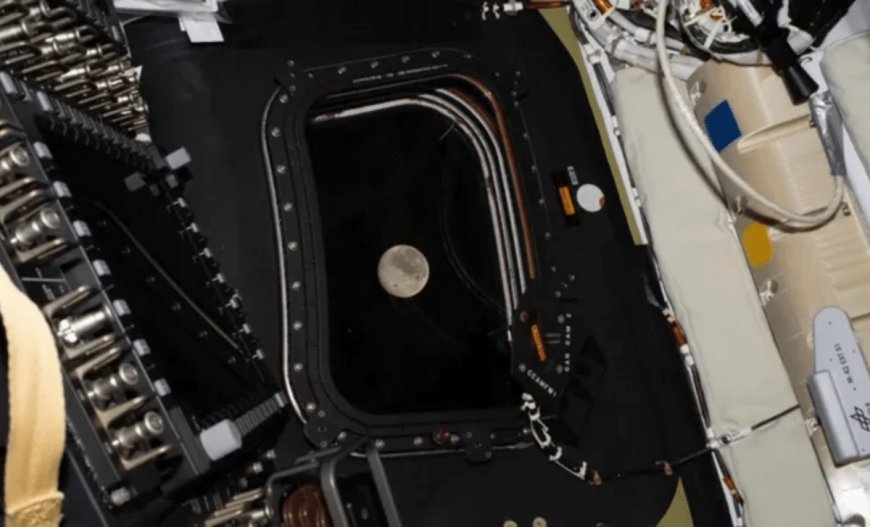
As Artemis II progresses, the crew will pass the Moon, coming within approximately 4,067 miles of its surface. This proximity will allow the astronauts to witness parts of the Moon that no human has seen before. Their unique vantage point will provide invaluable scientific data and stunning imagery of lunar features, some of which have never been captured before.
In addition to the mission’s scientific significance, the crew has also proposed naming two lunar craters. One is named after their spacecraft, “Integrity,” and the other honors Reid Wiseman’s late wife, Carroll. This gesture highlights the personal stakes for the astronauts, who are not only pioneers in space but also honoring the legacy of their loved ones and predecessors in space exploration.
“From the cabin of Integrity here, as we surpass the furthest distance humans have ever traveled from planet Earth, we do so in honoring the extraordinary efforts and feats of our predecessors in human space exploration,” said Hansen. “We will continue our journey even further into space before Mother Earth succeeds in pulling us back to everything that we hold dear. But we most importantly choose this moment to challenge this generation and the next to make sure this record is not long-lived.”
The Future of Lunar Exploration
The Artemis II mission is far from just a record-setting journey; it is a critical test for NASA’s broader Artemis program. The spacecraft’s systems, as well as the astronauts’ ability to operate in deep space, are being put to the test to ensure that future missions can land astronauts on the Moon, and eventually establish a permanent base. The Artemis program’s long-term goal is not just to revisit the Moon but to lay the groundwork for human missions to Mars.
NASA’s astronauts are providing essential data that will inform future missions and refine technologies needed for long-duration space travel. In the coming days, the crew will return to Earth, with splashdown expected on April 10, 2026, off the coast of San Diego. Their successful return will mark the completion of a mission that has captured the world’s attention and solidified humanity’s place in space exploration.
A Step Toward Mars
The Artemis II mission is just the beginning of NASA’s ambitious plans for space exploration. Following this success, NASA will continue sending astronauts on increasingly complex missions to explore the Moon and eventually Mars. Each step builds on the previous one, ensuring that humans will not only return to the Moon but establish a lasting presence there, creating a platform for even deeper space exploration.
In the words of Dr. Lori Glaze, “Their dedication is about more than breaking records – it’s fueling our hope for a bold future.” As humanity ventures farther into space, the Artemis II crew is laying the groundwork for future generations of explorers who will continue to reach for the stars.
Enjoyed this article? Subscribe to our free newsletter for engaging stories, exclusive content, and the latest news.
What's Your Reaction?
 Like
0
Like
0
 Dislike
0
Dislike
0
 Love
0
Love
0
 Funny
0
Funny
0
 Angry
0
Angry
0
 Sad
0
Sad
0
 Wow
0
Wow
0