


























NASA’s Artemis 2 to Break Speed Records with 24,000 MPH Earth Re-Entry

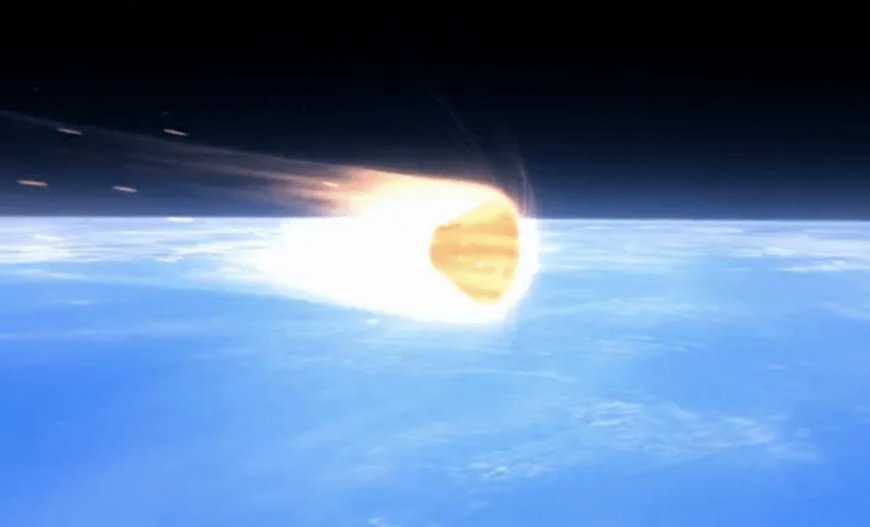
On April 10, 2026, NASA’s Artemis 2 mission will see astronauts Reid Wiseman, Victor Glover, Christina Koch, and Jeremy Hansen re-enter Earth’s atmosphere at a record-breaking speed of 23,840 mph. This incredible feat is part of the Artemis program’s ambitious goal to return astronauts to the Moon and beyond. But the most significant challenge remains the Orion capsule’s heat shield, crucial to ensuring a safe descent. According to a study from Space.com, the high-speed re-entry will put this vital technology to the test as NASA aims to safeguard astronauts during their fiery plunge back to Earth.
The Dangers of Re-Entry at 23,840 MPH
NASA’s Artemis 2 astronauts are currently orbiting the Moon, but the most dangerous part of their journey lies ahead. The spacecraft’s return to Earth will be the ultimate test of both technology and human endurance. At an astonishing speed of 23,840 mph (38,367 km/h), the astronauts will experience extreme heat and pressure. The friction between the capsule and Earth’s atmosphere will generate temperatures reaching up to 5,000°F (2,760°C). That’s hot enough to incinerate most materials, but the heat shield, a critical component of the Orion capsule, will be tasked with absorbing and dissipating this incredible heat.
This is not merely a dramatic descent; it’s a high-risk maneuver that will determine the success or failure of future space missions, including the ultimate goal of landing astronauts back on the Moon. With the speed of a bullet and temperatures that could melt most spacecraft, the heat shield must hold up under extreme conditions. Any failure could jeopardize the lives of astronauts on board.
What Went Wrong in Artemis 1
In December 2022, the Artemis 1 mission carried out an uncrewed re-entry of the Orion capsule. The mission was successful overall but revealed critical flaws in the heat shield. During its fiery descent, the heat shield suffered significant damage due to the expansion of trapped gases, which caused chunks of heat-resistant material, Avcoat, to dislodge. According to Space.com, this loss of material reduced the effectiveness of the heat shield, prompting NASA to reconsider its re-entry strategy for Artemis 2.
The original plan for Artemis 2 involved a series of “skip maneuvers,” like a stone skipping across water, to gradually lose velocity. However, the Artemis 1 test revealed the risks of this approach. In light of the damage sustained by the heat shield, NASA has decided to take a more direct route: a steeper angle of re-entry that minimizes the time the capsule spends in the most dangerous part of the descent.
Engineering Solutions: A Steeper Re-Entry for Artemis 2
NASA engineers are no strangers to the complexities of re-entry. With the lessons learned from Artemis 1, the team is refining the trajectory for Artemis 2’s return to Earth. The capsule will enter the atmosphere at a sharper angle than initially planned. This will help reduce the amount of time it spends at the highest velocities and temperatures, ultimately minimizing the chances of heat shield failure.
Despite this more direct approach, the heat shield will still face immense stress. The friction generated by the capsule’s high speed will ignite a massive fireball around it, and for a short period, communication with ground control will be lost due to the plasma surrounding the capsule. This moment is always a tense one in space missions, as teams on the ground wait for confirmation that the capsule has survived the harsh conditions.
Once the capsule reaches 26,500 feet (8,077 meters) above Earth, the first set of parachutes will deploy to slow its descent. These include smaller forward-bay-cover chutes. As the capsule descends further, larger drogue chutes will deploy to stabilize it, preparing for the final deployment of the main parachutes at 9,500 feet (2,896 meters). These parachutes, which are an engineering marvel themselves, will slow the capsule to a safe descent speed of just under 20 mph (32 kph), slow enough for a gentle splashdown in the Pacific Ocean.
The Importance of the Heat Shield: A Vital Innovation
At the heart of this re-entry challenge lies the heat shield, an engineering marvel made of titanium and covered with 186 blocks of Avcoat, a heat-resistant material. Each block is 1.5 inches thick and designed to withstand the blistering heat and intense pressure of atmospheric re-entry. The heat shield’s ability to absorb and dissipate heat is crucial for ensuring the safety of the astronauts aboard.
NASA’s heat shield technology has evolved over the years, from the Apollo missions to the latest Artemis program. The key difference in the Artemis 2 mission is the complexity of the re-entry. Unlike the Apollo capsules, which made a straightforward descent, Artemis 2 must deal with higher speeds and more extreme conditions. The spacecraft’s design and the heat shield material have been fine-tuned to handle these new challenges.
Recovery and the Final Stage of the Mission
Once the parachutes have deployed and the capsule is descending gently toward Earth, the recovery team is ready to act. U.S. Navy helicopters from the USS John P. Murtha will perform search and rescue operations to retrieve the astronauts from their capsule. The recovery teams have undergone rigorous training, including 12 mock recovery tests known as Underway Recovery Tests (URTs). These exercises, along with a real recovery operation during Artemis 1, have prepared the team for this critical moment.
The astronauts are expected to be safely recovered from the capsule, which will be floating on the Pacific Ocean’s surface, secured by flotation devices. If all goes as planned, this successful splashdown will mark a significant milestone in the Artemis program and the mission’s larger goal of returning humans to the Moon.
Enjoyed this article? Subscribe to our free newsletter for engaging stories, exclusive content, and the latest news.
What's Your Reaction?
 Like
0
Like
0
 Dislike
0
Dislike
0
 Love
0
Love
0
 Funny
0
Funny
0
 Angry
0
Angry
0
 Sad
0
Sad
0
 Wow
0
Wow
0