



























Mysterious New Dinosaur-Like Creature Found in China, Experts Left Stunned by Its Strange Features

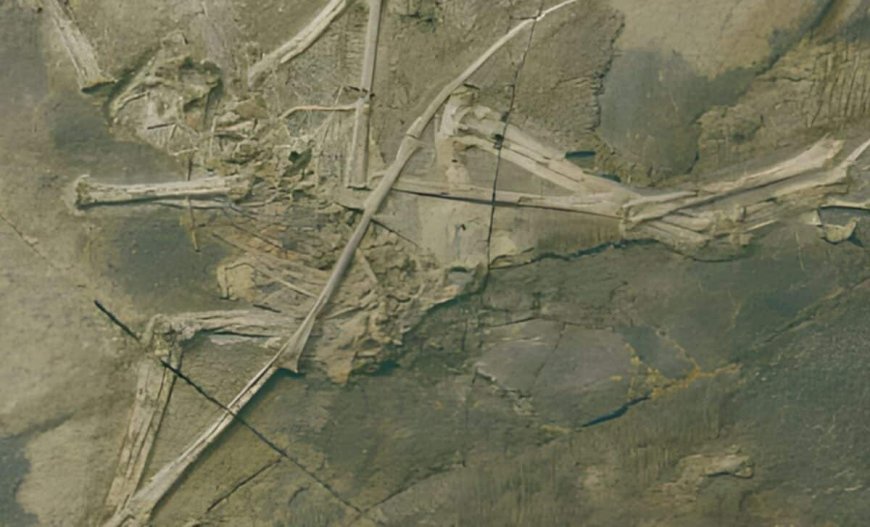
A new dinosaur species, Darwinopterus camposi, has been discovered in the Middle Jurassic rocks of western Liaoning, China. The nearly complete skeleton, dating back about 160 million years, is an exciting find that sheds fresh light on the evolution of these ancient flying reptiles.
The discovery itself takes place in a region that’s become something of a hotspot for fossil hunters. Western Liaoning, particularly the Tiaojishan Formation, has already yielded a treasure trove of prehistoric specimens, and this latest find adds to that growing collection.
The One-of-a-Kind Fossil
The fossil of Darwinopterus camposi was found in a gray-green shale slab from the Tiaojishan Formation, and it’s nearly complete. We’re talking about a fossil that includes the skull, lower jaw, vertebrae, and a bunch of limb bones; an almost full body, which is a rare treat for paleontologists.

“China has been a hotspot for pterosaur research for quite some time, presenting new discoveries that have fostered the study of these extinct flying reptiles,” said Dr. Xin Cheng, one of the paleontologists who worked on the discovery,
He was understandably excited about how well-preserved the specimen is. With an estimated wingspan of just 75 cm (30 inches), this little pterosaur wasn’t massive, but it’s still a fascinating creature in its own right.
One of the cool things about this species is how it blends characteristics from two different pterosaur lineages. The Wukongopteridae family, to which Darwinopterus camposi belongs, shows a mix of features you’d expect from older, more primitive pterosaurs and the more evolved pterodactyloids.
What Distinguishes Darwinopterus camposi from Other Dinosaurs
So, what makes Darwinopterus camposi different from other pterosaurs? According to a study, published in Anais da Academia Brasileira de Ciências, the most obvious is its premaxillary crest. Unlike other pterosaurs with more rounded crests, this one has a straight dorsal margin and a smooth side, which sets it apart. The fourth wing phalanx, shorter than the first, is another defining feature of this exceptional pterosaur.

As Dr. Cheng and his colleagues explained, these differences could help them piece together how this species fits into the larger picture of pterosaur evolution.
“More specimens and a closer look at the fusion of bones are needed to gain a better understanding of the ontogeny of the species that make up this interesting clade of pterosaurs.”
What’s interesting is how these features contribute to the overall diversity within the Wukongopteridae family. Even within this specific group of pterosaurs, Darwinopterus camposi is clearly a bit of an oddball, and that diversity is important. It shows that pterosaurs were far from one-size-fits-all creatures.
Growing Up Pterosaur
Another intriguing aspect of the fossil is what it reveals about how these creatures grew. The skull shows that some of the bones fused very late in the pterosaur’s development. Normally, you might expect these bones to fuse earlier, but in Darwinopterus camposi, it was a more gradual process.
“The skull of the holotype of Darwinopterus camposi shows that some cranial elements only fuse at an extremely late stage during ontogeny.”

This late fusion could help paleontologists understand more about how pterosaurs developed compared to other creatures from the same period. Of course, more specimens would help scientists get a clearer picture, but for now, this one fossil is opening doors to new possibilities.
Enjoyed this article? Subscribe to our free newsletter for engaging stories, exclusive content, and the latest news.
What's Your Reaction?
 Like
0
Like
0
 Dislike
0
Dislike
0
 Love
0
Love
0
 Funny
0
Funny
0
 Angry
0
Angry
0
 Sad
0
Sad
0
 Wow
0
Wow
0