



























Malaysia Swapped Streetlights With Glow-in-the-Dark Roads Before a Major Problem Came to Light

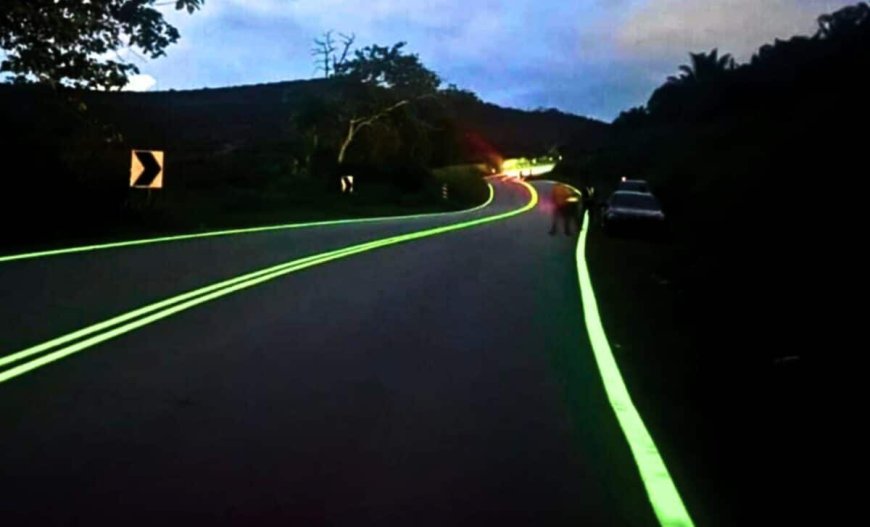
A stretch of road near Semenyih once looked like a small piece of the future. Instead of relying on streetlights, the lane markings themselves glowed after dark, storing daylight and releasing it at night on a two-lane road in Hulu Langat, Selangor. The pilot covered 245 meters and was introduced in late October 2023 at the junction of Jalan Sungai Lalang and Jalan Sungai Tekali.
The appeal was easy to understand. The area had no streetlights, and Malaysia’s Public Works Department framed the test as a practical road-safety measure, not a visual stunt. In comments reported from a JKR Facebook post, the department called it “our attempt to bring innovation into road engineering.”
For a while, the idea gathered real momentum. Early reports said drivers responded well, especially on a route where darkness made ordinary lane lines harder to follow. Works Minister Alexander Nanta Linggi said the markings could remain visible for up to 10 hours and still gave “a good glow effect” in rainy weather, while the ministry continued evaluating the project’s cost and effectiveness.
Why the Pilot Drew Attention So Quickly
The Semenyih test arrived with a simple promise: safer guidance on roads that do not have conventional lighting. According to Paul Tan’s Automotive News, the project involved 490 meters of glow-in-the-dark road markings across a 245-meter stretch, positioned as an alternative to road studs, or “cats’ eyes.” During the day, the markings looked conventional. At night, they were meant to keep working without electricity.

That idea was not unique to Malaysia. The Dutch Smart Highway project developed by Studio Roosegaarde and Heijmans used Glowing Lines that charged during the day and glowed at night, with an early Dutch trial lasting three months and producing lines visible for up to eight hours each night. The concept treated the road itself as a lighting surface.
Malaysia’s version, though, had a more immediate public-works logic. The Semenyih installation was presented as an attempt to improve visibility on poorly lit rural roads. That framing matched the early local coverage: this was a safety test for real traffic conditions, not just a demonstration piece.
Expansion Plans Came Before the Cost Problem Landed
The pilot’s positive reception quickly led to bigger plans. In February 2024, Selangor said it would expand the glow-in-the-dark markings to 15 additional locations across all nine districts in the state. The proposed rollout covered about 15 kilometers of roads in places including Sepang, Kuala Langat, and Petaling, with an estimated cost of RM900,000.
Other states were also testing the idea. Johor identified 31 roads for pilot projects, with one 300-meter stretch on Jalan Paloh J16 in Batu Pahat among the locations mentioned. At that point, the experiment looked less like a one-off and more like the start of a broader policy discussion about how to improve visibility on darker roads.

The problem was that the economics were already working against it. The government said photoluminescent paint costs RM749 per square meter, compared with RM40 per square meter for conventional road-marking paint. That gap made the glowing version nearly 20 times more expensive before questions of durability and maintenance were fully settled.
The Quote That Changed the Story
By November 2024, the tone had changed completely. Deputy Works Minister Ahmad Maslan told Parliament, “The cost is too high, so we are probably not going to continue with the glow-in-the-dark lanes.” He added a second line that mattered just as much: “We ran tests, but it did not satisfy the experts from the ministry.”
Those two remarks turned a futuristic-sounding pilot into a familiar infrastructure story. The markings may have worked well enough to impress drivers, but that was not the same as clearing the thresholds for cost, performance and scale. The government’s public explanation did not dwell on aesthetics or novelty. It came back to budget and expert assessment.
What had looked like a possible new model for lighting dark roads instead ran into a problem that has stalled many promising transport ideas before it: a technology can be interesting, visible, and even useful, yet still fail when judged against maintenance requirements, engineering standards, and the realities of public spending.
What the Experiment Still Revealed
The failed rollout does not make the original problem disappear. Road agencies everywhere still have to solve the same basic challenge: how to make lane markings visible enough to guide drivers safely at night and in bad weather, especially where lighting is limited. Japan’s National Institute for Land and Infrastructure Management has published work on indicators for the maintenance and management of lane markings on expressways, underscoring how seriously transport authorities treat the condition and visibility of markings as part of a wider safety system.
That may be the clearest lesson from Semenyih. Malaysia found a technology that caught public attention and, at least initially, appeared useful on dark roads. But usefulness was not enough. On the numbers presented by the government, and on the ministry’s own testing, the glow-in-the-dark markings could not justify a larger rollout. The 245-meter pilot remained what it began as: a trial, not a new standard.
In that sense, the project was still revealing. It showed both the appeal and the limit of innovation in road engineering. A glowing lane line can make a powerful first impression. Turning it into everyday infrastructure is a much harder test.
Enjoyed this article? Subscribe to our free newsletter for engaging stories, exclusive content, and the latest news.
What's Your Reaction?
 Like
0
Like
0
 Dislike
0
Dislike
0
 Love
0
Love
0
 Funny
0
Funny
0
 Angry
0
Angry
0
 Sad
0
Sad
0
 Wow
0
Wow
0