
























Lost for 96 Years Beneath the Nile, the Missing Half of a Legendary Egyptian Statue Has Finally Been Found

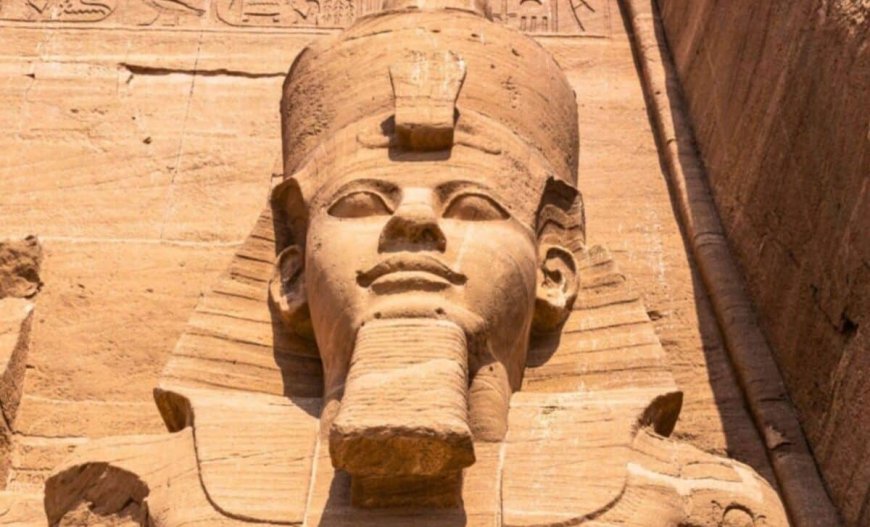
The silent landscape of El Ashmunein has finally yielded the remaining half of a royal puzzle that lay fractured for nearly a century. Deep beneath the sediment of Middle Egypt, the upper torso of a massive limestone figure was recovered, ending an archaeological search that began in the 1930s. This physical reunification of a pharaonic monument marks a pivotal moment for the joint Egyptian-American mission operating at the site of ancient Hermopolis Magna.
For decades, only the lower half of this seated colossus was known to scholars, standing as a solitary reminder of a vanished temple complex. The recent identification of the matching upper section allows for the first full reconstruction of the monument in over a millennium. This achievement provides researchers with a rare, complete look at the scale of royal propaganda utilized during the 19th Dynasty.
The logistical complexity of the extraction and the subsequent stabilization of the limestone have remained at the forefront of the mission’s 2025 agenda. Now, in early 2026, the two segments are being integrated to restore the statue to its estimated height of seven meters. This effort serves as a primary case study for modern conservation techniques applied to New Kingdom artifacts found in challenging geological conditions.
The 94-Year-Old Architectural Cold Case Finally Solved
The identification of the upper fragment relied on a comparative analysis of the limestone composition and matching inscriptions found on the back pillar. Researchers reported that the hieroglyphic texts on the newly discovered torso list the various titles of Ramesses II, which correlate directly with the inscriptions on the lower section found by German archaeologist Günther Roeder in 1930. These titles were designed to glorify the pharaoh and project imperial stability during the 13th century BC.
Official statements from the Egyptian Ministry of Tourism and Antiquities indicate that the upper block measures roughly 3.8 meters in height. The successful recovery of this section required specialized excavation techniques to protect the weathered limestone from the fluctuating water table of the Nile Valley. The Reuters report detailing the initial find notes that the mission utilized advanced ground-penetrating radar to locate the torso submerged beneath layers of later sedimentary deposits.

The logistical challenge of moving a multi-ton limestone block led to a year-long conservation period. Experts at the University of Colorado participated in the documentation process, ensuring the structural integrity of the porous stone was maintained before the physical joining of the pieces. This period of study also revealed traces of ancient pigments suggesting the statue was once vividly painted, a common feature of royal monuments during the New Kingdom.
A King’s Forgotten Footprint in the City of Wisdom
The presence of such a massive monument at Hermopolis Magna clarifies the geopolitical importance of the city during the 19th Dynasty. Ramesses the Great is renowned for his expansive building projects at Luxor and Abu Simbel; however, his investment in Middle Egypt illustrates a calculated effort to unify the administrative and religious centers of the Nile. Hermopolis was a strategic junction between the northern and southern reaches of the empire.
Historical data indicate that Ramesses II reigned for 66 years, a period characterized by intense monument construction following the Battle of Kadesh. The statue at El Ashmunein was likely part of a grand entrance to a temple dedicated to Thoth, though centuries of stone quarrying in the medieval period destroyed much of the surrounding architecture. The Britannica records for the site highlight its later significance as a Greco-Roman provincial capital, which frequently repurposed older Pharaonic materials.
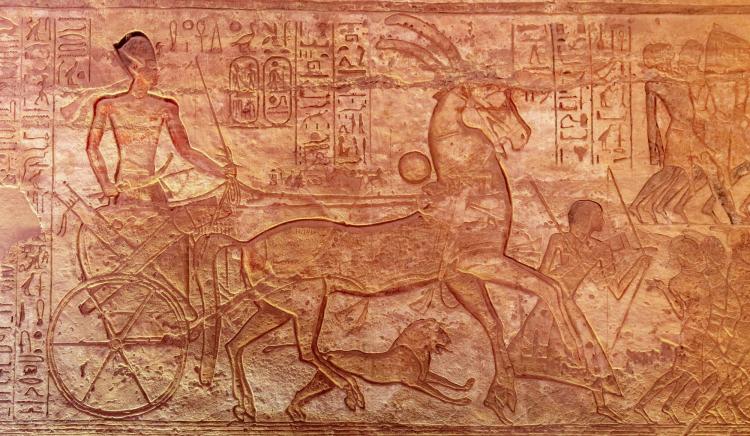
Methodologically, the discovery underscores the value of revisiting sites previously excavated during the early 20th century. Earlier missions often lacked the technology to detect deeply buried stone blocks or prioritized different areas of the site. The 2024 find suggests that other major fragments of the Hermopolis temple complex may still reside beneath the modern agricultural landscape, currently protected by the very silt that once hid the Ramesses torso.
Turning the Tide Against the Rising Nile
The completion of the restoration has prompted a broader discussion regarding the management of archaeological sites in Middle Egypt. The Ministry of Tourism and Antiquities has signaled a shift toward in-situ preservation, where monuments are displayed at their original locations rather than being moved to centralized museums in Cairo. This strategy aims to distribute tourism interest more equitably across the country while providing historical context to regional centers.

Research timelines for 2026 and 2027 include an extensive survey of the area surrounding the statue to identify the foundations of the temple pylon it once guarded. This work is complicated by local agricultural needs and the necessity of managing groundwater levels, which can accelerate the degradation of limestone. Engineers are currently evaluating drainage systems to protect the reassembled statue from long-term environmental damage.
The investigation into the statue’s original collapse remains focused on seismic data from the late antiquity period. The joint mission has scheduled a secondary excavation phase to begin in late 2026, targeting the northern quadrant of the temple of Thoth to locate the corresponding colossi that typically stood in pairs at such entrances.
Enjoyed this article? Subscribe to our free newsletter for engaging stories, exclusive content, and the latest news.
What's Your Reaction?
 Like
0
Like
0
 Dislike
0
Dislike
0
 Love
0
Love
0
 Funny
0
Funny
0
 Angry
0
Angry
0
 Sad
0
Sad
0
 Wow
0
Wow
0