



























James Webb Telescope Unveils Hidden Stars in Star-Forming Region W51

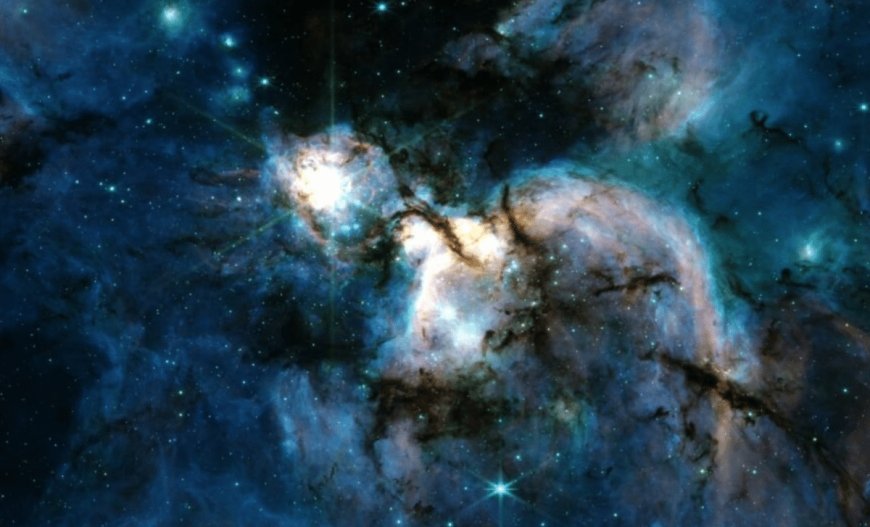
the James Webb Space Telescope (JWST) has uncovered the hidden mysteries of the W51 star-forming region, giving astronomers an unprecedented view of young, massive stars that were previously obscured by dust. This breakthrough offers a window into the early stages of star formation, setting the stage for deeper insights into the forces that shape the universe.
The Power of Infrared: Seeing What Was Once Invisible
For decades, astronomers have struggled to observe the birth of stars shrouded by cosmic dust. Traditional optical telescopes, along with ground-based infrared technology, have not been able to penetrate these dense clouds to reveal the youngest stars in their early stages. However, the JWST’s unparalleled infrared technology has changed everything. In the latest study, published in The Astronomical Journal, a team of researchers from the University of Florida used JWST to peer through the dust clouds in the W51 star-forming region, revealing young stars that had never been visible before.
“We can now see through the dust to view the young stars,” said Adam Ginsburg, Ph.D., a professor of astronomy at UF. “Before, this was impossible with optical and infrared telescopes.”
This breakthrough has allowed astronomers to study stars that are still in the process of forming, shedding light on the mechanisms driving their growth.

A Look Into the Heart of Star Formation
The W51 region, known for its massive young stars, is one of the most active star-forming areas in our galaxy. With JWST’s superior resolution, scientists were able to observe the intricate processes that lead to the birth of these stars, some of which are still growing. These stars have only started to form within the past million years, and many are still in the midst of this critical phase.
The images captured by JWST have revealed not only young stars but also dark filaments of gas, ionized gas bubbles, and the powerful radiation interacting with the surrounding gas. These features are vital in understanding how stars evolve and how they influence their environments.

Taehwa Yoo, a doctoral candidate on the research team, emphasized the importance of these observations:
“Because of James Webb, we can see those hidden, young massive stars forming in this star-forming region. By looking at them, we can study their formation mechanisms.”
This insight could help answer long-standing questions about the role high-mass stars play in the cosmos.
What Makes This Discovery Unique
What sets this discovery apart is the sheer quality of the images. While this region had been observed before, previous photographs were of lower resolution and could not capture the same level of detail. JWST’s capabilities, however, have brought these stars and their environments into sharp focus.
“They are not the first photos of this region, but they are the best,” said Ginsburg. “They’re so much better that they essentially are brand new photos.” The improved resolution has allowed researchers to identify thousands of smaller stars and observe the effects of hot stellar winds interacting with their surroundings. These new images have provided astronomers with crucial data that they can use to refine models of star formation.

Credit: NASA, ESA, CSA, Yoo & Ginsburg (UF). Image processing: A Pagan (STScI)
Every time the team reviews these images, they uncover new surprises. “Every time we look at these images, we learn something new and unexpected,” Ginsburg added, underscoring the depth of information these images contain.
Comparing Data: The Role of Other Telescopes
While JWST has revolutionized the study of star formation, the research team did not rely solely on its data. To gain a more comprehensive understanding, they also compared JWST’s findings with observations from the Atacama Large Millimeter/submillimeter Array (ALMA). The two telescopes provided complementary insights: while JWST revealed young stars hidden by dust, ALMA captured aspects of star formation that are invisible to infrared light, showing a more complete picture.
By combining data from both telescopes, researchers were able to determine that only a small fraction of stars are visible to both. This emphasizes the need for multiple types of observation in order to fully comprehend the complex process of star formation.
Enjoyed this article? Subscribe to our free newsletter for engaging stories, exclusive content, and the latest news.
What's Your Reaction?
 Like
0
Like
0
 Dislike
0
Dislike
0
 Love
0
Love
0
 Funny
0
Funny
0
 Angry
0
Angry
0
 Sad
0
Sad
0
 Wow
0
Wow
0