



























It Looked like a Normal Bee at First. Then a Scientist Realized She Was Seeing Something Lost for 119 Years

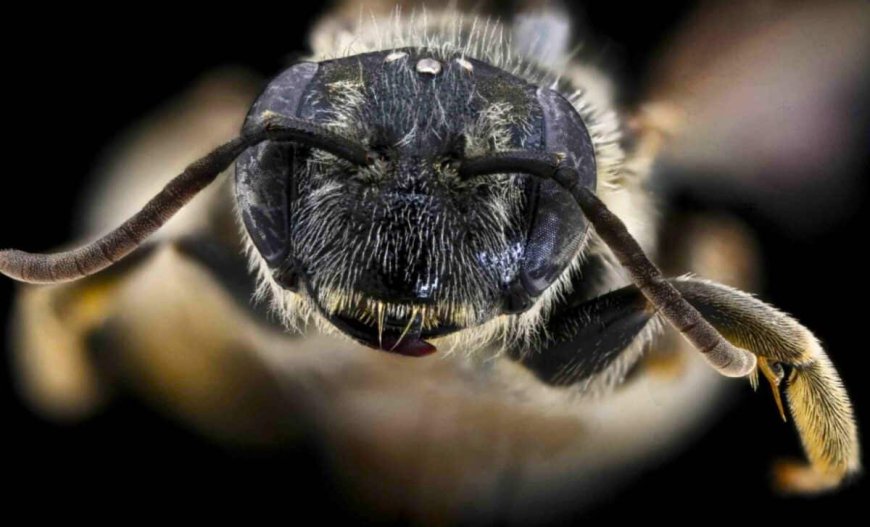
In a research orchard in Syracuse, pollinator ecologist Molly Jacobson swept her net through the air just 10 feet from where she had spent the entire summer. Within minutes, she caught two small brown bees on an American chestnut flower. She had just found something no one had seen in Central New York for more than a century.
The insect was the chestnut mining bee, Andrena rehni, a species that had not been documented in that part of the state since 1904. Jacobson collected the two specimens from the SUNY College of Environmental Science and Forestry (ESF) orchard in July 2025, confirming only the second known living population of the bee in New York. As she later told The Guardian, “I had a feeling in my gut that it would be here.”
A ‘Holy Grail’ Bee That Had Disappeared From Records
For decades, experts assumed the chestnut mining bee had vanished from New York. The New York Natural Heritage Program labeled it “possibly extirpated” in its 2022 pollinator survey, a formal classification meaning the species was likely gone from the state.
The last record came from southern New York in 1904. After that, nothing. No sightings, no museum specimens, no evidence that the bee still existed anywhere in the region. Jacobson calls it a “holy grail kind of bee” that entomologists had been actively hunting for years.

That changed in 2023, when Jacobson located a population at Lasdon Park and Arboretum in Westchester County. A bee specialist at the United States Geological Survey confirmed the identification, and the find was published in the journal Northeastern Naturalist in 2024. That study documented the first living specimen of Andrena rehni in New York in 119 years.
The Syracuse discovery pushes the story further north. It marks the first time the bee has ever been recorded north of the Hudson Valley in New York, a couple hundred miles beyond its previously known range. ESF issued a press release calling the find a major expansion for the species.
A Tiny Specialist That Lives on One Tree
The chestnut mining bee is not a social, hive-dwelling insect. It lives alone, nests in the ground, and does not sting. What makes it unusual is its diet.
The bee is a pollen specialist, relying almost entirely on chestnut and chinquapin flowers. Without those specific blooms, the female cannot collect pollen to feed her young, and the species cannot reproduce. This makes it an oligolectic species, one of the rarest types of bees in North America. “The lives of most wild bees are a mystery to us,” Jacobson told The Guardian. “We don’t know where they nest, or what their nests look like.”

That specialization worked fine when the American chestnut dominated eastern forests. Before a fungal blight arrived in the early 1900s, an estimated three to four billion American chestnut trees covered the region, roughly a quarter of all hardwoods. People called it the redwood of the East.
The blight killed billions of trees in just a few decades. The chestnut mining bee lost its food source and nearly disappeared alongside the tree.
A Discovery in an Urban Orchard, Surrounded by Highways
The Syracuse orchard where Jacobson found the bee is part of ESF’s American Chestnut Research and Restoration Project. Researchers there grow a mix of American chestnut, chinquapin, hybrids and Chinese chestnut, testing different strategies to bring back a tree that once shaped entire landscapes.
What makes the discovery surprising is the location. The orchard sits in a densely urbanized part of Syracuse, surrounded by highways. “You’d think that wasn’t a great landscape for this bee to be in,” Jacobson told The Guardian. The find suggests the species can persist in managed orchards inside cities, not just in remote forests.

Jacobson’s moment of discovery happened almost by accident. She had a few minutes before packing up to leave, started swinging her net, and found two bees in 10 minutes. “They must have been there the whole time, and yet no one had taken the time to really look,” she said.
Why This Matters for Chestnut Restoration and Citizen Science
The return of the chestnut mining bee offers a living example of how habitat restoration works. As ESF scientist Andrew Newhouse said, restoring a keystone tree can support specialized wildlife that had nearly disappeared alongside it.
Jacobson emphasizes that people should not assume only pristine wilderness holds rare species. “We have to stop working on the assumption that super-pristine habitats are the only things that have great things left in them,” she told The Guardian. She called on the public to look in their own backyards, noting that citizen science is essential because “that’s the place most scientists can’t search.”

A Tumblr post from the USGS Bee Inventory and Monitoring Lab had previously highlighted how easily rare bees like this one can go unnoticed, urging the public to report sightings.
In New York, the chestnut mining bee is classified as imperiled and is considered one of the rarest bees in the state. Jacobson describes it as an indicator species that shows the surrounding environment is still diverse enough to support wildlife that depends on a single resource.
Researchers still know very little about the bee’s ecology. No one has ever found its nests. It remains unclear whether it will use non-native chestnut species. The Syracuse population offers a chance to study those questions.
For now, the chestnut mining bee remains easy to overlook. It is small, brown and quiet on a flower spike. But as Jacobson said, “I can say that I have inspired some people to want to protect insects and that’s the only way that conservation is going to work.”
Enjoyed this article? Subscribe to our free newsletter for engaging stories, exclusive content, and the latest news.
What's Your Reaction?
 Like
0
Like
0
 Dislike
0
Dislike
0
 Love
0
Love
0
 Funny
0
Funny
0
 Angry
0
Angry
0
 Sad
0
Sad
0
 Wow
0
Wow
0