




























Hidden Beneath the Sands, Archaeologists Find the Perfectly Preserved Remains of a 395-Year-Old Shipwreck

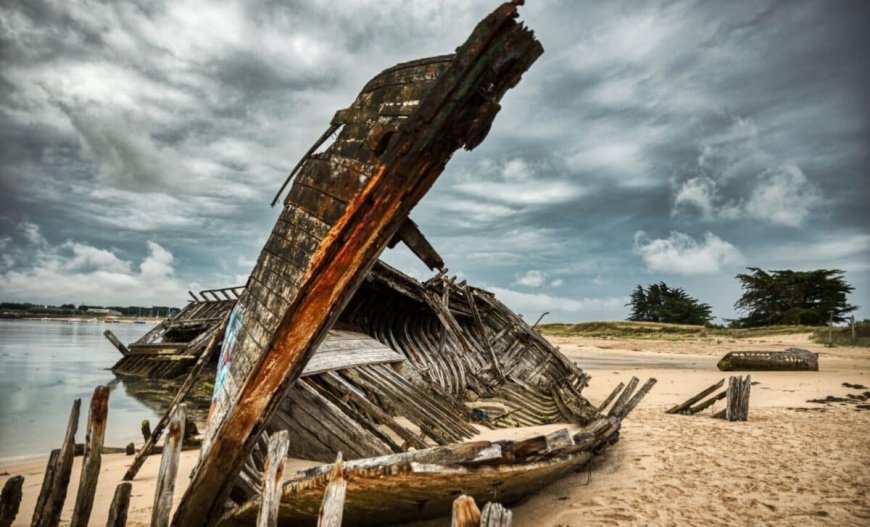
After nearly 400 years buried under the sands of southern England, the missing hull of the shipwreck Fame, a Dutch merchant ship that sank in 1631, has reemerged along Studland Beach.
Parts of the ship had been unearthed in previous excavations, but the hull itself remained elusive until the recent storm washed up key fragments. This breakthrough completes the puzzle of one of the most significant shipwrecks in England’s maritime history.
A Ship Lost to Time
The Fame, a Dutch merchant vessel, was built over 130 feet long and was used primarily for transporting salt from the Caribbean to Europe. In 1631, disaster struck when the ship ran aground on a sandbank in the Swash Channel off the coast of southern England.
Tom Cousins, a maritime archaeologist from Bournemouth University, explained in a university statement that the ship was dragged by its anchor and broke apart, leaving its 45 crew members with no choice but to abandon it. The Fame was quickly looted by locals and lost to the sea, with its final resting place remaining a mystery for centuries.
“It’s really exciting to find this piece of historical ship,” he said. “During our excavation of the Swash Channel wreck in 2013, there were pieces of the ship missing and we do believe a section of the hull has now been revealed at Studland.”

The Hull’s Surprising Discovery
In a stroke of fortune, a powerful storm in southern England has finally exposed the missing portion of the shipwreck. The remnants, which washed ashore at Studland Beach, are approximately 20 feet long and six feet wide. The timbers, connected with wooden treenails, appear well-preserved, with the outer hull planks in excellent condition.
As stated by Tracey Churcher, general manager for the National Trust in Purbeck, this find is “a real treasure” for historians and archaeologists alike. She added that the preserved condition of the hull is remarkable, considering its exposure to the elements for centuries.
“The wooden tree nails are still in place and holding after 400 years—what a testament to the craftsmanship at the time.”

Protecting a Historical Site
The Fame’s wreck site is a protected site under the Protection of Wrecks Act of 1973, which safeguards shipwrecks along England’s coast. The remains of the wreck were first discovered in the 1990s, and in 2013, Bournemouth University’s team of archaeologists conducted a thorough excavation of the Swash Channel. Hefin Meara, a maritime archaeologist from Historic England noted that the Fame’s wreck is part of an exclusive group ofpre-1700 shipwrecks in England, vessels that are exceedingly rare to find.
The newly discovered hull will be carefully studied and preserved. Archaeologists plan to conduct dendrochronology testing on the wood to determine when and where the timbers were sourced, potentially matching them with other pieces of the wreck.
“We can’t say for certain that these fragments come from that wreck site, but it’s an intriguing possibility.”
This will help to confirm whether the recently unearthed remains are indeed part of the original Fame wreck or a separate vessel entirely.
Enjoyed this article? Subscribe to our free newsletter for engaging stories, exclusive content, and the latest news.
What's Your Reaction?
 Like
0
Like
0
 Dislike
0
Dislike
0
 Love
0
Love
0
 Funny
0
Funny
0
 Angry
0
Angry
0
 Sad
0
Sad
0
 Wow
0
Wow
0