


























Goodbye to Toilet Paper: Thousands of People Are Switching to Cleaner, Cheaper, and More Eco-Friendly Options

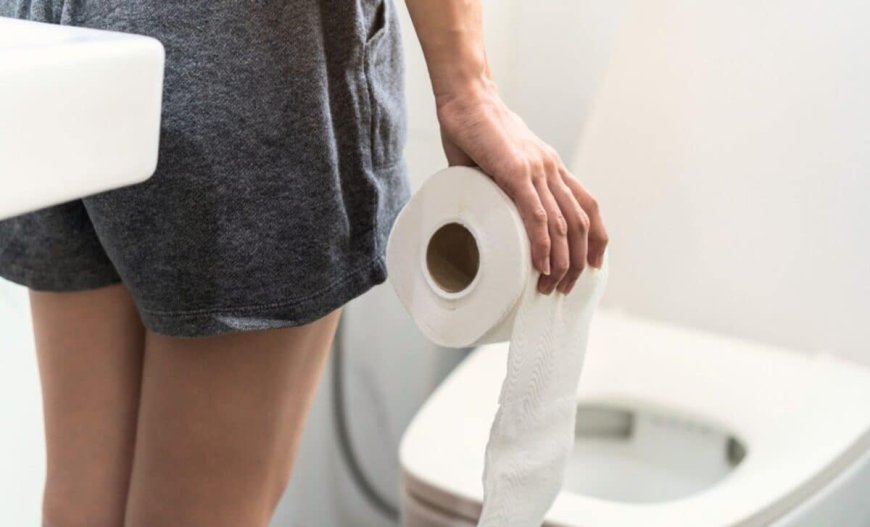
The roll sits in a plastic sleeve on supermarket shelves across America, wrapped in packaging covered with images of green leaves and promises about saving trees. Shoppers reaching for bamboo toilet paper believe they have made an environmentally superior choice, selecting a fast-growing grass over traditional wood fiber. The marketing language makes intuitive sense. Bamboo grows quickly. It requires fewer pesticides. The words tree free carry genuine weight with consumers trying to reduce their footprint.
Naycari Forfora had heard those claims repeatedly while working on her Ph.D. at North Carolina State University’s College of Natural Resources. She decided to test whether the data supported the messaging. What she found, working alongside researcher Ronalds Gonzalez, complicated the simple story printed on those packages. Their findings appeared in the journal Cleaner Environmental Systems and challenged assumptions about what makes a bathroom product sustainable.
What the Life Cycle Assessment Revealed
The research team built a detailed life cycle assessment comparing standard wood-based tissue produced in the United States with bamboo tissue manufactured in China and shipped across the Pacific. They tracked emissions from forests and bamboo plantations through pulp mills, tissue machines, and ocean freight.
Standard U.S. tissue produced with light dry crepe technology generated approximately 1,824 kilograms of carbon dioxide equivalent per ton. Bamboo tissue manufactured in China came in at roughly 2,400 kilograms for the same amount of product. Premium ultra-soft tissue using more energy-intensive creped through air drying pushed emissions higher still, with bamboo blends reaching 2,739 kilograms compared to 2,531 kilograms for conventional wood furnish.
Forfora noted that consumers often equate “tree-free” with “low-impact,” but the reality involves more variables than the fiber type alone. The technology used to dry and crepe the tissue, the fuel mix for steam generation, and the distance traveled all contribute to the final footprint.
Why Coal Changes the Equation
The discrepancy had little to do with the plants themselves. Bamboo as a crop is not inherently dirtier than eucalyptus or softwood. The difference lives in the power grid and the industrial machinery.
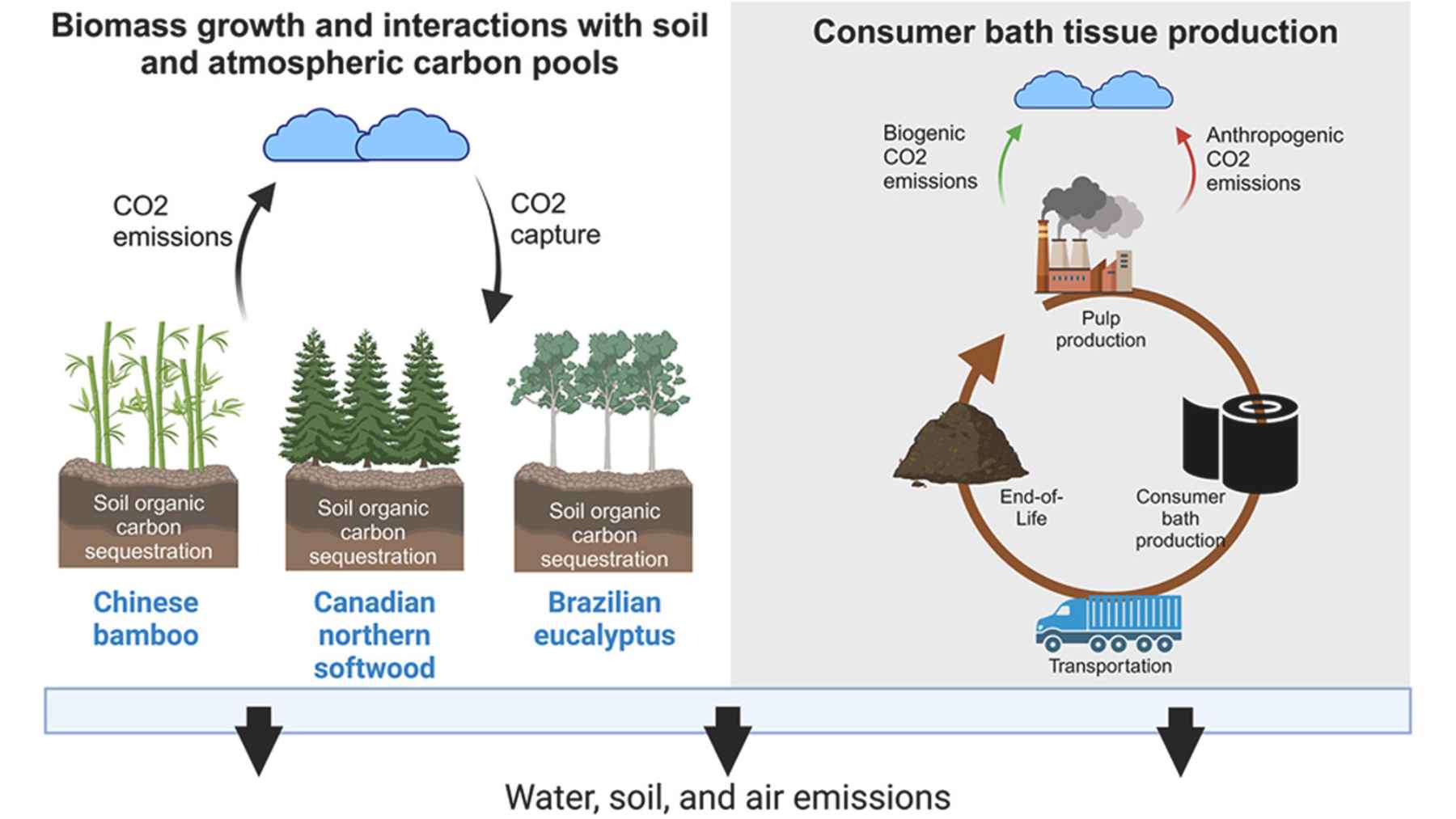
Chinese pulp and paper mills in the study rely heavily on coal-based electricity and fossil fuels for steam generation and drying. Canadian mills supplying pulp to the United States draw from hydroelectric resources. Brazilian operations use significant biomass energy from the pulping process itself. When the team modeled a scenario where bamboo tissue was produced with a cleaner electricity mix, its carbon footprint dropped and began to resemble wood-based options.
Gonzalez said the finding shifts attention away from fiber type and toward manufacturing infrastructure. Bamboo is a crop like any other, he said, and it goes through the same production processes as wood. The trees used for conventional tissue are planted and harvested, not cut from old-growth forests. When coal-reliant mills enter the equation, the emissions math flips.
Water Systems Offer Different Path
While the fiber debate continues, another alternative has gained traction that bypasses paper entirely. Water-based cleaning systems known as bidets have been standard in parts of Europe, Asia, and the Middle East for generations. Modern iterations from manufacturers like Toto include heated water, air drying, and self-cleaning nozzles.

These systems can reduce household toilet paper consumption by 75 percent, fundamentally changing the volume of fiber required. The adoption has accelerated due to inexpensive mechanical attachments that install on existing plumbing without professional help or bathroom renovations. Industry analysis from Mordor Intelligence identifies rising bidet penetration as a long-term restraint on tissue market growth.
Wipes Create Infrastructure Crisis
The search for alternatives has led many consumers toward flushable wipes, a product category composed of synthetic fibers designed for durability rather than disintegration. Wastewater engineers have identified these products as a major threat to municipal infrastructure.
The National Association of Clean Water Agencies estimated that wipes cost U.S. clean water utilities approximately $441 million annually in added operating expenses according to their detailed cost analysis. These synthetic fibers snag on pump components and trap grease to form massive fatbergs, dense masses requiring specialized equipment and significant maintenance budgets to remove. The costs ultimately pass to taxpayers through increased utility rates.
A separate study in the Journal of Cleaner Production examined how these wipes travel through pipes, finding that even those labeled flushable remain largely intact after flushing. The research documented how wipes accumulate on rough pipe surfaces and combine with fats and oils to create blockages.
Market Reality
The global toilet paper market continues expanding, valued at approximately $56.9 billion in 2026, with projected growth to $66.43 billion by 2031, according to market research data. Asia-Pacific grows fastest as sanitation infrastructure expands in India and China. Recycled fiber currently holds about 53 percent of the market, while bamboo and other alternatives capture a smaller but growing slice.
The North Carolina State University study was supported by the Sustainable and Alternative Fibers Initiative, a coalition examining fiber sustainability across global supply chains. Co-authors included researchers from the university’s Department of Forest Biomaterials.
The researchers emphasized that their findings should not be read as an indictment of bamboo fiber itself. In regions with cleaner electricity grids, bamboo tissue performs comparably to wood-based options. The determining factor is the energy behind the mill, not the plant in the ground. For now, the climate impact of bathroom tissue depends more on how it is made than on what it is made from.
Enjoyed this article? Subscribe to our free newsletter for engaging stories, exclusive content, and the latest news.
What's Your Reaction?
 Like
0
Like
0
 Dislike
0
Dislike
0
 Love
0
Love
0
 Funny
0
Funny
0
 Angry
0
Angry
0
 Sad
0
Sad
0
 Wow
0
Wow
0