


























Geologists can now detect volcanoes just hours before they erupt, but the warning may come too late

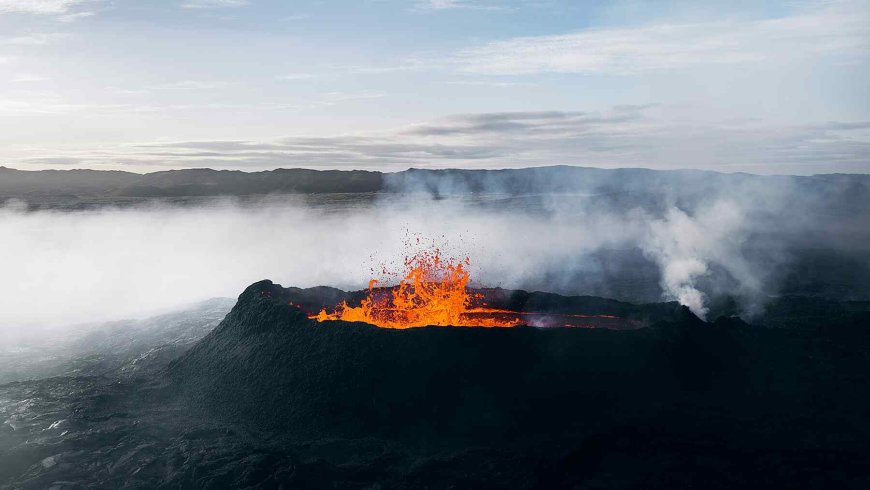
We can now detect volcanic eruptions through new technology.
Geology has been a major driver of conservation efforts that could save our planet from a perilous situation in the near future. New methods developed by geologists can forecast when and where a volcano may erupt hours ahead of time, but is this a sufficient warning time frame?
What is this new method to detect volcanic eruptions around the world?
How geology has forecasted eruptions over the last few decades
For the most part, geologists have relied on several methods to attempt to predict when Mother Nature will erupt with fury.
Geologists have relied on methods like RSAM, which is Real-time Seismic-Amplitude Measurement, to somewhat predict when and where tremors deep beneath us may lead to volcanic eruptions.
As magma deep inside the Earth moves upward, it can sometimes cause the ground to bulge or tilt.
This led to the development of GNSS systems and tiltmeters to accurately determine what exactly is going on down there. However, a new and interesting method has been making the rounds recently and could enable far more accurate forecasts of possible eruptions.
Mother Nature is screaming at the human species, but are we listening
That would be the real question that requires an honest answer from society.
Climate change is the issue of our time, and has been for the past few decades. We simply weren’t paying enough attention to the warning signs that Mother Nature was sending us.
Regions of the world where volcanic eruptions are a possibility have faced evacuation mandates in recent months and years.
Such as the recent forced evacuations and grounded flights that were necessary when Kīlauea’s tallest lava fountain in Hawai’i erupted with little warning. Volcanic eruptions can bring an entire city to a complete standstill.
And as the climate continues to change due to our impact on it, new warnings over potential weather-related threats are emerging across the world.
There have been some discussions and plans put into place to try to avert more natural disasters.
Such as the USDA proposing to construct more roads to control wildfires more effectively across the more fire-prone regions of the nation. But recent findings have shown that this measure may be counterproductive at best.
The GFZ Helmholtz-Zentrum für Geoforschung, or GFZ German Research Centre for Geosciences, has detailed their latest measure to detect upcoming volcanic eruptions.
Geology has a new method of forecasting eruptions, but is it too little, too late?
The GFZ Helmholtz-Zentrum für Geoforschung has been working diligently to develop a new method to detect when eruptions may take place in advance.
Providing the local populace with sufficient time to evacuate the immediate region around a volcano can save countless lives. Science has taught us that Earth holds on to more heat than it can release, and more volcanic eruptions can only make things more concerning.
Traditional methods to detect potential eruptions analyze data from multiple sensors around the volcano, but this has proven to be problematic at the best of times.
We now have a far more accurate way of forecasting possible eruptions
GFZ Helmholtz-Zentrum für Geoforschung has developed the new “jerk” method to forecast volcanic eruptions.
It involves using a specific, physical acceleration signal that is caused by rocks fracturing at the beginning of magma intrusion. The team used a single broadband seismometer to analyze the data and more accurately forecast potential eruptions.
This technique is special as it enables automated, real-time detection of magma intrusions that could lead to volcanic eruptions.
It also enables a 92% accuracy of forecasting eruptions roughly eight hours ahead of time. So while the climate crisis accelerates, we can at least take a positive from the fact that we can now detect volcanic eruptions at least eight hours before they actually take place.
What's Your Reaction?
 Like
0
Like
0
 Dislike
0
Dislike
0
 Love
0
Love
0
 Funny
0
Funny
0
 Angry
0
Angry
0
 Sad
0
Sad
0
 Wow
0
Wow
0