





























From a 1950 discovery in California to $27,000,000 per gram, and it’s the most valuable mineral

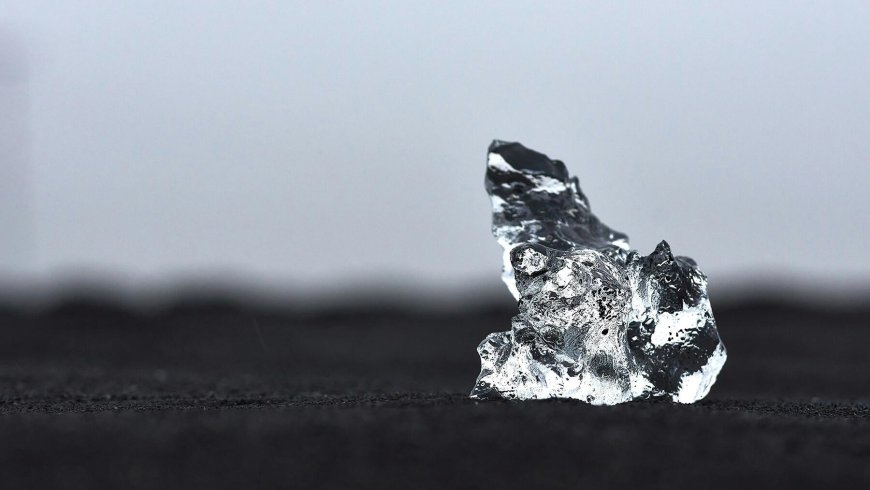
California, 1950. While most people were dreaming about sunshine, new cars, and the American Dream, a small group of scientists was quietly working in a laboratory. They were not searching for gold, not chasing diamonds, and not trying to get rich.
Yet what they stumbled upon would one day become worth more than luxury mansions per gram. At the time, no one celebrated. History was quietly being made.
Science first, money never
The researchers at the University of California, Berkeley were focused on a single goal: understanding how atoms behave. This was the early nuclear age, a period filled with uncertainty, bold ideas, and constant trial and error. Scientists were creating new atomic elements simply to observe what would happen next.
Most of these experiments led nowhere, and many newly formed atoms survived only briefly before breaking apart. Still, the team persisted, driven not by rewards or recognition, but by pure scientific curiosity and the desire to explore the unknown.
A breakthrough that almost nobody noticed
When this unusual material was first identified, it attracted almost no public attention. There were no press releases, no newspaper headlines, and no immediate sense that something special had occurred.
The discovery remained confined to academic circles, mentioned only in technical papers read by a small number of specialists. For years, it sat quietly in the background, waiting for the world to catch up to its significance.
Why this material is unbelievably expensive
Unlike precious metals or gemstones, this material cannot be mined from the Earth. It must be created artificially under extreme conditions that only a handful of facilities can provide. The process takes years and requires immense precision and energy.
Even after all that effort, the amount produced is incredibly small. These tiny quantities are the main reason the price reaches levels that seem almost unreal.
Small quantities, massive impact
Despite being available only in microscopic amounts, it has practical uses with real-world impact. Scientists rely on it to study complex reactions that would otherwise be impossible to observe.
Industries use it to gather information from deep underground, and in medicine, it has been applied in highly specialized treatments where precision is critical. Its influence is far greater than its size suggests.
Californium-252: the world’s most expensive man-made mineral
The mystery material is Californium-252. Discovered in California in 1950, it is valued at approximately $27,000,000 per gram, making it the most expensive material ever created by humans.
Only minuscule amounts are produced each year, often measured in milligrams. Each tiny portion represents years of effort, expertise, and controlled conditions that few places on Earth can achieve.
Rare, powerful, and closely guarded
Because of its extreme rarity and unique properties, Californium-252 is strictly regulated worldwide. Only a small number of institutions are authorized to produce or handle it, and every step is carefully monitored.
Its presence has even appeared in international discussions, highlighting its strategic importance and the need for tight oversight.
From a quiet lab to legendary status
What began as a quiet laboratory experiment in the middle of the 20th century has become one of the most remarkable materials in human history. Californium-252 does not shine or attract attention through beauty.
Instead, its value lies in what it represents: the power of science, patience, and human curiosity to create something extraordinary from the invisible building blocks of matter.
What's Your Reaction?
 Like
0
Like
0
 Dislike
0
Dislike
0
 Love
0
Love
0
 Funny
0
Funny
0
 Angry
0
Angry
0
 Sad
0
Sad
0
 Wow
0
Wow
0