




























Forget the Panama Canal: A New Interoceanic Corridor Just Shipped 900 Vehicles Across Two Oceans in 72 Hours

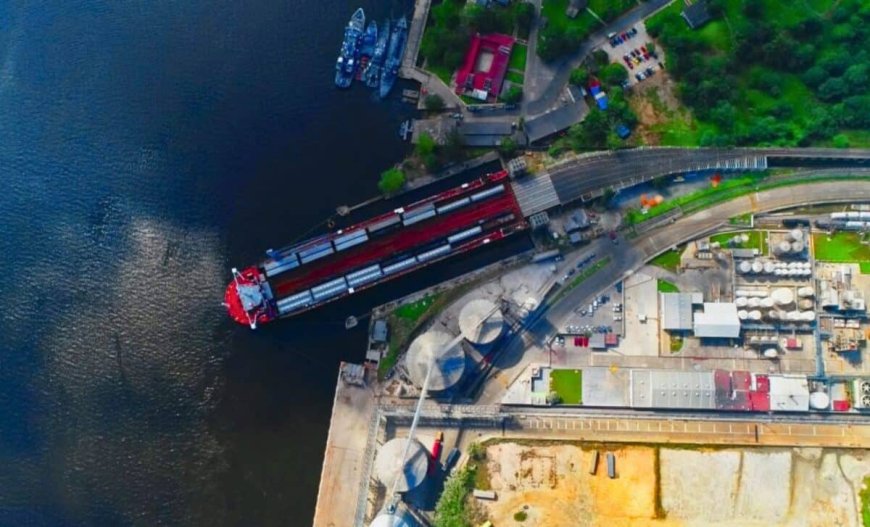
Mexico’s Interoceanic Corridor of the Isthmus of Tehuantepec successfully moved 900 vehicles from Asia to the U.S. East Coast in spring 2025, completing the first major international logistics test of the 303-kilometer rail route connecting the Pacific port of Salina Cruz to the Gulf port of Coatzacoalcos.
The pilot, carried out by Hyundai and its logistics arm Hyundai Glovis, completed each rail crossing in roughly nine hours, with the full ocean-to-ocean transfer benchmarked at about 72 hours. A climate study published the same year found that the Panama Canal could face significantly more frequent extreme droughts by the end of the century if greenhouse gas emissions remain high.
The two developments reflect a shared pressure on global shipping: a water-dependent chokepoint that moves roughly 5% of world maritime trade is becoming less reliable, and alternatives are being tested in real conditions.
What Hyundai’s Pilot Actually Tested
Between March 28 and April 3, 2025, the car carrier Glovis Cosmos delivered vehicles from South Korea to Salina Cruz. From there, 600 units and then 300 were loaded onto 50 BI-MAX freight wagons designed for vehicle transport and moved across southern Mexico using Line Z of the corridor. At Coatzacoalcos, the vehicles transferred onto the ship RCC Africa for the final leg to Brunswick, Georgia.

The operation demonstrated that the corridor can handle multi-modal international cargo. For automakers, the appeal is direct: under Panama Canal drought restrictions in 2023 and 2024, some routes stretched to 15 to 20 days. Nino Morales, President of the CIIT Oversight Commission, described the result as meaningful for the corridor’s strategic ambitions. “This test strengthens the Interoceanic Corridor as a strategic new route linking Asia with the U.S. East Coast,” Morales said.
The Panama Canal’s Water Problem
The severity of the 2023–2024 drought is what gave the Hyundai pilot commercial relevance. Water levels in Gatún Lake, the freshwater reservoir that powers the canal’s locks, fell nearly two meters below the prior year’s level in January 2024. Canal authorities reduced daily transits from a typical 38 ships to as low as 22 and imposed cargo weight limits, producing backlogs and expensive detours around South America.
A study published in Geophysical Research Letters by Samuel Muñoz of Northeastern University modeled how Gatún Lake levels could shift across different emissions scenarios over the next 75 years. Under high greenhouse gas emissions, droughts like those in 2023 could become roughly twice as likely by the end of the century. The biggest driver in the model was a projected decline in Panama’s wet-season rainfall, particularly from May through August, where monthly totals could fall by around 50 millimeters.

Muñoz was direct about what the choice of emissions pathway means for the canal. “If we mitigate emissions and we choose one of the lower emissions pathways, then it really keeps this system pretty stable,” he said. “But if we don’t, then these low water levels that are really disruptive now become the norm by the end of the century.”
Canal authorities are already responding, improving water-use efficiency and planning a new reservoir to buffer against drier conditions in coming decades.
A Dry Canal Model for Global Trade Disruption
The CIIT is not a like-for-like replacement for Panama. Its current design requires two ocean transfers, limiting its commercial advantage to cargo types where speed and schedule reliability outweigh handling costs. Vehicles are a clear fit; bulk container shipping at scale is not.
The corridor, managed by the Mexican Navy and formally approved in 2019, began rail freight service in 2023. The wider logistics platform, including expanded port facilities and ten planned industrial parks, is expected to reach fuller operational capacity around mid-2026. Omar Cancino, a specialist in southern Mexican economics, framed the corridor’s significance in terms of resilience. The CIIT, he said, “stands to become a crucial alternative for global trade, especially amid ongoing shifts in international supply chains and geopolitical uncertainty.”
The timing matters. Nearshoring trends are already redirecting manufacturing investment toward Mexico, and the corridor sits at the intersection of that industrial shift and a growing need for freight routes that do not depend on a single waterway.
Unresolved Tensions Along the Route
The corridor’s development has faced persistent resistance. Indigenous communities in Oaxaca and Veracruz have raised objections to land use for the planned industrial parks, and courts temporarily halted some construction after legal challenges. Environmental groups warn that new road and energy infrastructure through the region could accelerate deforestation and fragment ecosystems in an area that retains significant tropical forest cover.
A more immediate concern emerged in December 2025, when a passenger train on the Interoceanic line derailed in Oaxaca, killing more than a dozen people. The accident prompted calls in Mexico’s Congress for investigations into construction contract irregularities and raised questions about safety oversight on a military-managed rail project moving at speed.
The corridor is operational for freight and has demonstrated a functioning path for international vehicle logistics. Whether it attracts sustained commercial volume depends on how consistently it delivers on the 72-hour benchmark and how port capacity develops at both ends of the route.
Enjoyed this article? Subscribe to our free newsletter for engaging stories, exclusive content, and the latest news.
What's Your Reaction?
 Like
0
Like
0
 Dislike
0
Dislike
0
 Love
0
Love
0
 Funny
0
Funny
0
 Angry
0
Angry
0
 Sad
0
Sad
0
 Wow
0
Wow
0