




























For the First Time in 1,350 Days, The Sun Has Been Observed as Completely Spotless

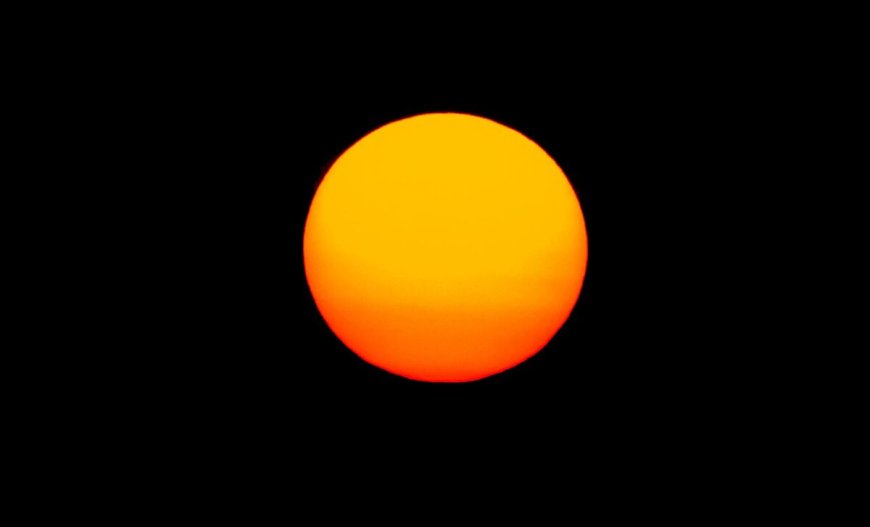
For the first time since June 2022, the sun has appeared completely free from sunspots, a phenomenon that caught the attention of scientists and skywatchers alike. This rare sight, recorded on February 22, 2026, suggests that the sun may be entering a quieter phase in its solar cycle.
Sunspots, cooler and darker patches on the sun’s surface, are direct indicators of solar activity. Their absence marks a momentary pause in the usual storm of solar flares and coronal mass ejections that can disrupt Earth’s magnetosphere. As its reaches the tail end of its 25th solar cycle, this spotless phase provides a brief but intriguing glimpse into what could be a quieter period ahead.
How Sunspots Drive Solar Activity
Sunspots occur where magnetic fields are particularly strong, preventing heat from rising to the surface and creating darker spots. According to NASA’s Solar Dynamics Observatory, these spots often signal bursts of solar flares and coronal mass ejections. These eruptions can send plasma into space, occasionally reaching Earth and causing geomagnetic storms, which can interfere with satellite communications, GPS, and power grids.
The sun’s magnetic activity rises and falls throughout an 11-year cycle, with sunspot numbers peaking around the middle of each cycle. When the fiery orb’s surface is free of sunspots, it signals a quieter period with fewer solar flares. This lull, however brief, suggests that the sun may be winding down toward the next solar minimum.

A Brief Moment of Calm
This temporary absence of sunspots lasted only a few days. According to a report pubslished by Spaceweather, on February 22, 2026, the sun was completely spotless, but by February 24, new sunspot activity had already begun to emerge. This suggests that the current solar cycle is not yet finished with its ups and downs. The last time it was free of sunspots for a prolonged period was on June 8, 2022, as menitoned by the UK Met Office.
Though solar activity appears to be winding down, scientists caution that this doesn’t necessarily mean a complete absence of solar events. In fact, even during solar minimums, there can still be sporadic solar flares or sunspots that briefly appear. As observed by Spaceweather:
“Spotless days are a key indicator the solar cycle. During years around Solar Minimum, whole months can go by without a single sunspot, racking up dozens of spotless days in a row. Between 2018-2020 (the last Solar Minimum) there were more than 700 spotless days!”

The Solar Cycle Explained: What’s on the Horizon
The current cycle, the 25th since records began, peaked in 2024. The lull observed in February 2026 could indicate the sun is moving towards the quieter part of its cycle. However, experts say the next solar minimum, when it reaches its lowest activity, is still years away, expected to occur around 2030. During the last solar minimum, it went for extended periods without visible sunspots. Despite these quiet spells, solar activity will eventually rise again.
Enjoyed this article? Subscribe to our free newsletter for engaging stories, exclusive content, and the latest news.
What's Your Reaction?
 Like
0
Like
0
 Dislike
0
Dislike
0
 Love
0
Love
0
 Funny
0
Funny
0
 Angry
0
Angry
0
 Sad
0
Sad
0
 Wow
0
Wow
0