


























Delaying Artemis II to 2027? A New Forecast Warns of Dangerous Solar Activity

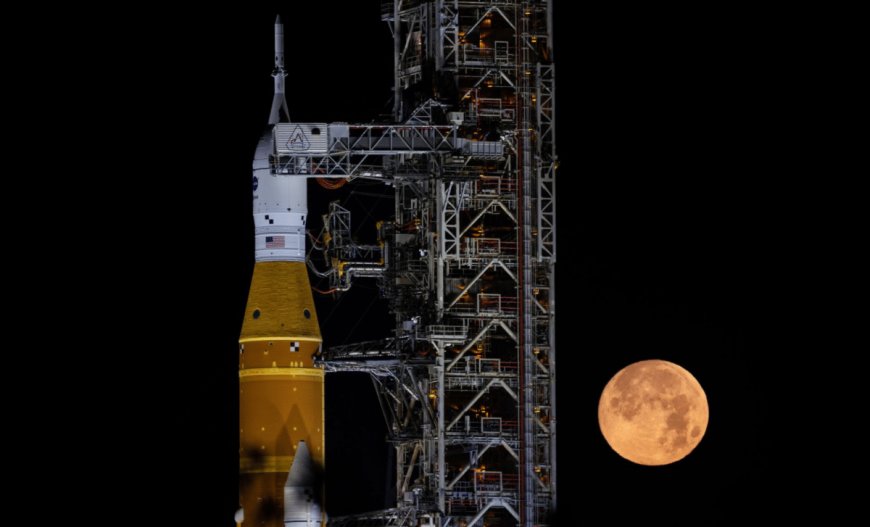
NASA’s Artemis II mission, scheduled to launch in 2026, may face significant delays due to new scientific findings on solar superflares. A study published in the Journal of Geophysical Research: Space Physics has raised alarms about the potential risks of launching during a peak solar activity period. These powerful solar events could jeopardize astronaut safety and disrupt crucial space systems. Victor M. Velasco Herrera and his team from the National Autonomous University of Mexico have developed a method that could provide more accurate solar flare forecasts, suggesting that a delay in the Artemis II mission would be a safer choice. In this article, we will explore these findings and discuss the implications for both space exploration and Earth’s technology.
Understanding Solar Superflares: The Hidden Threat to Space Missions
Solar superflares are some of the most powerful and dangerous phenomena in our solar system. These extreme bursts of energy, predominantly in X-ray bands, can produce significant geomagnetic storms that have the potential to disrupt satellite communications, GPS, and even pose a threat to the health of astronauts in space. Although these events have been known for decades, predicting their occurrence has remained a major challenge for scientists. As Velasco Herrera points out, “Traditional solar forecasting struggles with these extreme events because they happen so quickly and unpredictably.” This unpredictability has made it difficult for space agencies like NASA to plan space missions, especially those that venture beyond Earth’s protective magnetic field, such as the Artemis II mission.
Recent advancements in solar physics, however, have led to the development of a more accurate forecasting model. Velasco Herrera’s team has studied 50 years’ worth of solar data, offering a new approach that looks for patterns linked to the cycles of solar flare activity. With this model, they can predict periods of heightened solar flare activity and give space weather operators critical advance warning. As a result, the risks posed by these superflares are now more predictable than ever before.

The Critical Timing of the Artemis II Mission
NASA’s Artemis II mission, planned to carry astronauts around the moon, is currently scheduled for April 2026. However, the new analysis suggests this timing may coincide with an active solar period, increasing the risks to both the astronauts and space infrastructure. According to Velasco Herrera,
“Given how active the sun is right now, our forecasts suggest that delaying the launch until the end of 2026 may be a much safer decision.”
During periods of intense solar flare activity, astronauts are more vulnerable to harmful radiation. The mission’s trajectory takes the crew outside of Earth’s magnetic shield, leaving them unprotected from solar radiation and other space weather hazards.
The study emphasizes that the period from mid-2025 to mid-2026 will see peak solar activity, particularly in the sun’s southern hemisphere. This increased solar flare risk poses significant challenges to human spaceflight, as astronauts could face greater radiation exposure, increasing the potential for health complications. Delaying the mission would ensure that astronauts are not subjected to these heightened risks, and their safety can be better guaranteed with the improved forecasting method developed by Velasco Herrera’s team.
The New Solar Flare Prediction Model: A Game Changer for Space Exploration
Velasco Herrera and his team have made a breakthrough by developing a solar flare prediction model that utilizes data from 50 years of X-ray observations from the Geostationary Operational Environmental Satellites (GOES). This model identifies previously unknown cycles in the sun’s behavior, each lasting 1.7 years and seven years, respectively. These cycles are tied to the buildup of magnetic energy on the sun’s surface, which ultimately leads to solar superflares.
“Our method gives space weather operators and satellite managers one to two years of advance warning about when conditions are most dangerous,” said Velasco Herrera.
With this advance notice, space agencies and satellite operators will have enough time to take precautionary measures. They can adjust satellite orbits, power down vulnerable systems, and even delay space missions to avoid the worst of solar storms. The ability to predict solar flare activity with such a long lead time is a significant advancement in space weather forecasting, which could have far-reaching implications for the future of space exploration and Earth’s technological infrastructure.
Impact of Solar Flares on Earth’s Technology
Solar superflares not only endanger space missions, but they can also wreak havoc on Earth’s technology. The radiation from these events can disrupt GPS signals, cause blackouts by damaging power grids, and potentially interfere with communication systems. As Velasco Herrera highlights,
“This critical lead time allows them to prepare and protect communications systems, power grids, and astronaut safety.”
By improving the accuracy of solar flare predictions, this research enables better preparation for solar storms, helping to mitigate the risks posed to both space and Earth-based systems.
Given the increasing reliance on satellite networks and global communication infrastructure, solar flare forecasting has become more important than ever. The study’s findings, while focused on space missions, also underscore the importance of safeguarding Earth’s technological landscape from the disruptive potential of solar storms.
Enjoyed this article? Subscribe to our free newsletter for engaging stories, exclusive content, and the latest news.
What's Your Reaction?
 Like
0
Like
0
 Dislike
0
Dislike
0
 Love
0
Love
0
 Funny
0
Funny
0
 Angry
0
Angry
0
 Sad
0
Sad
0
 Wow
0
Wow
0