




























Deep in Mexico’s Cenote Network, Divers Discover an 8,000-Year-Old Prehistoric Human Skeleton Hidden in a Flooded Cave

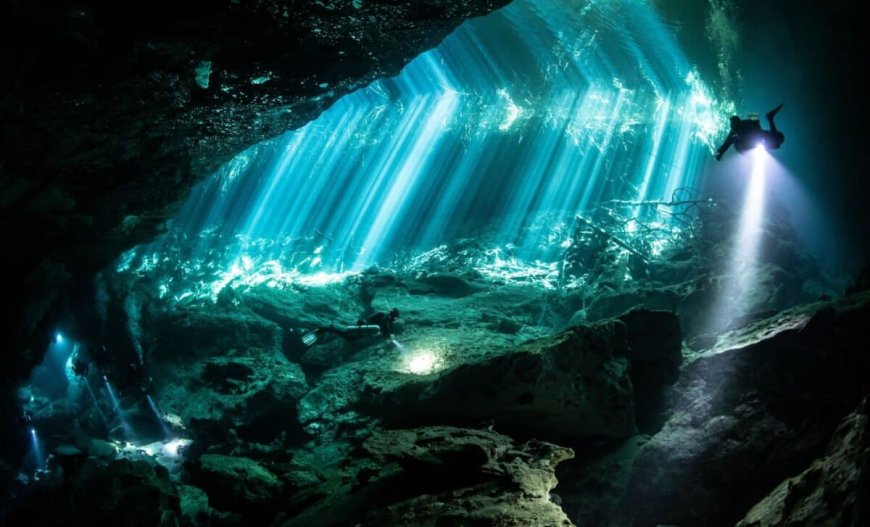
Researchers have long considered these cave systems valuable archaeological archives. The latest discovery is part of a series of finds reported by PLOS One that have helped archaeologists piece together the early history of human presence in the region.
The skeleton was found roughly 8 meters (26 feet) below the surface and about 200 meters (656 feet) from the cave entrance, in a section accessible today only to trained cave divers using specialized equipment.
According to Octavio del Río, a cave-diving archaeologist collaborating with Mexico’s National Institute of Anthropology and History (INAH), the remains could only have reached this location when the cave was still dry thousands of years ago. He explained to The Associated Press that:
“with the distance (from the cave entrance) and the depth … it could not have gotten there at any other time than when the cave was dry, at least 8,000 years ago.”
The skeleton rested on a mound of sediment inside a narrower interior chamber of the cave. Researchers believe this context indicates the body may have been deliberately placed there as part of a funerary practice.
“It suggests that it was a funereal deposit where the body was placed intentionally, perhaps as part of a ritual practice,” noted Del Río.
Cenote Caves A Record Of Ancient Human Presence
The Yucatán Peninsula’s cenotes, natural sinkholes connected to vast underground rivers, have yielded numerous prehistoric discoveries over the past several decades.

According to the same source, the newly discovered skeleton is the 11th prehistoric human skeleton found in these cave systems over the past thirty years. Some earlier remains uncovered in the region date back about 13,000 years, making them among the oldest human remains discovered in North America.
Their stable underwater conditions can preserve bones and artifacts that might otherwise disappear in surface environments. Archaeologists have also recovered more recent historical objects from the caves, including 19th-century rifles and a small cannon, illustrating how the underground network has recorded different moments of regional history.
A Find That Helps Trace Early Human Movement in the Americas
Beyond the individual remains, archaeologists believe the find could help clarify how early populations reached the Yucatán Peninsula, which looked very different thousands of years ago. Instead of dense jungle and tourist beaches, the region was once a dry plain with cliffs.

According to Luis Alberto Martos, director of archaeological studies at INAH, discoveries in these caves are helping researchers understand how ancient populations arrived and used the landscape. As he explained:
“The puzzle of Yucatan prehistory is becoming better understood,” he added that: “There is a lot more study that has to be done in order to correctly interpret, [including] dating, some kind of photographic studies, and some collection.”
Genetic evidence increasingly supports the idea that some early groups migrated from Asia across the Bering land bridge, the land connection that once linked Siberia and Alaska. Some clues also suggest the possibility of another route coming from South America, though research is still ongoing.
At the same time, the cave systems remain fragile environments. As stated by the APnews, Mexican authorities are now working toward designating the area as a national protected zone, a measure the Environmental Ministry hopes to achieve in 2026.
Enjoyed this article? Subscribe to our free newsletter for engaging stories, exclusive content, and the latest news.
What's Your Reaction?
 Like
0
Like
0
 Dislike
0
Dislike
0
 Love
0
Love
0
 Funny
0
Funny
0
 Angry
0
Angry
0
 Sad
0
Sad
0
 Wow
0
Wow
0