



























Decades after the Chernobyl disaster, the Elephant’s Foot is still changing as its structure shifts and releases dangerous radioactive dust

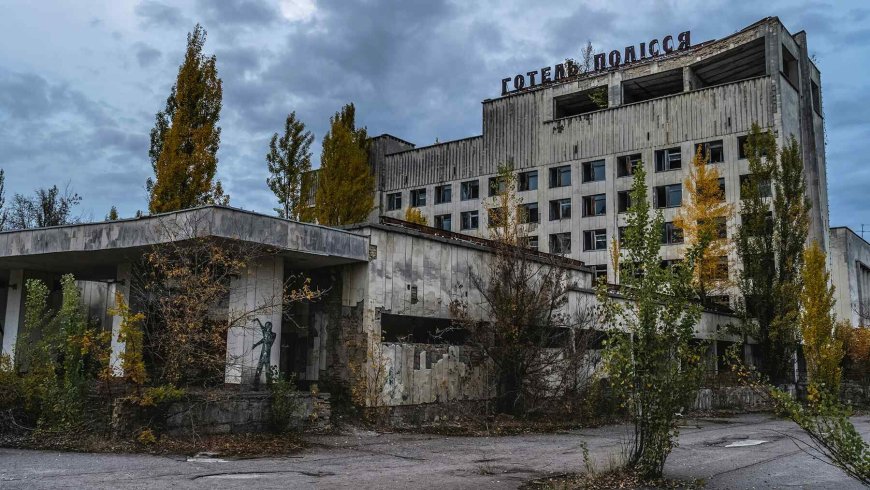
The Chernobyl nuclear disaster changed the world forever.
It was the single most devastating nuclear disaster in humanity’s history. The result of reactor number 4 overheating at the facility created a radioactive wasteland around the town. But recent studies have found that the radioactive “Elephant’s Foot” is still changing its structure.
When will the danger from Chernobyl come to an unceremonious end?
How the world came to understand the dangers of nuclear energy generation
The Chernobyl nuclear disaster was one of the most significant human-led disasters in history.
On April 26, 1986, a combination of inherent design flaws and human error during a safety test at the Chernobyl nuclear facility led to an uncontrollable surge in power and two massive nuclear explosions.
Operators at Unit 4 were supposed to conduct the safety tests during the day following extensive preparations.
However, following a nearly ten-hour delay, the tests were moved to the night shift at the now infamous nuclear facility in Ukraine. The night shift operators were unprepared as they were not properly briefed on the procedure, leading to the world-changing nuclear disaster.
The world is searching furiously for the next big thing in energy generation
While the nuclear power sector has been making a comeback in recent years, safety concerns are still rife within the energy community.
As such, the green energy transition has been gaining momentum as solar and wind power have become the latest must-haves for energy generation around the world. Many nations now see the renewable energy sector meeting at least half of their energy needs.
This points to the fact that we are making inroads in addressing our energy needs while keeping the environment at the forefront of our minds.
But even the dominant force of solar power in modern-day society has a few issues to consider. And these problems have become clearer as weather-related events bring them to the surface.
So what other alternatives are available for energy generation?
The hydrogen energy industry has been gaining some notable traction in recent years. And scientists may have found a method to drastically improve the output capacity for energy from the hydrogen market.
However, while all these new energy production methods are being developed, we have come to learn that the long-term implications that have emerged from the Chernobyl nuclear disaster are far from over.
Chernobyl’s Elephant Foot is still changing after 30 years
Trapping the nuclear energy of a star to power the world has long been a dream of the scientific community.
However, the Chernobyl disaster proved that the safety protocols in nuclear energy are of the utmost importance. The Elephant’s Foot was initially as hard as glass and actually needed the power of an AK47 to break off samples.
But the foot has progressively weakened over the last thirty years.
Now that does not in any way mean that it is less dangerous; in fact, quite the opposite. By the late 1990s, it began to show cracks that led to radioactive leakages of harmful nuclear dust.
As the mass of the Elephant’s Foot crumbles away, it has been found to generate inhalable radioactive dust particles.
The gamma radiation has slowly decayed over the last three decades, enabling a very brief human presence in reactor number 4. However, as the Foot decays, new concerns have emerged as alpha-emitting isotopes like Plutonium-239 have been found in the radioactive dust around it.
These radioactive dust clouds can be fatal when ingested or inhaled, proving that the danger from the Chernobyl disaster is far from over.
So while we develop astonishing new technology for energy generation, we should learn a thing or two from the Chernobyl event to prevent the next disaster that will emerge from our need to power the world.
What's Your Reaction?
 Like
0
Like
0
 Dislike
0
Dislike
0
 Love
0
Love
0
 Funny
0
Funny
0
 Angry
0
Angry
0
 Sad
0
Sad
0
 Wow
0
Wow
0